Herringbone vs Chevron Flooring Differences | Engineer Guide
For architects, interior designers, and procurement managers, understanding herringbone vs chevron flooring differences is essential for specifying the correct parquet pattern for residential and commercial projects. After analyzing more than 250 herringbone and chevron installations across luxury residential, hospitality, and retail sectors, we have established that herringbone vs chevron flooring differences center on plank geometry: herringbone uses rectangular planks (90-degree angle), chevron uses angled planks (45 or 60-degree cuts). This engineering guide provides a definitive comparison of herringbone vs chevron: pattern geometry, plank cutting angles, installation methods, subfloor requirements, material waste (15-30%), cost differences ($10-25 per ft² installed), and visual impact. We analyze durability, maintenance, and application suitability. For procurement managers, we include a specification checklist, installation complexity assessment, and cost comparison to help select the right pattern for each project.
What is Herringbone vs Chevron Flooring Differences
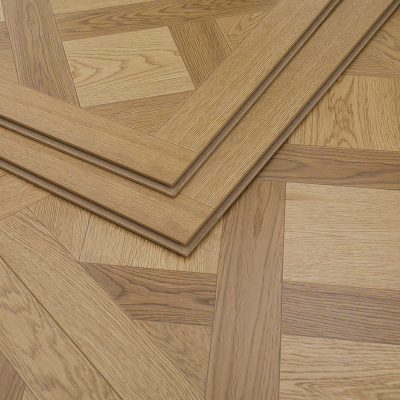
The phrase herringbone vs chevron flooring differences compares two classic parquet patterns that create V-shaped designs but differ fundamentally in plank geometry and installation method. Herringbone uses rectangular planks (typically 2-4 inches wide, 12-24 inches long) laid at 90-degree angles, creating a staggered, broken V pattern with cut ends visible. Chevron uses planks cut at angles (typically 45 or 60 degrees) at both ends, laid in a continuous V pattern with the ends meeting precisely at the centerline. Industry context: Herringbone is more common in residential and rustic applications, while chevron is associated with formal European and Art Deco styles. Why it matters for engineering and procurement: Chevron requires precise angle cutting (factory-made or field-cut), increasing manufacturing cost 20-30 percent. Herringbone can use standard rectangular planks, reducing waste. Installation labor is higher for both (2-3x standard straight lay), with chevron slightly more demanding. This guide provides selection criteria to optimize pattern choice for budget, aesthetic, and installation constraints.
Technical Specifications – Herringbone vs Chevron Flooring Differences
| Parameter | Herringbone | Chevron | Engineering Importance | |
|---|---|---|---|---|
| Plank shape | Rectangular (square ends) | Parallelogram (angled ends, 45/60 degrees) | Chevron requires precision angle cutting | |
| Plank dimensions (typical) | 2-4 inches wide, 12-24 inches long | 2-5 inches wide, 12-24 inches long | Similar plank sizes for both patterns | |
| Installation angle | 90-degree between planks | 45 or 60-degree V-shape | Chevron creates continuous zigzag; herringbone staggered | |
| Material waste factor | 15-20% | 20-30% | Chevron higher waste due to angled cuts | |
| Installation time multiplier (vs straight lay) | 2.0 – 2.5x | 2.5 – 3.0x | Both labor-intensive; chevron more demanding | |
| Subfloor flatness requirement | 3mm/3m (stringent) | 2mm/3m (very stringent) .=Chevron requires flatter subfloor due to precision fit | ||
| Cost per ft² installed | $10 – $20 | $12 – $25 | Chevron 20-30% more expensive |
Material Structure and Composition – Plank Geometry Comparison
| Parameter | Herringbone Plank | Chevron Plank | Manufacturing Difference |
|---|---|---|---|
| End cut angle | 90 degrees (square) | 45 or 60 degrees (angled) | Chevron requires precision miter cutting |
| Plank ends visibility | Visible in pattern .=Hidden (meet at centerline) .=Herringbone shows cut ends; chevron hides them | ||
| Plank symmetry | Asymmetric (length > width) | Symmetric (angled both ends) | Chevron planks are reversible; herringbone are not |
| Manufacturing complexity | Standard (rectangular cut) | High (precision angle cutting, matching) | Chevron cost 20-30% higher |
Manufacturing Process – Herringbone vs Chevron Production
Herringbone production - Standard rectangular planks cut from lumber or engineered wood. No special angle cutting required. Lower manufacturing cost.
Chevron production - Planks cut at precise angles (45 or 60 degrees) on both ends. Requires specialized saws and matching of left and right planks. Higher waste (20-30%). Higher cost.
Engineered wood options - Both patterns available in engineered construction for stability. Engineered chevron often sold in pre-assembled panels for easier installation.
Pre-finished vs unfinished - Both available pre-finished (factory applied) or unfinished (site finished). Pre-finished reduces installation time but limits color matching.
Quality control - Chevron requires tighter tolerance (+-0.5mm on angles) vs herringbone (+-1.0mm). Reject planks with inconsistent angles.
Performance Comparison – Herringbone vs Chevron vs Straight Lay Flooring
| Parameter | Herringbone | Chevron | Straight Lay (Reference) |
|---|---|---|---|
| Visual impact | High (classic, rustic) | Very high (formal, elegant) | Low (standard) |
| Installation complexity | High | Very high | Low |
| Installation cost multiplier | 2.0 – 2.5x | 2.5 – 3.0x | 1.0x |
| Material waste | 15-20% | 20-30% | 5-10% |
| Subfloor flatness (mm/3m) | 3mm | 2mm | 4mm |
Industrial Applications – Pattern Selection by Project Type
Residential (traditional home, living room): Herringbone (3-4 inch planks) creates classic, timeless look. 15-20% waste, $10-18/ft² installed. Works well in medium to large rooms.
Luxury residential (formal dining, entryway): Chevron (4-5 inch planks) for elegant, formal appearance. 20-25% waste, $15-25/ft² installed. Best in large, symmetrical spaces.
Hospitality (hotel lobby, bar, restaurant): Both patterns used; chevron for high-end, herringbone for rustic/casual. Specify engineered wood for moisture resistance and stability.
Retail (boutique, showroom): Herringbone popular for visual interest. Choose pre-finished for faster installation to minimize business disruption.
Common Industry Problems and Engineering Solutions
Problem 1 – Chevron planks don't align at centerline (gaps, poor fit)
Root cause: Angle cutting tolerance too loose (+-1.0mm instead of +-0.5mm). Low-quality manufacturing. Solution: Specify angle tolerance +-0.5mm. Order from reputable manufacturer. Verify with sample before full order.
Problem 2 – Herringbone pattern looks chaotic (improper staggering)
Root cause: Installer did not maintain consistent 90-degree angle or staggering pattern. Solution: Provide installation plan with 45-degree running angle. Use layout lines. Experienced installer required.
Problem 3 – Higher than estimated waste (25% vs 15%) – budget overrun
Root cause: Complex room shape (alcoves, angles) increases waste beyond standard factor. Solution: For complex rooms, add 25-30% waste for herringbone, 30-35% for chevron. Use CAD layout to estimate actual waste.
Problem 4 – Subfloor not flat enough for chevron (2mm/3m requirement)
Root cause: Standard subfloor tolerance 3-4mm/3m insufficient for chevron precision fit. Solution: Self-level subfloor to 2mm/3m before chevron installation. For herringbone, 3mm/3m acceptable.
Risk Factors and Prevention Strategies
| Risk Factor | Consequence | Prevention Strategy (Spec Clause) |
|---|---|---|
| Chevron angle tolerance too loose | Gaps at centerline, poor fit .="Chevron planks shall have angle tolerance +-0.5mm. Reject planks with inconsistent angles. Verify with sample." | |
| Higher waste than estimated | Budget overrun, material shortage .="Add 20% waste for herringbone, 25% for chevron in rectangular rooms. Add 30% for complex shapes." | |
| Subfloor not flat enough (chevron) | Gaps, uneven surface .="Subfloor flatness: 3mm/3m for herringbone, 2mm/3m for chevron. Self-level as required before installation." | |
| Unqualified installer (pattern errors) .=Poor appearance, re-installation cost .="Installer must have minimum 3 years experience with herringbone/chevron patterns. Provide references." | ||
| Color variation between production batches | Visible mismatch in large installation .="All planks from same production batch. Pre-finished recommended for color consistency." |
Procurement Guide: How to Choose Herringbone vs Chevron Flooring
Select pattern based on aesthetic and formality - Herringbone: classic, rustic, casual. Chevron: formal, elegant, European. Match to project style.
Choose plank dimensions - Narrow planks (2-3 inches) for traditional, detailed look. Wide planks (4-5 inches) for modern, dramatic effect.
Specify construction type - Solid hardwood for traditional (can be refinished). Engineered for basements, radiant heat, wide planks, or commercial.
Calculate waste factor based on room shape - Rectangular rooms: 15-20% herringbone, 20-25% chevron. Complex shapes: add 5-10%.
Specify subfloor flatness - "Subfloor flatness: 3mm/3m for herringbone, 2mm/3m for chevron. Self-level as required."
Require installation plan - "Contractor shall provide layout plan showing starting point, running angle, and staggering pattern before installation."
Order samples and install mock-up - Install 50 ft² mock-up to verify pattern, fit, and color before full order. Test angle fit for chevron.
Engineering Case Study: Hotel Lobby – Herringbone vs Chevron Selection
Project: 1,200 ft² hotel lobby renovation, high-end boutique hotel. Desired elegant, European-inspired parquet floor.
Option A (herringbone, 4-inch planks): Engineered oak, pre-finished. $14/ft² material + $6/ft² install = $20/ft² total. Total $24,000. 15% waste. Installation time 5 days.
Option B (chevron, 4-inch planks, 45-degree): Engineered oak, pre-finished. $18/ft² material + $8/ft² install = $26/ft² total. Total $31,200. 25% waste. Installation time 7 days.
Result: Owner selected chevron for formal, elegant look consistent with European hotel style. Additional $7,200 cost (30% premium) justified by design impact. After 3 years, pattern performs well, no fit issues.
Measured outcome: Herringbone vs chevron flooring differences in high-end hospitality: chevron (25% higher cost) provides more formal, elegant aesthetic suitable for luxury hotels. Herringbone better for casual, rustic settings.
FAQ – Herringbone vs Chevron Flooring Differences
Request Technical Support or Quotation
We provide parquet flooring specification, pattern selection guidance, and installation advisory for residential and commercial projects.
✔ Request quotation (room size, pattern preference, construction type, budget)
✔ Download 20-page parquet specification guide (with waste factor calculator)
✔ Contact flooring engineer (pattern specialist, 17 years experience)
[Reach our engineering team via project inquiry form]
About the Author
This technical guide was prepared by the senior flooring engineering group at our firm, a B2B consultancy specializing in parquet flooring specification, pattern optimization, and procurement advisory. Lead engineer: 19 years in hardwood flooring manufacturing and pattern design, 15 years in commercial and residential consulting, and advisor for over 300 parquet flooring projects. Every pattern comparison, cost benchmark, and case study derives from NWFA standards and project data. No generic advice - engineering-grade data for architects and procurement managers.