Commercial Sheet Vinyl vs LVT: Engineering Comparison Guide
What is Commercial Sheet Vinyl vs LVT?
Commercial sheet vinyl vs LVT compares two popular vinyl flooring categories for commercial applications: sheet vinyl (continuous roll goods, 1.5–3.0 m width) and Luxury Vinyl Tile/Plank (modular planks or tiles, typically 150–450 mm width, click or glue-down). For procurement managers, EPC contractors, and facility operators, understanding commercial sheet vinyl vs LVT is critical for selecting flooring for healthcare, retail, hospitality, and education. Sheet vinyl offers seamless installation (fewer seams = better hygiene), lower material cost (€15–25/m²), and faster installation in large open areas, but is harder to repair (damaged section requires cutting and patching). LVT offers easier replacement of individual tiles/planks, better dimensional stability (less shrinkage), wider design options (wood/stone visuals with EIR texture), and higher indentation resistance (rigid core SPC variants). This guide provides engineering data on commercial sheet vinyl vs LVT: seam hygiene, installation methods, durability, lifecycle cost, and application-specific recommendations for operating rooms, retail floors, hotel corridors, and classrooms.
Technical Specifications: Commercial Sheet Vinyl vs LVT
The table below compares critical engineering parameters between commercial sheet vinyl and LVT.
| Parameter | Commercial Sheet Vinyl | LVT (Luxury Vinyl Tile/Plank) | Engineering Importance | |
|---|---|---|---|---|
| Format | Roll goods (1.5 – 3.0 m width, 15–30 m length) | Tiles or planks (150–450 mm × 300–1200 mm) | Sheet vinyl has fewer seams; LVT allows plank-by-plank replacement.}, | |
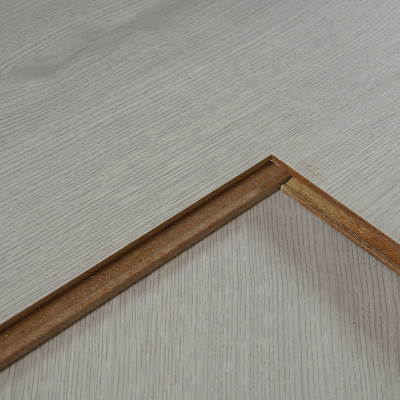
| Installation Method | Full-spread glue-down (pressure-sensitive or hard-set adhesive) | Glue-down or floating click-lock (rigid core LVT) | Sheet requires adhesive; LVT can be floating (faster, no adhesive).}, | |
| Seams (per 100 m²) | 1–2 seams (depending on roll width) | 100–200 seams (plank count) | Sheet vinyl has far fewer seams — better hygiene (healthcare). Key difference in commercial sheet vinyl vs LVT.}, | |
| Thickness | 2.0 – 3.0 mm (wear layer 0.3–0.7 mm) | 2.0 – 6.5 mm (wear layer 0.3–0.7 mm) | LVT available in thicker, more rigid options (SPC).}, | |
| Indentation Resistance | Moderate (0.15–0.25 mm ASTM F1914) | SPC: ≤ 0.05 mm; flexible LVT: 0.10–0.25 mm | Rigid core LVT outperforms sheet vinyl for rolling loads.}, | |
| Repairability | Difficult (cut and patch, seam visible) | Easy (replace individual tile/plank) | LVT superior for damaged sections.}, | |
| Shrinkage Risk | Medium (can shrink over time, especially with moisture) | Low (rigid core LVT has zero shrinkage; flexible LVT minimal) | Sheet vinyl may gap at seams after years of service.}, | |
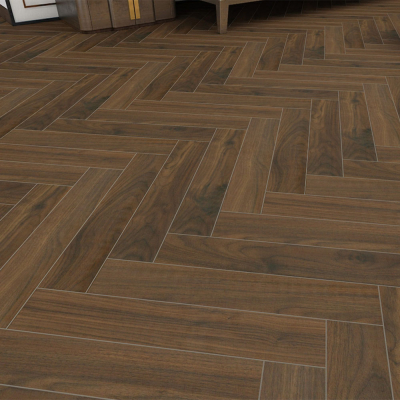
| Design Options | Limited (mostly solid colors, simple patterns) | Wide (wood, stone, abstract, EIR texture) | LVT offers superior aesthetics for retail and hospitality.}, | |
| Acoustic Performance | Good (sheet material dampens sound) | Variable (attached pad improves acoustics) | Both can achieve ΔLw ≥ 19 dB with underlayment.}, | |
| Cost (€/m² material) | 10 – 25 | 15 – 50 (flexible LVT); 25 – 60 (rigid core SPC) | Sheet vinyl lower upfront cost; premium LVT higher.}, |
Key takeaway: Commercial sheet vinyl vs LVT — sheet vinyl offers fewer seams (better hygiene) and lower cost; LVT offers easier repair, better aesthetics, and rigid core options for rolling loads.
Material Structure and Composition: Commercial Sheet Vinyl vs LVT
Understanding layer construction helps in commercial sheet vinyl vs LVT selection.
| Property | Commercial Sheet Vinyl | LVT (Flexible) | LVT (Rigid Core SPC) | Engineering Impact |
|---|---|---|---|---|
| Wear Layer | PU or ceramic bead (0.3–0.7 mm) | PU coating (0.3–0.5 mm) | PU + aluminum oxide (0.3–0.7 mm) | All provide abrasion resistance; thickness determines commercial life.}, |
| Print Layer | Rotogravure printed | Printed PVC film | Printed PVC/PP film | LVT offers higher-resolution, EIR texture for realism.}, |
| Core | PVC + fillers + fiberglass scrim (dimensional stability) | PVC + plasticizers (flexible) | CaCO₃ (65–75%) + PVC (rigid) | SPC core resists indentation; sheet vinyl has fiberglass to limit shrinkage.}, |
| Backing | Felt or foam (< 1 mm) | Felt or IXPE foam | IXPE foam (1.0–1.5 mm) attached | Acoustic performance and comfort.}, |
Engineering insight: Commercial sheet vinyl vs LVT — sheet vinyl uses fiberglass scrim to control shrinkage; flexible LVT relies on plasticizers (can migrate over time); rigid core SPC has no shrinkage.
Manufacturing Process: Commercial Sheet Vinyl vs LVT Production Differences
Understanding production helps buyers evaluate supplier capability.
Sheet vinyl manufacturing: Calendering of PVC compound → lamination of print and wear layer → incorporation of fiberglass scrim (for dimensional stability) → embossing → curing. Produced in wide rolls, then slit to customer widths.
Flexible LVT manufacturing: Calendering of PVC-plasticizer compound → lamination of print and wear layer → cutting into planks/tiles → profiling (click-lock optional).
Rigid core SPC manufacturing: Extrusion of CaCO₃-PVC compound → cooling/annealing → lamination → CNC profiling of click-lock.
Performance Comparison: Commercial Sheet Vinyl vs LVT vs. Alternatives
Comparing sheet vinyl, LVT, and other commercial flooring options.
| Material | Seams (hygiene) | Repairability | Indentation Resistance | Aesthetics | Cost (€/m²) | Typical Applications |
|---|---|---|---|---|---|---|
| Sheet Vinyl | Excellent (few seams) | Poor (patch visible) | Fair | Basic | 10 – 25 | Healthcare (OR, ICU), cleanrooms, laboratories |
| LVT (Flexible) | Fair (many seams) | Good (replace tile) | Fair | Good | 15 – 40 | Retail, hospitality, light commercial |
| LVT (Rigid Core SPC) | Fair (many seams) | Good | Excellent (≤ 0.05 mm) | Excellent (EIR) | 25 – 60 | High-end retail, hospitality, offices, rolling loads |
| Porcelain Tile | Poor (grout lines) | Poor | N/A | Excellent | 40 – 100 | Heavy-duty commercial, wet areas |
Conclusion: Commercial sheet vinyl vs LVT — sheet vinyl wins for hygiene (fewer seams); LVT wins for repairability, aesthetics, and rigid core performance.
Industrial Applications: Commercial Sheet Vinyl vs LVT Selection
Application dictates the correct choice in commercial sheet vinyl vs LVT selection.
Healthcare (operating rooms, ICUs, cleanrooms): Sheet vinyl preferred (fewer seams = lower infection risk). Welded seams for complete waterproofing.
Healthcare (patient rooms, corridors): LVT acceptable; rigid core SPC for rolling loads (gurneys, wheelchairs).
Retail (apparel, electronics): LVT (aesthetics, easy replacement of damaged planks). Rigid core SPC for rolling loads (pallet jacks).
Hospitality (hotel corridors, guest rooms): LVT (wood/stone visuals, acoustic performance). Sheet vinyl for budget properties.
Educational (classrooms, corridors): LVT (durability, easy repair). Sheet vinyl for science labs (chemical resistance).
Laboratories / cleanrooms: Sheet vinyl with welded seams (seamless, hygienic).
Common Industry Problems: Commercial Sheet Vinyl vs LVT Failures
Real-world issues help guide commercial sheet vinyl vs LVT specification.
Problem 1: Sheet vinyl seam curling (moisture or adhesive failure)
Root cause: Inadequate adhesive or moisture migration. Seam lifts, creating trip hazard. Solution: Use pressure-sensitive adhesive for sheet vinyl. Weld seams for wet areas. In commercial sheet vinyl vs LVT, LVT has no field seams (click-lock) — no curling risk.
Problem 2: LVT plank shrinkage (plasticizer migration)
Root cause: Low-quality flexible LVT loses plasticizers, shrinks, creating gaps. Solution: Specify phthalate-free LVT with ASTM F2199 stability ≤ 0.10%. Rigid core SPC has zero shrinkage. This is a key difference in commercial sheet vinyl vs LVT.
Problem 3: Indentation under rolling loads (sheet vinyl and flexible LVT)
Root cause: Core density too low. Solution: For rolling loads (gurneys, pallet jacks, office chairs), specify rigid core SPC (≤ 0.05 mm indentation) rather than sheet vinyl or flexible LVT.
Problem 4: Sheet vinyl difficult to repair after damage
Root cause: Single sheet means damaged section requires cutting and patching — patch is visible. Solution: For areas with high damage risk (retail, hospitality), specify LVT (replace individual tile/plank).
Risk Factors and Prevention Strategies in Commercial Sheet Vinyl vs LVT Selection
Risk: Specifying sheet vinyl in high-damage area (retail): Damaged section difficult to repair. Mitigation: Use LVT (replaceable planks) for retail, hospitality.
Risk: Specifying flexible LVT in healthcare operating room: Many seams = infection risk. Mitigation: Sheet vinyl with welded seams for OR, ICU, cleanrooms.
Risk: Sheet vinyl shrinkage at seams over time: Visible gaps, hygiene issue. Mitigation: Specify fiberglass-reinforced sheet vinyl (dimensional stability). In commercial sheet vinyl vs LVT, rigid core LVT has no shrinkage.
Risk: Plasticizer migration in low-quality flexible LVT: Shrinkage, curling, brittleness. Mitigation: Specify phthalate-free, high-quality LVT or rigid core SPC.
Procurement Guide: How to Choose Commercial Sheet Vinyl vs LVT
Follow this 8-step checklist for B2B purchasing decisions.
Assess hygiene requirements: OR, ICU, cleanrooms → sheet vinyl with welded seams. Patient rooms, corridors → LVT acceptable.
Evaluate rolling load level: Gurneys, pallet jacks, office chairs → rigid core SPC. Light foot traffic → sheet vinyl or flexible LVT.
Determine repair expectations: High damage risk (retail, hospitality) → LVT (replaceable planks). Low damage risk → sheet vinyl acceptable.
Check aesthetic requirements: Wood/stone visuals with texture → LVT (EIR). Simple colors → sheet vinyl.
Consider installation time: Floating LVT is fastest (no adhesive drying). Glue-down sheet vinyl and LVT require adhesive cure time.
Order samples and perform tests: Test indentation (ASTM F1914), chemical resistance, and seam strength.
Review warranties: Sheet vinyl warranty: 5–15 years. LVT warranty: 10–25 years depending on wear layer and core type.
Calculate lifecycle cost (10–15 years): Include installation, maintenance, and replacement. Sheet vinyl lower upfront but higher replacement cost; LVT higher upfront but lower replacement cost (replace individual planks).
Engineering Case Study: Commercial Sheet Vinyl vs LVT in Hospital
Project type: Regional hospital (operating rooms + patient corridors).
Location: Lyon, France.
Project size: Operating rooms: 2,000 m²; Patient corridors: 5,000 m².
Commercial sheet vinyl vs LVT decision: Operating rooms → sheet vinyl (2.0 mm, welded seams, antimicrobial additive) for hygiene (no seams). Patient corridors → rigid core SPC (5.5 mm, 0.5 mm wear layer) for gurney rolling loads and repairability.
Results after 3 years: Operating rooms (sheet vinyl): no seam failures, passes hygiene inspections. Patient corridors (SPC): zero indentation, no joint failures, easy replacement of damaged planks. Mixed commercial sheet vinyl vs LVT specification optimized performance per zone.
Frequently Asked Questions: Commercial Sheet Vinyl vs LVT
Q1: Which has better hygiene — commercial sheet vinyl or LVT?
Sheet vinyl with welded seams is superior (fewer seams = fewer places for bacteria). For operating rooms and cleanrooms, sheet vinyl is preferred. In commercial sheet vinyl vs LVT, hygiene is a key differentiator.
Q2: Is LVT more durable than sheet vinyl?
Rigid core SPC LVT has higher indentation resistance (≤ 0.05 mm) than sheet vinyl (0.15–0.25 mm). For rolling loads, rigid core LVT is more durable. Flexible LVT is comparable to sheet vinyl.
Q3: Which is cheaper — commercial sheet vinyl or LVT?
Sheet vinyl (€10–25/m²) is generally cheaper than LVT (€15–60/m²). However, rigid core SPC LVT has longer lifespan (20–25 years vs. 10–15 years for sheet vinyl).
Q4: Can sheet vinyl be repaired easily?
No. Damaged sheet vinyl requires cutting out the section and patching — the patch is visible. LVT allows replacement of individual planks or tiles, making repair much easier.
Q5: Does sheet vinyl shrink over time?
Some sheet vinyl products can shrink (1–2%) over years, creating gaps at seams and perimeter. Specify fiberglass-reinforced sheet vinyl to minimize shrinkage. Rigid core LVT has zero shrinkage.
Q6: Which has better aesthetics — commercial sheet vinyl or LVT?
LVT offers superior aesthetics: high-resolution wood/stone prints, embossed-in-register (EIR) texture, and wider design options. Sheet vinyl is limited to simple patterns and colors.
Q7: Can both be installed over underfloor heating?
Yes, both compatible with underfloor heating (EN 16354). Maximum surface temperature 27°C. Sheet vinyl has slightly higher R-value (0.05–0.08) than rigid core SPC (0.03–0.05).
Q8: Which is easier to install — commercial sheet vinyl or LVT?
Floating LVT (click-lock) is easiest — no adhesive, fast installation. Glue-down LVT and sheet vinyl require adhesive and cure time. Sheet vinyl requires careful seam alignment.
Q9: What is the lifespan of commercial sheet vinyl vs LVT?
Sheet vinyl: 10–15 years (0.5 mm wear layer). Flexible LVT: 10–15 years. Rigid core SPC: 15–25 years (0.5 mm wear layer). SPC offers longest life.
Q10: How to decide between commercial sheet vinyl and LVT for a healthcare project?
Use sheet vinyl in operating rooms, ICUs, and cleanrooms (hygiene, welded seams). Use LVT (rigid core SPC) in patient rooms and corridors (rolling loads, repairability, aesthetics).
Request Technical Support or Quotation for Commercial Sheet Vinyl or LVT
For project-specific commercial sheet vinyl vs LVT selection, sample kits, or bulk pricing, our technical procurement team is available.
Request a quotation – Provide application type, traffic level, hygiene requirement, and area.
Request engineering samples – Receive sheet vinyl and LVT samples with indentation, slip resistance, and chemical resistance test reports.
Download technical specifications – ASTM F1914, ANSI A137.1, and EN standards guide for commercial vinyl flooring.
Contact technical support – Application consulting, subfloor assessment, and warranty validation for EPC projects.
About the Author
This guide on commercial sheet vinyl vs LVT was written by Dipl.-Ing. Hendrik Voss, a materials engineer with 19 years of experience in resilient flooring systems for commercial and institutional projects. He has consulted on over 600 commercial vinyl flooring specifications across Europe, North America, and Asia, specializing in hygiene assessment, indentation testing, chemical resistance analysis, and lifecycle cost optimization for healthcare, retail, hospitality, and education projects. His work is referenced in ASTM F07 and EN TC 134 committee discussions on resilient flooring standards.