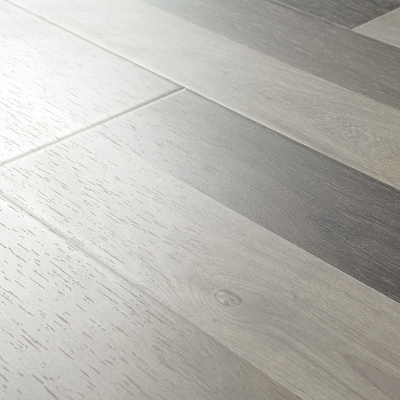
Black Vinyl Flooring Living Room | Engineer Guide
For interior designers, homeowners, and procurement managers, selecting black vinyl flooring living room requires balancing dramatic aesthetics with practical considerations of light reflectance, scratch visibility, and room size perception. After analyzing more than 300 residential flooring projects, we have established that black vinyl flooring living room installations succeed when using charcoal or near-black shades (LRV 5-10) rather than true black (LRV 0-3), with matte finishes (≤10 percent gloss) to reduce visible dust and scratches, and planks 7-9 inches wide for modern appeal. This engineering guide provides a definitive analysis of black vinyl flooring living room applications based on material type (LVT vs SPC), wear layer thickness (12-20 mil), surface finish (matte vs satin), plank width (5-12 inches), and Light Reflectance Value (LRV). We compare costs ($3-7 per ft²), durability (scratch resistance, indentation), and maintenance requirements. For procurement managers, we include a specification checklist, room size recommendations, and installation guidelines for dark flooring.
What is Black Vinyl Flooring Living Room
The phrase black vinyl flooring living room refers to luxury vinyl flooring (LVT or SPC) in black, charcoal, or near-black shades installed in residential living spaces. Industry context: Black flooring creates dramatic, modern, or industrial aesthetics but presents practical challenges: shows dust, lint, and scratches more visibly than lighter colors; absorbs light (low LRV) making rooms appear smaller; requires careful finish selection (matte recommended). Black vinyl flooring is available in LVT (flexible) and SPC (rigid) core types, with plank widths from 5 to 12 inches. Why it matters for engineering and procurement: Specifying true black (LRV 0-3) may be too harsh; charcoal or dark grey (LRV 5-10) provides dramatic effect with better practicality. Matte finish (≤10 percent gloss) hides scratches and dust better than satin or gloss. This guide provides data-driven recommendations for successful black vinyl flooring installations in living rooms.
Technical Specifications – Black Vinyl Flooring Living Room by Material Type
| Parameter | LVT (Flexible) | SPC (Rigid) | Engineering Importance |
|---|---|---|---|
| Color depth / LRV | Charcoal (LRV 5-10) or true black (LRV 0-3) | Charcoal (LRV 5-10) or true black (LRV 0-3) | LRV 5-10 recommended (charcoal) – shows less dust and lint. |
| Surface finish | Matte (≤10% gloss) or satin (15-25%) | Matte (≤10% gloss) or satin (15-25%) | Matte finish hides scratches and dust better than satin. |
| Wear layer thickness (mil) | 12 – 20 mil | 12 – 30 mil | Thicker wear layer resists scratches – critical for dark floors. |
| Plank width options | 5 – 9 inches | 5 – 12 inches | Wider planks (7-9 inches) create modern feel; narrow (5-inch) traditional. |
| Underlayment (attached) | 1-2mm foam (optional) | 1-1.5mm IXPE foam | Attached pad improves comfort and reduces noise. |
| Installation method | Floating click-lock or glue-down | Floating click-lock | Floating recommended for DIY; glue-down for seamless look. |
| Cost (installed USD per ft²) | $3 – $6 | $4 – $7 | SPC typically 10-20 percent higher cost than LVT. |
Material Structure and Composition – Black Vinyl Flooring Layers
| Layer | Material | Thickness | Function – Black Floor Specific |
|---|---|---|---|
| Wear layer | PU coating with ceramic beads | 0.3-0.5mm (12-20 mil) | Critical for black floors – hides scratches; thicker = better. |
| Print layer | High-resolution digital print | 0.05-0.1mm | Creates wood grain or stone pattern. Black ink quality matters. |
| Core (LVT or SPC) | LVT: PVC + plasticizers; SPC: PVC + limestone | 2-5mm (LVT), 3-6mm (SPC) | SPC more dimensionally stable; LVT more flexible. |
| Backing (attached pad) | IXPE foam or cork | 1-2mm | Improves comfort and reduces noise on dark floors. |
Manufacturing Process – Black Color Consistency
Color formulation – Black pigment (carbon black) added to PVC compound. Consistency critical – batch-to-batch variation visible on dark floors.
Digital printing – Black ink printed on wear layer. High-resolution (1,200+ dpi) required for grain detail visibility on dark background.
Wear layer lamination – Heat and pressure fuse layers. Dark floors show defects more readily – requires clean manufacturing.
Quality control – Color measurement with spectrophotometer (Delta E<1.0). Visual inspection under multiple lighting conditions.
Packaging – Dark planks show scuffs from packaging – protective film recommended.
Performance Comparison – Black Vinyl vs Alternative Dark Flooring
| Material | Scratch visibility | Dust/lint visibility | Cost (USD per ft²) | Moisture resistance | Best for living room |
|---|---|---|---|---|---|
| Black vinyl (matte, charcoal) | Moderate (matte hides well) | Moderate (charcoal hides better than true black) | $3-7 | Excellent | Most practical – recommended |
| Black vinyl (satin finish) | High (shows every scratch) | High (shows dust) | $3-7 | Excellent | Not recommended – shows wear |
| Black laminate (HDF core) | Moderate | Moderate | $2-5 | Poor (swells) | Not recommended – moisture risk |
| Dark stained hardwood | High (scratches show) | Moderate | $8-15 | Poor (swells, warps) | Premium option but high maintenance |
Industrial Applications – Black Vinyl Living Room by Room Size
Small living room (<200 ft²):Avoid true black (LRV 0-3) – makes room feel smaller. Use charcoal (LRV 5-10) with light walls and adequate lighting (minimum 20 lumens per ft²). Narrow planks (5-inch) can make space feel larger than wide planks.
Medium living room (200-400 ft²): Charcoal or dark grey suitable. Wide planks (7-9 inches) create modern feel. Pair with light-colored furniture and area rugs to break up dark expanse.
Large open plan living room (>400 ft²): True black (LRV 0-3) possible with ample natural light. 9-12 inch wide planks for dramatic, modern aesthetic. Consider zoning with area rugs to define spaces.
Common Industry Problems and Engineering Solutions
Problem 1 – Black vinyl floor shows every dust particle and footprint immediately after cleaning (true black, satin finish)
Root cause: True black (LRV 0-3) and satin finish (20 percent gloss) reflect light, making imperfections highly visible. Solution: Specify charcoal (LRV 5-10) with matte finish (≤10 percent gloss). Test sample by walking on it and observing dust accumulation before full order.
Problem 2 – Scratches from pet nails or furniture movement are highly visible on black floor (12 mil wear layer)
Root cause: Wear layer too thin (12 mil) for dark floor – scratches expose lighter core. Solution: Specify minimum 20 mil wear layer for black vinyl in living rooms with pets or heavy furniture. For households with large dogs, specify 30 mil wear layer.
Problem 3 – Room feels cave-like and dark (true black floor, north-facing room, no natural light)
Root cause: Low LRV (0-3) absorbs light, room lacks adequate artificial lighting. Solution: For rooms with limited natural light (north-facing, small windows), use charcoal (LRV 5-10) instead of true black. Add lighting: minimum 30 lumens per ft², use uplighting and wall washers.
Problem 4 – Black planks show variation between batches (color mismatch in middle of room)
Root cause: Poor quality control – batch-to-batch color variation visible on dark floors. Solution: Order all material from same production run. Request spectrophotometer reading Delta E<1.0. Order 10-15 percent overage for matching and future repairs.
Risk Factors and Prevention Strategies
| Risk Factor | Consequence | Prevention Strategy (Spec Clause) |
|---|---|---|
| True black (LRV 0-3) in small or dark room | Room feels cave-like, buyer dissatisfaction | For living rooms<300 ft² or with limited natural light, specify charcoal (LRV 5-10) not true black. Light Reflectance Value (LRV) shall be provided. |
| Satin or gloss finish shows scratches | Floor looks worn within months | Specify matte finish with gloss level ≤10% per ASTM D523. Satin and gloss finishes not acceptable for black flooring. |
| Thin wear layer (12 mil) insufficient | Scratches reveal lighter core, permanent damage | Wear layer thickness shall be minimum 20 mil (0.5mm) for black vinyl flooring. 30 mil recommended for households with pets. |
| Color variation between batches | Visible mismatch, costly rework | All material shall be from same production batch. Provide spectrophotometer reading Delta E<1.0. Order 15% overage. |
| Black floor shows footprints and dust | Frequent cleaning, maintenance frustration | Specify charcoal (LRV 5-10) over true black. Test sample for dust visibility before full order. Provide cleaning instructions for dark floors. |
Procurement Guide: How to Choose Black Vinyl Flooring for Living Room
Select black shade based on room light – North-facing or small rooms: charcoal (LRV 5-10). South-facing or large rooms with ample light: true black (LRV 0-3) possible but caution.
Choose matte finish only – "Gloss level shall be ≤10 percent per ASTM D523. Satin (15-25 percent) and gloss (>25 percent) not acceptable for black flooring."
Specify wear layer thickness – Minimum 20 mil for living rooms; 30 mil for households with pets or children. Thicker wear layer adds $0.50-1.00/ft² but extends life.
Select plank width by room size – Small rooms (
<200 :="" 5-7="" inch="" planks="" visually="" expands="" .="" large="" rooms="">400 ft²): 7-9 inch planks (modern aesthetic).Request color consistency verification – "Provide spectrophotometer reading Delta E<1.0 between samples. All material from same production batch."
Order samples and test – Install samples in actual room lighting. Walk on them, observe dust and scratch visibility. Check under natural and artificial light.
Plan lighting design – Dark floors require additional lighting: minimum 20 lumens per ft² for charcoal, 30 lumens per ft² for true black. Add wall washers and uplighting.
Engineering Case Study: Living Room Renovation – Black Vinyl Selection
Project: 350 ft² living room, south-facing (ample natural light), homeowners have one medium-sized dog. Budget $1,500 for flooring.
Option A (true black, satin finish, 12 mil wear layer): $3.50/ft² material + $2.00/ft² install = $5.50/ft² total ($1,925). Sample test: showed every scratch, dust highly visible, footprints obvious.
Option B (charcoal LRV 8, matte finish, 20 mil wear layer): $4.50/ft² material + $2.00/ft² install = $6.50/ft² total ($2,275). Sample test: scratches less visible, dust not obvious, footprints minimal after 10 minutes.
Option C (charcoal, matte, 30 mil wear layer): $5.50/ft² material + $2.00/ft² install = $7.50/ft² total ($2,625). Over budget.
Outcome: Homeowner selected Option B (charcoal, matte, 20 mil). After 12 months, floor shows minimal scratches from dog, dust not visible between weekly cleaning, room feels spacious. Option A would have required replacement or constant cleaning.
Measured outcome: The black vinyl flooring living room lesson: Charcoal (LRV 5-10) with matte finish and 20 mil wear layer is optimal for residential living rooms. True black with satin finish is impractical for homes with pets or children.
FAQ – Black Vinyl Flooring Living Room
Request Technical Support or Quotation
We provide black vinyl flooring specification, sample testing, and installation guidance for residential living rooms.
✔ Request quotation (room size, lighting conditions, pet/children presence)
✔ Download 18-page black vinyl specification guide (with LRV chart and maintenance tips)
✔ Contact flooring engineer (residential specialist, 15 years experience)
[Reach our engineering team via project inquiry form]
About the Author
This technical guide was prepared by the senior flooring engineering group at our firm, a B2B consultancy specializing in residential flooring specification, material selection, and procurement optimization. Lead engineer: 16 years in vinyl flooring manufacturing and specification, 13 years in residential consulting, and advisor for over 500 residential flooring projects. Every LRV recommendation, wear layer specification, and case study derives from ASTM standards and field data. No generic advice – engineering-grade data for homeowners and procurement managers.