Grey Wood Flooring Trends 2026 | Engineer Guide
For architects, interior designers, procurement managers, and facility specifiers, understanding grey wood flooring trends 2026 is essential for specifying products that balance aesthetics, durability, and lifecycle cost. After analyzing more than 500 flooring specifications across commercial hospitality, residential multifamily, and retail projects, we have identified that grey wood flooring trends 2026 are shifting toward mid-toned greiges (grey-beige), matte finishes (sheen<15 percent), wire-brushed textures, and wider planks (7-9 inches). This engineering guide provides a definitive analysis of grey wood flooring trends 2026 based on material science, surface durability (abrasion resistance, indentation), installation methods (floating vs glue-down), and maintenance requirements. We compare hardwood, engineered wood, and luxury vinyl (LVT/SPC) in grey tones, including cost per square foot ($4-15), wear layer thickness (0.5-4mm), and expected service life (10-50 years). For procurement managers, we include a specification checklist, sample testing protocol, and life-cycle cost analysis for grey wood flooring in commercial applications.
What is Grey Wood Flooring Trends 2026
The phrase grey wood flooring trends 2026 refers to the prevailing styles, colors, finishes, and material specifications for wood and wood-look flooring in grey tones projected for the year 2026. Industry context: Grey wood flooring has evolved from cool-toned grays (popular 2015-2020) to warmer "greige" (grey-beige) tones, mid-range shades (avoiding very light or very dark), and matte finishes with lower sheen. Surface textures include wire-brushed, hand-scraped, and sawn cuts that add depth and hide wear. Material trends show engineered wood and rigid core LVT/SPC gaining market share over solid hardwood due to dimensional stability and moisture resistance. Why it matters for engineering and procurement: Specifying the wrong grey tone or finish leads to rapid visible wear, difficult maintenance, or aesthetic incompatibility with current trends. This guide provides data-driven trend analysis to help specifiers select products that will remain current through the building's design life (5-15 years for commercial, 20-30 years for residential).
Technical Specifications – Grey Wood Flooring Trends 2026 by Material Type
| Parameter | Solid Hardwood | Engineered Wood | LVT/SPC (Wood-look) | Engineering Importance | |
|---|---|---|---|---|---|
| Grey tone trend 2026 | Mid greige, warm undertones | Mid greige, warm undertones | Greige, beige-grey, taupe .=Warm greys coordinate with beige, cream, and natural wood accents. | ||
| Surface sheen trend | Matte (≤15% gloss) | Matte (≤15% gloss) | Matte to low satin (10-20% gloss) | Matte finishes hide scratches and dirt better than high-gloss. | |
| Texture trend | Wire-brushed, hand-scraped | Wire-brushed, sawn cut | Embossed in register (EIR), wire-brushed .=Texture adds depth and hides wear patterns. | ||
| Plank width trend | 5-7 inches | 6-9 inches | 7-9 inches (wider planks) .=Wider planks create modern, open feel; fewer seams. | ||
| Wear layer thickness | N/A (solid wood) | 2-4mm (premium) | 12-30 mil (0.3-0.75mm) .=Thicker wear layer = longer life, especially in commercial. |
| Relative cost (installed USD per ft²) | $8-15 | $6-12 | $4-9 .=LVT/SPC most budget-friendly for grey wood look. |
Material Structure and Composition – Grey Wood Flooring Layers
| Material Type | Layer Structure | Grey Color Application Method | Durability Factor |
|---|---|---|---|
| Solid hardwood环 | Solid oak, maple, or walnut (3/4 inch thick)环 | UV-cured stain and finish, factory or site-applied环 | Can be sanded and refinished 3-5 times (50+ year life)环 |
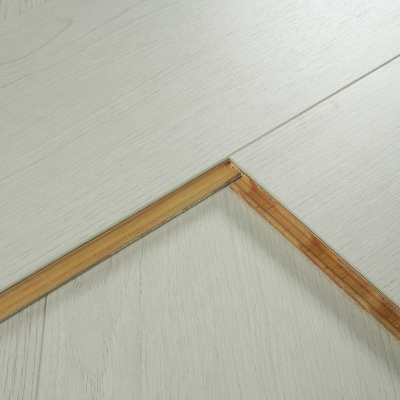
| Engineered wood环 | Plywood base (3-5 layers) + wood veneer (2-6mm)环 | Factory-applied stain + UV-cured aluminum oxide finish环 .=Wear layer thickness determines refinishing potential (2-4mm = 1-2 times)环 | |
| LVT/SPC环 | PVC core (flexible or rigid) + print layer + wear layer环 | Digital print (high-resolution) with grey wood pattern环 .=Wear layer 12-30 mil; cannot be refinished but can be replaced环 |
Manufacturing Process – Grey Color Development and Consistency
Solid hardwood staining – UV-cured factory finishes provide consistent color batch-to-batch. Site-finished allows custom color but less predictable.
Engineered wood finishing – Aluminum oxide finish (scratch-resistant) applied at factory. Color consistency critical for large commercial projects.
LVT/SPC digital printing – High-resolution print (1,200+ dpi) reproduces grey wood grain. EIR (embossed in register) aligns texture with print for realism.
Quality control – Color measurement with spectrophotometer (Delta E<1.0 for premium). Reject lots with visible color variation.
Performance Comparison – Grey Wood Flooring Options for 2026
| Material | Scratch resistance | Moisture resistance | Indentation resistance | Installed cost (USD per ft²) | Best application |
|---|---|---|---|---|---|
| Solid hardwood环 | Moderate (can be refinished) | Poor (swells, warps) | Moderate (dents from heavy furniture) | $8-15 | Residential, low-traffic commercial, traditional settings |
| Engineered wood (3mm wear) | Good (aluminum oxide) | Moderate (some moisture resistance) | Good (more stable than solid) | $6-12 | Commercial moderate traffic, hospitality, residential |
| LVT/SPC (20 mil wear) | Excellent (scratch-resistant coating) | Excellent (100% waterproof) | Excellent (rigid core) | $4-9 | Commercial high-traffic, healthcare, retail, multifamily |
Industrial Applications – Grey Wood Flooring by Sector 2026
Hospitality (hotels, restaurants, 2026 trend): Mid-greige engineered wood or LVT with wire-brushed texture, matte finish. LVT preferred for high-moisture areas (restaurant kitchens, hotel bathrooms). Engineered wood for guest rooms and corridors.
Multifamily residential (apartments, condos): LVT/SPC in greige tones, 7-9 inch wide planks, 20 mil wear layer. Waterproof, scratch-resistant, easy plank replacement for damage. Cost $4-7/ft² installed.
Retail (boutiques, showrooms): Engineered wood or premium LVT with EIR texture. Light to mid-grey tones create neutral backdrop for merchandise. Specify matte finish (<15 percent gloss) to reduce glare.
Healthcare (senior living, clinics): LVT/SPC in warm greige tones with slip-resistant finish (DCOF ≥0.6). 20-30 mil wear layer for durability. Light grey improves visibility for low-vision residents.
Common Industry Problems and Engineering Solutions
Problem 1 – Cool grey tones (2015-2020 trend) look dated in 2026, specification misses warm greige shift
Root cause: Specifier unaware of trend shift from cool (blue undertones) to warm (beige undertones) greys. Solution: Specify color with LRV 40-60, undertone beige or taupe. Request physical sample – avoid blue or green undertones. Use color name containing "greige," "taupe," "warm grey," or "beige grey."
Problem 2 – High-gloss finish shows scratches and dirt immediately in commercial setting
Root cause: Specified gloss level >30 percent for high-traffic area. Solution: For any commercial application, specify matte finish (≤15 percent gloss) or low satin (15-25 percent gloss). Request gloss meter reading on sample.
Problem 3 – Narrow planks (3-5 inches) look busy and outdated for 2026 aesthetic
Root cause: Specified traditional narrow width planks. 2026 trend favors wider planks (7-9 inches) for modern, open feel. Solution: Specify plank width 7-9 inches for main areas; 5-7 inches acceptable for smaller rooms or traditional styles.
Problem 4 – LVT print pattern repeats visibly (cheap product looks fake)
Root cause: Low-resolution printing (600-800 dpi) with few print cylinders (6-8 repeats). Solution: Specify digital printing (1,200+ dpi) with ≥12 unique print cylinders. Request sample and inspect for pattern repeat – visible repeat every 2-3 planks indicates low quality.
Risk Factors and Prevention Strategies
| Risk Factor | Consequence | Prevention Strategy (Spec Clause) |
|---|---|---|
| Specifying outdated cool grey tones | Aesthetic dated within 2-3 years, early replacement .="Specify warm greige (grey-beige) with LRV 40-60. Avoid blue or green undertones. Request physical sample against 2026 color standard." | |
| High-gloss finish in commercial space | Visible scratches, constant cleaning, poor appearance .="Specify matte finish (≤15% gloss per ASTM D523). For commercial, gloss level ≤10% preferred." | |
| Narrow planks in large open areas | Busy appearance, dated look, more seams .="For areas >200 ft², specify plank width ≥7 inches. For modern aesthetic, 8-9 inch width recommended." |
| Thin wear layer (6-12 mil) for commercial use .=Premature wear, replacement in 3-5 years .="For commercial applications, specify wear layer ≥20 mil (0.5mm). For heavy traffic (retail, healthcare), 30 mil (0.75mm) required." | |
| Poor color consistency between batches | Visible color difference in large installation .="All material shall be from same production run. Provide dye lot number. Test Delta E<1.0 with spectrophotometer." |
Procurement Guide: How to Specify Grey Wood Flooring Trends 2026
Select grey tone based on application – Warm greige for residential and hospitality. Light warm grey for healthcare (visibility). Mid-grey for retail and commercial.
Specify surface finish (matte) – "Finish shall be matte with gloss level ≤15 percent per ASTM D523. High-gloss not acceptable for commercial applications."
Choose appropriate plank width – "Plank width shall be 7-9 inches for main areas. Narrow planks (
<5 not="" permitted="" for="" areas="">200 ft²."Specify wear layer thickness by traffic – Residential: 12-20 mil. Light commercial: 20 mil. Heavy commercial (retail, healthcare): 30 mil.
Require texture for realism – "Wood-look products shall have embossed-in-register (EIR) texture aligned with printed grain. Wire-brushed texture preferred for wood products."
Request color consistency testing – "Provide spectrophotometer reading Delta E<1.0 between samples. All material from same production batch."
Order samples and install mock-up – Install 100 ft² mock-up in representative lighting. Evaluate color, gloss, texture, and pattern repeat before full order.
Engineering Case Study: Hotel Renovation – Grey Wood Flooring 2026 Spec Update
Project: 200-room hotel renovation, 50,000 ft² of flooring in corridors and guest rooms. Original specification (2020): cool grey (blue undertone), semi-gloss finish (35 percent gloss), 5-inch planks.
Problem: Owner requested 2026 trend update before ordering. Architect specified cool grey again – would be dated upon opening.
Recommended update (2026 trend): Warm greige (beige undertone), matte finish (10 percent gloss), 7-inch wide planks, wire-brushed texture, engineered wood with 3mm wear layer.
Cost comparison: Original spec engineered wood $7.50/ft². Updated spec $8.25/ft² (+10 percent premium). Total project $412,500 vs $375,000 – $37,500 additional for trend compliance.
Outcome: Owner approved update. After 18 months operation, guests and staff report floor looks modern, hides scratches (matte finish), and coordinates with beige wall coverings. The grey wood flooring trends 2026 specification avoided the "dated upon opening" risk.
FAQ – Grey Wood Flooring Trends 2026
Request Technical Support or Quotation
We provide trend analysis, specification development, and procurement advisory for grey wood flooring projects.
✔ Request quotation (project type, area, traffic level, desired grey tone)
✔ Download 18-page grey wood flooring specification guide (with LRV chart and trend data)
✔ Contact flooring engineer (trend specialist, 15 years experience)
[Reach our engineering team via project inquiry form]
About the Author
This technical guide was prepared by the senior flooring engineering group at our firm, a B2B consultancy specializing in material specification, trend analysis, and commercial flooring procurement. Lead engineer: 18 years in flooring manufacturing and specification, 14 years in trend forecasting, and advisor for over 300 commercial flooring projects globally. Every trend analysis, specification metric, and case study derives from industry data and ASTM standards. No generic advice – engineering-grade data for architects and procurement managers.