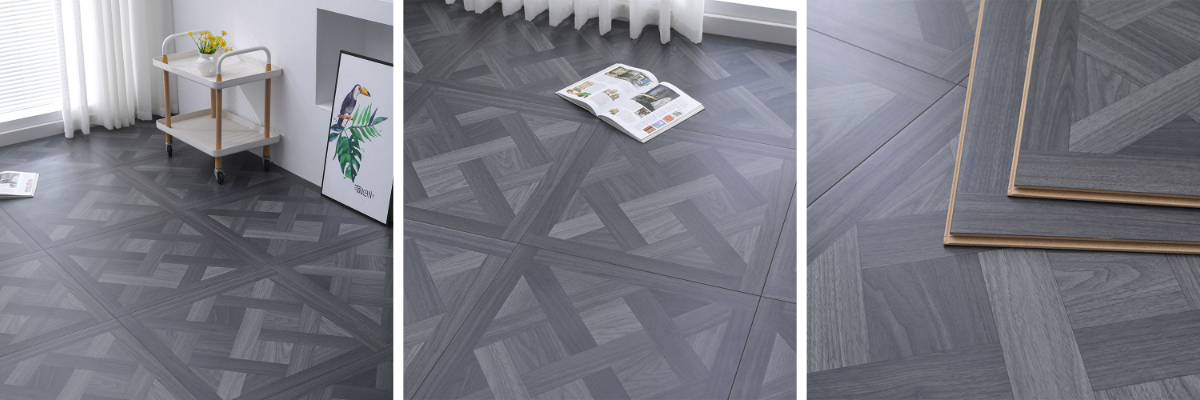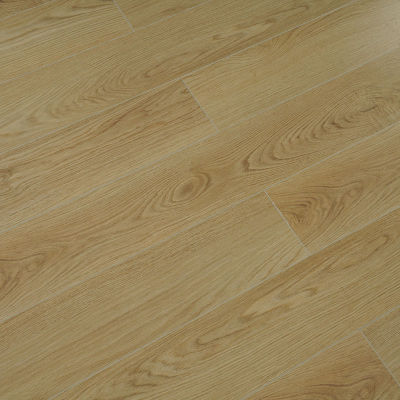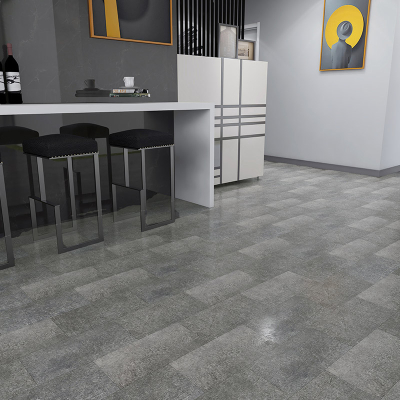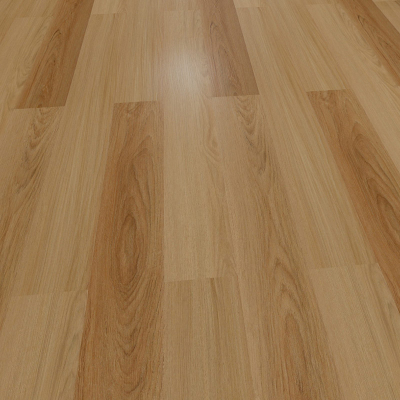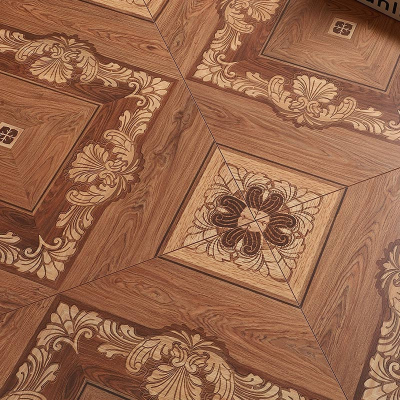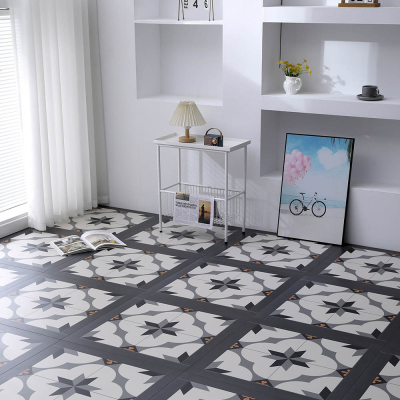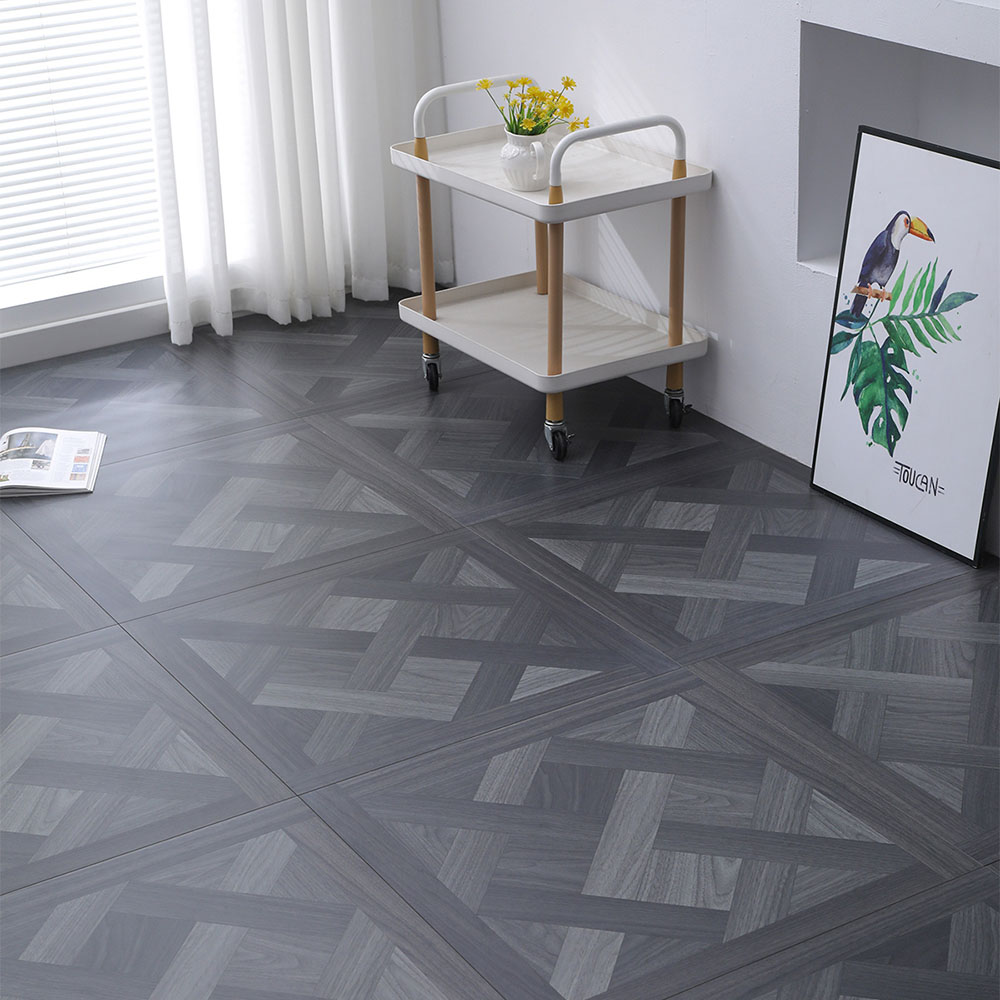
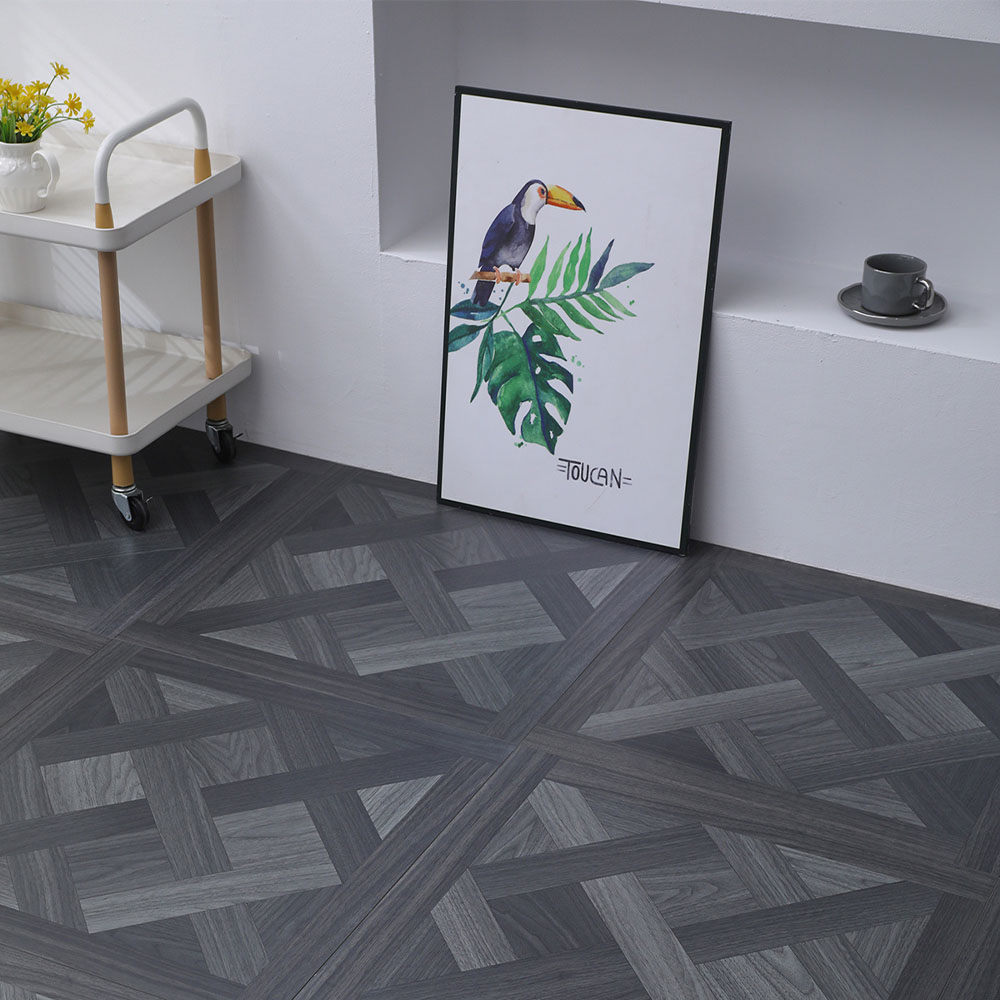
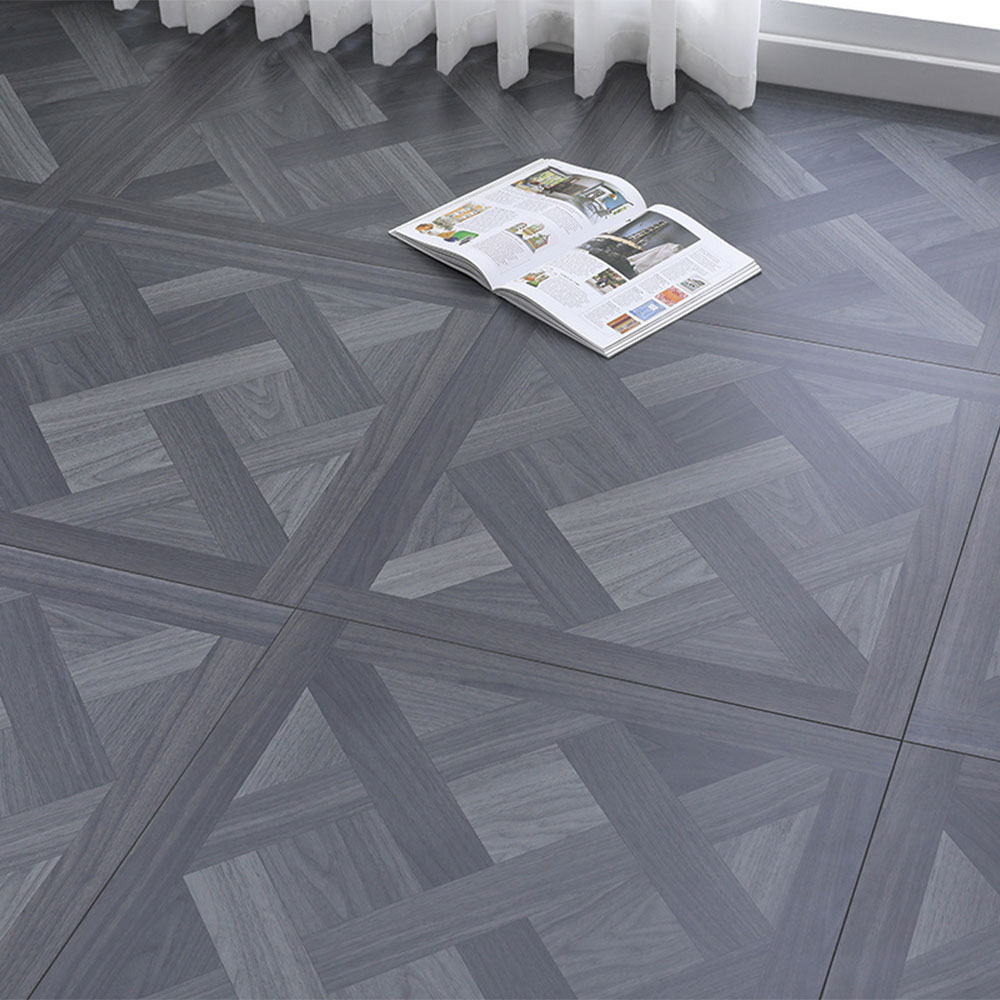
HDF Parquet Grey Oak Laminate Flooring Sale
Manufacturing Process
The production of HDF parquet grey oak laminate flooring follows standardized industrial flooring manufacturing procedures.
Fiber Preparation: Wood fibers refined, dried, and mixed with resin binders.
HDF Board Pressing: Continuous hot press forms high-density fiberboard panels.
Surface Lamination: Decorative paper and overlay pressed onto HDF under high pressure.
Cooling and Conditioning: Boards stabilized to control internal stress.
Profiling: CNC milling machines cut precise click-lock edges.
Surface Finishing: Embossing, texturing, and UV curing.
Quality Inspection: Dimensional tolerance, abrasion, and moisture resistance testing.
Product Definition
HDF parquet grey oak laminate flooring is an engineered floor covering manufactured with a high-density fiberboard core and a decorative grey oak wood-grain layer. It is designed to deliver dimensional stability, wear resistance, and consistent visual appearance for commercial, residential, and large-scale construction projects.
Technical Parameters and Specifications
The following specifications represent mainstream, project-grade HDF parquet grey oak laminate flooring widely used in international B2B markets.
Total Thickness: 8 mm / 10 mm / 12 mm
Wear Layer Rating: AC3 / AC4 / AC5 (EN 13329)
Core Density: ≥850 kg/m³ HDF
Panel Dimensions: 1200–1380 mm × 190–240 mm
Locking System: Click-lock (angle or drop-lock)
Surface Finish: Grey oak embossed or matte texture
Formaldehyde Emission: E1 or E0 standard
Moisture Swelling (24h): ≤18%
Slip Resistance: R9–R10
Service Life: 15–25 years (application dependent)
Structure and Material Composition
HDF parquet grey oak laminate flooring adopts a four-layer composite structure engineered for durability and ease of installation.
Overlay Layer: Transparent aluminum oxide wear-resistant coating
Decorative Layer: Printed grey oak parquet wood-grain paper
Core Layer: High-density fiberboard (HDF) with uniform fiber distribution
Balancing Layer: Moisture-resistant backing paper for dimensional stability
Manufacturing Process
The production of HDF parquet grey oak laminate flooring follows standardized industrial flooring manufacturing procedures.
Fiber Preparation: Wood fibers refined, dried, and mixed with resin binders.
HDF Board Pressing: Continuous hot press forms high-density fiberboard panels.
Surface Lamination: Decorative paper and overlay pressed onto HDF under high pressure.
Cooling and Conditioning: Boards stabilized to control internal stress.
Profiling: CNC milling machines cut precise click-lock edges.
Surface Finishing: Embossing, texturing, and UV curing.
Quality Inspection: Dimensional tolerance, abrasion, and moisture resistance testing.
Industry Comparison
| Parameter | HDF Laminate Flooring | Engineered Wood Flooring | SPC Flooring |
|---|---|---|---|
| Core Material | High-Density Fiberboard | Plywood + Veneer | Stone Plastic Composite |
| Water Resistance | Moderate | Low–Moderate | High |
| Cost Level | Medium | High | Medium |
| Surface Consistency | High | Medium | High |
| Installation Speed | Fast | Medium | Fast |
Application Scenarios
HDF parquet grey oak laminate flooring is widely adopted in standardized and volume-driven flooring projects.
Distributors & Importers: Retail and wholesale flooring supply
EPC Contractors: Commercial fit-out and residential developments
Property Developers: Apartment and housing projects
Hospitality Projects: Hotels, serviced apartments, and resorts
Public Buildings: Offices, schools, and light-traffic corridors
Core Pain Points and Solutions
Uneven Subfloors: Click-lock systems allow floating installation with underlayment.
Wear and Abrasion: AC4–AC5 wear layers extend service life in commercial areas.
Color Consistency: Controlled decorative printing ensures batch uniformity.
Installation Efficiency: Precision profiling reduces labor time and error rates.
Risk Warnings and Mitigation Measures
Moisture Exposure: Avoid prolonged water contact; specify moisture barriers.
Subfloor Preparation: Ensure flatness ≤3 mm per 2 m span.
Improper Storage: Acclimate flooring 48 hours before installation.
Low-Grade Core Risk: Verify HDF density and bonding standards.
Procurement and Selection Guide
Define traffic class and abrasion resistance requirements.
Select appropriate thickness based on structural conditions.
Confirm formaldehyde emission compliance for target market.
Review locking system compatibility and installation method.
Request batch color consistency samples.
Evaluate packaging, palletization, and logistics requirements.
Confirm supplier quality control and testing documentation.
Engineering Case Study
In a mid-rise residential development project, approximately 18,000 m² of HDF parquet grey oak laminate flooring was installed across 240 apartment units. The selected AC4, 10 mm product achieved consistent visual appearance, reduced installation time by 22%, and met project budget constraints while complying with E1 emission standards.
FAQ
Q1: Is grey oak suitable for commercial interiors?
A: Yes, it offers neutral aesthetics and hides wear.Q2: Can it be installed over underfloor heating?
A: Yes, with temperature control ≤27°C.Q3: What is the minimum order quantity?
A: Typically one container for export orders.Q4: Does it require glue installation?
A: No, it uses floating click-lock installation.Q5: How is abrasion resistance tested?
A: According to EN 13329 standards.Q6: Is it suitable for kitchens?
A: Suitable with proper moisture protection.Q7: Can surface texture be customized?
A: Yes, embossing patterns can be specified.Q8: What packaging formats are available?
A: Carton boxes with palletized export packing.Q9: What is the warranty period?
A: Typically 10–20 years depending on use.Q10: Can private labeling be supported?
A: Yes, for qualified bulk orders.
Call to Action
For pricing inquiries, technical datasheets, or project-specific samples of HDF parquet grey oak laminate flooring, procurement teams are invited to submit detailed requirements including quantities, specifications, and destination markets.
E-E-A-T Author Credentials
This article is prepared by flooring industry specialists with over 12 years of experience in laminate flooring manufacturing, international trade compliance, and large-scale construction material procurement. All technical content reflects current industry standards and verified engineering practices.