Why is my spc flooring separating at joints
Why Is My SPC Flooring Separating at Joints? Causes, Solutions & Engineering Guide
Product Definition
SPC (Stone Plastic Composite) flooring is a rigid core click-lock flooring system engineered for dimensional stability and durability. Joint separation occurs when planks disengage at locking edges due to installation errors, subfloor issues, or environmental stress, compromising structural integrity and long-term performance.
Technical Parameters & Specifications
| Parameter | Typical SPC Value |
|---|---|
| Thickness | 3.5 – 6.5 mm |
| Wear Layer | 0.2 – 0.5 mm |
| Locking Strength | ≥ 1.5 kN/m |
| Dimensional Stability | ≤ 0.1% |
| Thermal Expansion | 0.04 – 0.06 mm/m·°C |
| Subfloor Flatness Requirement | ≤ ±2 mm / 2 m |
Structure & Material Composition
UV Coating: Surface protection against wear and scratches
Wear Layer: Transparent PVC layer for durability
Decor Film: Visual design layer
SPC Core: Rigid limestone-PVC composite
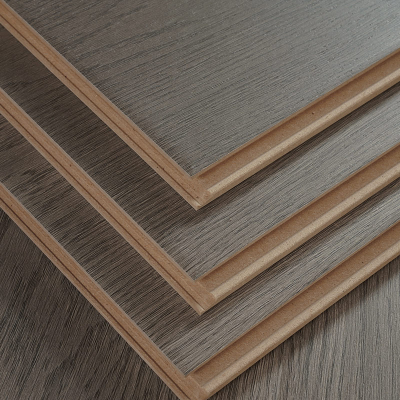
Click-Lock System: Precision-engineered joints for plank connection
Underlayment: Optional IXPE/EVA for sound absorption
Manufacturing Process
Material Mixing: PVC resin and calcium carbonate blending.
Extrusion: High-pressure extrusion to form SPC core.
Lamination: Application of wear layer and decor film.
Cooling: Stabilization to reduce internal stress.
Click Profiling: CNC precision cutting of locking edges.
Quality Control: Locking strength and dimensional tolerance testing.
Industry Comparison (Joint Performance)
| Material | Joint Stability | Moisture Impact | Failure Risk |
|---|---|---|---|
| SPC Flooring | High | Low | Low–Moderate |
| Laminate Flooring | Moderate | High | High |
| WPC Flooring | Moderate | Low | Moderate |
| Solid Wood | Low | Very High | Very High |
Application Scenarios
Contractors: Residential and commercial flooring installations.
Developers: Multi-unit housing and rental projects.
Distributors: Bulk supply to renovation markets.
Facility Managers: Maintenance of high-traffic spaces.
Core Pain Points & Solutions
1. Weak Locking System:
Solution: Select SPC flooring with certified locking strength ≥1.5 kN/m.2. Uneven Subfloor:
Solution: Ensure flatness within ±2 mm over 2 meters before installation.3. Improper Installation Technique:
Solution: Use correct angle-lock method and ensure full engagement of joints.4. Thermal Expansion Stress:
Solution: Maintain expansion gaps (5–8 mm) around perimeter.5. Heavy Traffic or Point Load:
Solution: Use thicker SPC (≥4.5 mm) with reinforced locking edges.
Risk Warnings & Mitigation
No expansion gap → Leads to joint stress and separation.
High temperature fluctuations → Causes plank movement.
Low-quality locking profile → Increases failure risk.
Improper subfloor preparation → Creates uneven stress distribution.
Procurement & Selection Guide
Verify locking system strength and design.
Select appropriate thickness (≥4.0 mm recommended).
Check dimensional stability certification.
Evaluate supplier manufacturing precision.
Request installation manuals and training support.
Assess project conditions (traffic, temperature, subfloor).
Prioritize lifecycle performance over initial cost.
Engineering Case Study
A residential apartment project (80 units) reported SPC flooring joint separation within 6 months due to uneven subfloor and improper installation. After subfloor leveling and reinstallation using certified locking systems, joint failure was eliminated. Follow-up inspections over 12 months confirmed stable performance without further separation.
FAQ (Frequently Asked Questions)
1. Why is my SPC flooring separating at joints?
Due to poor installation, subfloor issues, or weak locking systems.2. Is joint separation common?
No, if installed correctly.3. Can it be repaired?
Yes, by reinstalling affected planks.4. Does temperature affect joints?
Yes, thermal expansion can cause stress.5. What is the ideal expansion gap?
5–8 mm.6. Does thickness matter?
Yes, thicker SPC improves stability.7. Can heavy furniture cause separation?
Yes, if load exceeds design limits.8. Is underlayment necessary?
Recommended for stability and cushioning.9. How to prevent joint failure?
Follow proper installation guidelines.10. What is the key factor?
Locking system quality and installation accuracy.
Call to Action (CTA)
For SPC flooring technical specifications, locking system details, and project-based recommendations, contact our engineering team. We provide product samples, installation guidance, and customized solutions to prevent joint separation issues.
E-E-A-T: Authoritative Expertise
This article is developed by flooring engineers with over 10 years of experience in SPC manufacturing and installation systems. Our team supports global contractors, developers, and distributors with technical solutions focused on durability, installation efficiency, and long-term performance.