Why More Distributors Are Adding Laminate Again
Over the past decade, laminate flooring experienced fluctuating demand as newer materials such as SPC (Stone Plastic Composite) and WPC (Wood Plastic Composite) entered the global market. However, a noticeable shift is occurring: distributors, importers, engineering contractors, and procurement managers are once again expanding their laminate product lines.
This renewed interest is not accidental. Driven by evolving consumer preferences, cost pressures, and advancements in manufacturing technology, laminate flooring is regaining competitiveness in both residential and commercial segments. Companies like floorcasa are witnessing increased inquiries from global partners seeking reliable, cost-effective flooring solutions that balance performance and price.
This article explores why more distributors are adding laminate again, providing a comprehensive, data-driven analysis of the product’s technical advantages, cost structure, and market positioning.
What is Why More Distributors Are Adding Laminate Again
The phrase “Why More Distributors Are Adding Laminate Again” reflects a broader industry trend rather than a single product feature. It highlights the resurgence of laminate flooring as a strategic SKU for distributors aiming to diversify portfolios and improve margins.
Modern laminate flooring consists of multiple layers fused together through high-pressure or direct-pressure processes. Unlike earlier generations, today’s laminate offers improved water resistance, realistic surface textures, and enhanced durability.
Key drivers behind this trend include:
· Improved product performance (water-resistant and scratch-resistant surfaces)
· Competitive pricing compared to SPC and hardwood
· Strong demand in mid-range residential and commercial projects
· Easier logistics due to lighter weight and lower shipping costs
Key Technical Specifications
Modern laminate flooring has evolved significantly. Below is a typical technical specification range:
Specification | Typical Range |
Thickness | 7mm – 12mm |
Wear Layer (AC Rating) | AC3 – AC5 |
Core Material | High-Density Fiberboard (HDF) |
Water Resistance | 24–72 hours (enhanced versions) |
Surface Finish | Embossed, EIR (Embossed in Register) |
Click System | Unilin / Valinge |
Density (HDF Core) | 800–900 kg/m³ |
Formaldehyde Emission | E1 / E0 compliant |
Compared to earlier products, high-end laminate now delivers performance levels suitable for heavy residential and light commercial use.
Main Cost Factors or Performance Factors
Understanding why more distributors are adding laminate again requires a closer look at cost and performance dynamics.
1. Raw Material Costs
Laminate primarily uses HDF cores, decorative paper, and melamine layers. These materials are generally more stable in pricing compared to PVC-based SPC products, which are affected by petrochemical fluctuations.
2. Production Efficiency
Laminate manufacturing processes are mature and highly automated, resulting in lower per-unit costs.
3. Logistics Advantage
· Lower weight than SPC reduces shipping costs
· Better pallet efficiency
· Reduced risk of deformation during transport
4. Performance-to-Price Ratio
Laminate offers a strong balance:
· Comparable scratch resistance to SPC
· Lower cost than engineered wood
· Improved water resistance in newer models
Product Structure or Core Technology
Laminate flooring typically consists of four layers:
1. Wear Layer
Transparent overlay providing scratch and abrasion resistance.
2. Decorative Layer
High-resolution printed paper simulating wood or stone textures.
3. Core Layer (HDF)
The structural backbone offering stability and strength.
4. Balance Layer
Ensures dimensional stability and prevents warping.
Recent innovations include:
· Waterproof edge sealing technology
· Anti-bacterial coatings
· Advanced locking systems for easier installation
Manufacturers such as floorcasa are integrating these technologies to meet evolving global standards.
Manufacturing Process Overview
The laminate production process involves several key steps:
1. HDF Board Production
Wood fibers are compressed into high-density boards.
2. Decor Paper Printing
Designs are printed with high-definition imaging.
3. Impregnation
Papers are soaked in melamine resin.
4. Hot Pressing
Layers are fused under high temperature and pressure.
5. Cutting and Profiling
Boards are cut and click systems are milled.
6. Surface Finishing
Texturing and coating are applied.
7. Quality Inspection
Products undergo strict testing for durability and emissions.
This mature process ensures consistent quality and scalability for bulk orders.
Industry Comparison
To fully understand why more distributors are adding laminate again, it is essential to compare it with alternative flooring options.
Feature | Laminate Flooring | Engineered Wood | |
Cost | Low–Medium | Medium | High |
Water Resistance | Moderate–High | High | Low |
Scratch Resistance | High | High | Medium |
Installation | Easy (click) | Easy | Moderate |
Weight | Light | Heavy | Medium |
Environmental Impact | Lower (wood-based) | Higher (PVC) | Natural but resource-intensive |
Laminate stands out for its cost-effectiveness and balanced performance, making it attractive for distributors targeting mid-market segments.
Application Scenarios
Laminate flooring is widely used in:
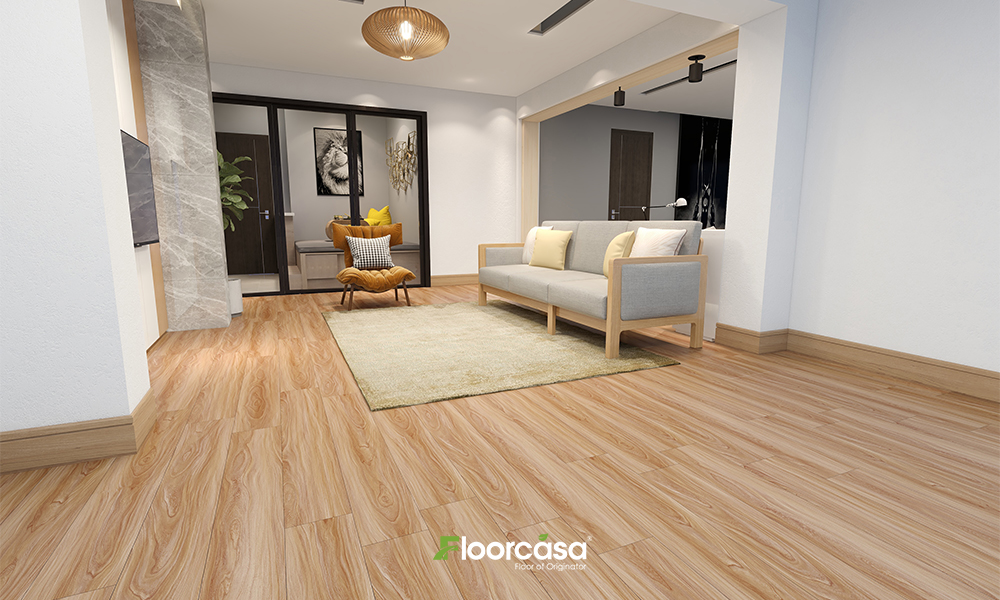
· Residential apartments and housing projects
· Commercial spaces such as offices and retail stores
· Hospitality projects (hotels, serviced apartments)
· Renovation and DIY markets
Its versatility and aesthetic variety make it suitable for both modern and traditional interiors.
Common Buyer Concerns
Despite its advantages, buyers often raise concerns:
· Is laminate truly waterproof?
Modern laminate offers water resistance but is not fully waterproof like SPC.
· Does it swell over time?
High-quality HDF cores minimize swelling when properly installed.
· Is it environmentally friendly?
Certified products meet E1/E0 emission standards.
· Can it compete with SPC?
In many use cases, laminate provides better value.
Procurement and Selection Guide
When selecting laminate flooring, buyers should consider:
1. AC Rating
Choose AC4 or AC5 for commercial applications.
2. Thickness
8mm–12mm is recommended for durability and stability.
3. Core Density
Higher density ensures better performance.
4. Locking System
Reliable click systems reduce installation issues.
5. Supplier Reliability
Work with experienced manufacturers like floorcasa to ensure consistent quality and global compliance.
Case Study or Example
A European distributor recently reintroduced laminate flooring into its portfolio after a five-year focus on SPC products.
Challenge
· Rising SPC costs
· Customer demand for lower-priced alternatives
Solution
· Added high-performance laminate with water-resistant features
Results
· 25% increase in overall flooring sales
· Improved profit margins
· Expanded customer base in mid-range housing projects
This example clearly illustrates why more distributors are adding laminate again—it fills a critical gap between affordability and performance.
FAQ
1. Is laminate flooring suitable for commercial use?
Yes, especially AC4 and AC5 rated products.
2. How water-resistant is laminate flooring?
Modern products can resist water for 24–72 hours.
3. What is the lifespan of laminate flooring?
Typically 10–20 years depending on usage.
4. Can laminate be installed over existing floors?
Yes, in many cases with proper underlayment.
5. Is laminate environmentally friendly?
Yes, especially products with E1/E0 certification.
6. How does laminate compare to SPC in cost?
Laminate is generally more cost-effective.
7. Does laminate fade over time?
High-quality products offer UV resistance.
8. What maintenance is required?
Regular cleaning with minimal water is sufficient.
9. Is laminate suitable for underfloor heating?
Yes, if specified by the manufacturer.
10. Why are distributors reintroducing laminate now?
Because of improved technology, stable costs, and strong market demand.
Conclusion
The resurgence of laminate flooring is not a temporary trend but a strategic shift driven by market realities. As this article demonstrates, why more distributors are adding laminate again is rooted in clear advantages: cost efficiency, improved performance, and adaptability across applications.
For distributors, importers, and procurement professionals, laminate flooring represents a reliable and profitable category—one that continues to evolve with modern technology and global demand.