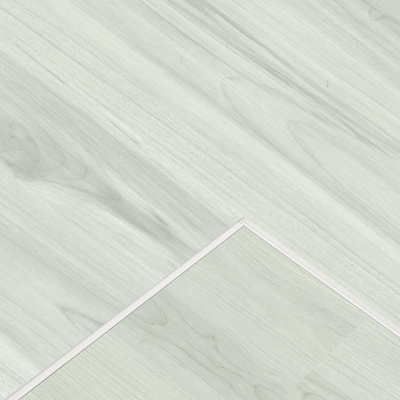
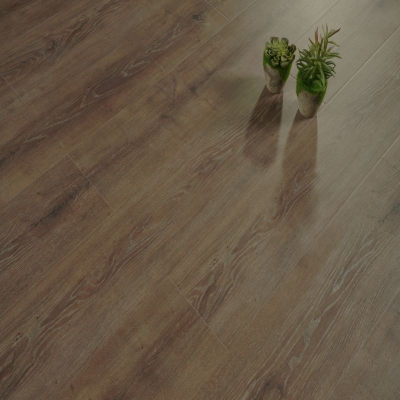
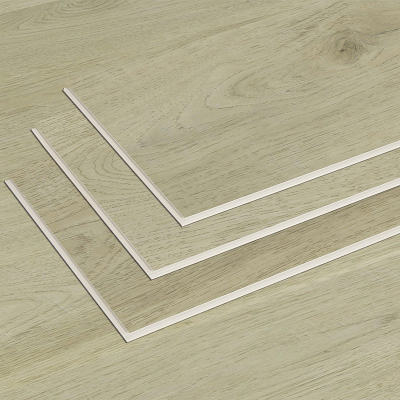
What Is EIR Flooring? Understanding Embossed-in-Register Technology
What Is EIR Flooring?
EIR stands for embossed-in-register. It describes a flooring surface in which the embossed texture is positioned to correspond with the printed design beneath it: the grain lines, knots and pores that are printed on the décor layer are matched by the texture pressed into the surface, so that what the eye sees and what the hand feels line up.
The emphasis is on correspondence, not on the presence of texture. A floor can be embossed with a wood-grain texture and still not be EIR, because the texture does not follow the printed pattern. EIR is the alignment of the two.
It is a surface technology. It affects how a floor looks and feels, and it does not by itself change the wear resistance, the slip resistance, the water resistance or the dimensional behaviour of the product. Those properties are determined by the wear layer, the coating, the core and the construction, and they are specified and tested separately.
How Does Embossed-in-Register Technology Work?
The EIR effect comes from four elements working together: the printed décor, the embossing tool, the registration between them, and the final surface finish.
Decorative Film and Printed Patterns
The décor layer carries the printed design, which may reproduce wood, stone or another material. For a wood design, the print includes the grain lines, the pores, the knots and the colour variation of the species. The print defines where the texture has to go: a knot that is printed on the surface has to be matched by a depression in the texture, and a grain line has to be followed by a raised or recessed line. The quality of the print, its resolution and the number of décor repeats affect how convincing the result is.
Embossing Plates and Rollers
The texture is formed by a press plate or a roller that carries the negative of the texture. In production, the plate or roller is pressed into the surface under heat and pressure, and the pattern on the tool determines the texture depth and shape. The tool is specific to the design it was made for, which is why a change of décor usually means a change of tool. The equipment, the tooling and the registration control used for a particular product are part of the manufacturer's process; the registration may be achieved mechanically, optically or by another method, and which method is used should be confirmed from the process documentation for the product rather than assumed from a general description.
Pattern Registration and Alignment
Registration is the step that makes the texture and the print line up. The décor layer and the embossing tool are positioned relative to each other during pressing, so that the texture lands on the corresponding part of the print. The precision of that positioning determines the quality of the result: a small misalignment shows as a texture that runs across the grain rather than along it, or as a knot that is printed but not pressed. The registration is a production control, and it is what distinguishes EIR from an embossed floor whose texture is applied independently of the print.
Final Surface Texture
The finished surface combines the texture depth, the surface finish and the coating. The texture depth affects how pronounced the effect is and how the surface feels; the finish affects how light reflects off it; and the coating affects the surface performance. A deeper texture can give a more pronounced effect, but it also changes how the surface behaves under cleaning: a deep texture with a low-sheen coating holds dust in the recesses more readily than a shallow texture with a smooth coating, which is why the texture, the finish and the coating are specified together.
EIR Flooring vs Standard Embossed Flooring
| Comparison item | EIR flooring | Standard embossed flooring |
|---|---|---|
| Texture alignment | The texture corresponds to the printed pattern | The texture may not correspond to the printed pattern |
| Surface appearance | Closer to the natural material, because the grain and the texture agree | Depends on the embossing design |
| Texture positioning | Positioned to match the printed features | May use a repeating or non-registered texture |
| Design flexibility | The décor and the tool have to be matched | More flexible, because the texture is independent |
| Production requirements | Higher registration precision is required | Depends on the product and the tool |
| Cost | Depends on the equipment, the process and the order | Depends on the specific process |
The table describes the difference in the technology, not a difference in performance. Whether an EIR floor is more expensive than a standard embossed floor, and by how much, depends on the product, the tool and the order, and it should be compared between specific products.
Which Types of Flooring Use EIR Technology?
In laminate, the décor is a printed paper layer and the texture is pressed into the overlay during lamination. EIR laminate is used for wood reproductions, where the printed grain and the pressed texture are matched in the press. The general structure of a laminate plank is described on the laminate flooring guide.
EIR SPC Flooring
In SPC, the décor is a printed film and the texture is formed in the surface layer, and how the registration is achieved depends on the production line. Some SPC lines press the texture into the coating or the wear layer with a registered tool, and the result should be confirmed from the product's samples and its process documentation rather than assumed from the product type. The structure of an SPC plank is described on the SPC flooring structure page.
EIR can be used on parquet patterns to emphasise the grain and the geometry of the design, but the product should be checked: a parquet floor with a three-dimensional texture is not necessarily EIR, and the texture has to correspond to the printed pattern for the term to apply. Where the pattern is a herringbone or chevron, the registration has to work across the pattern, which places additional demands on the tool and the process.
EIR vs Embossed vs Registered Embossing
The three terms describe different things, and they are often confused:
Embossed flooring: the surface has been textured by a press plate or roller. The texture may or may not correspond to the print. The types of embossing and their effects are covered on the embossed laminate flooring page.
Registered embossing: the texture is positioned to correspond to the printed pattern. This is the general term for the technology.
EIR flooring: embossed-in-register, the term commonly used in the flooring industry for registered embossing. It describes the same alignment principle.
A product described as embossed is not necessarily registered, and a product described as registered is describing the alignment rather than a different material. The terms should be checked against the sample rather than taken from the name.
Benefits and Limitations of EIR Flooring
The benefit is visual and tactile: the texture and the print agree, so the surface reads as a natural material rather than as a printed image with an unrelated texture. The effect is most convincing at close range and under raking light, where a non-registered texture shows as a mismatch. A textured surface can also make fine surface marks less obvious under some lighting, although it does not prevent scratching; the actual wear behaviour is determined by the wear layer and the coating, not by the texture.
The limitations follow from the same point. EIR does not by itself improve wear resistance, slip resistance, water resistance or durability: those depend on the wear layer, the coating, the core and the construction. A deeper texture can hold dirt in the recesses and may need more attention in cleaning than a smooth surface, and the extent depends on the texture shape and the coating. A product can be EIR and still be unsuitable for a given room, and the suitability should be checked from the product's specifications rather than from the surface technology.
How to Identify Genuine EIR Flooring
The check is a comparison between what is printed and what is pressed. It should be carried out both at normal viewing distance, where the overall effect is judged, and at close range, where the registration is checked.
Look along a plank at a low angle under raking light, and check whether the texture follows the printed grain lines.
Examine a knot or a pore in the print, and check whether it is matched by a depression in the texture at the same position.
Run a fingertip across the grain and check whether the texture direction agrees with the printed direction.
Compare several planks from the same batch, and check whether the registration is consistent and whether the décor repeat is obvious.
Ask for a sample of the exact product and, where possible, the process documentation for the décor and the tool.
A surface that looks like wood and feels textured is not proof of EIR. The proof is the correspondence between the print and the texture, checked on the sample.
What to Check When Buying EIR Flooring
Decorative Pattern Quality
Check the print resolution, the number of décor repeats and the colour consistency between planks. A high repeat count and a good print make the registration more convincing across a large floor.
Embossing Accuracy and Texture Depth
Check the registration on a sample, as described above, and check whether the texture depth is consistent across the plank and between planks. A texture that varies in depth between planks reads as an inconsistent surface across a large floor, even where the registration itself is correct.
Surface Wear Performance
The wear performance is separate from the EIR effect. Check the wear layer or the AC rating from the test report for the product, and read it with the expected traffic.
Sample and Batch Consistency
Ask for a production sample from the batch that will be supplied, and compare it with the approved sample. Registration, texture depth and colour can vary between batches, and the comparison is what shows whether the batch matches.
Product Specifications and Test Reports
Request the specification sheet and the test reports for the exact product. The surface technology should be stated, together with the wear layer, the core and the other specifications; how to read the reports is covered on the quality standards pages for laminate and for SPC.
The EIR laminate and EIR SPC product series pages list the décors, the surface textures and the specifications currently offered for each product.
Frequently Asked Questions
1. What does EIR mean in flooring?
EIR stands for embossed-in-register. It means the embossed texture is positioned to correspond with the printed design, so that the grain, knots and pores in the print are matched by the texture.
2. Is EIR flooring better than regular embossed flooring?
It is different rather than better. EIR gives a closer correspondence between the print and the texture, which looks more natural at close range. Whether it is the better choice depends on the design wanted, the product and the budget.
3. Is EIR flooring more durable?
EIR does not by itself affect durability. Wear resistance depends on the wear layer, the coating and the construction, and it should be confirmed from the test report for the product.
4. Is EIR flooring waterproof?
EIR is a surface technology and does not determine water resistance. Water resistance depends on the core, the joints and the edges, and on the product's construction. An EIR SPC floor may be water-resistant because of its core, not because of the EIR surface, and an EIR laminate floor may still not be suitable for wet areas, because a laminate core is wood-based whatever the surface texture.
5. What is the difference between EIR and embossed flooring?
Embossed flooring has a textured surface; the texture may or may not follow the print. EIR is a registered embossing, in which the texture is positioned to follow the print.
6. Is EIR available in SPC and laminate flooring?
Yes, EIR is used in both, and in parquet patterns. The way the registration is achieved depends on the product and the production line, so it should be confirmed from the sample and the process documentation rather than assumed from the product type.
7. Is EIR flooring more expensive?
It depends on the product, the tool and the order. The registration requires a tool that matches the décor and a production process with higher positioning precision, and the cost difference should be compared between specific products rather than assumed from the technology.