Is SPC Better Than PVC? A B2B Perspective on 3.5mm SPC Flooring
As global demand for resilient flooring continues to rise, international buyers are increasingly evaluating 3.5mm SPC flooring against traditional PVC flooring. While both materials belong to the vinyl flooring category, their performance, structure, and long-term value differ significantly. For importers, distributors, and project contractors, understanding these differences is critical to making informed procurement decisions.
This article provides a comprehensive, data-driven comparison to answer a key industry question: Is SPC better than PVC?
Global Flooring Industry Background and Market Context
Resilient Flooring Growth Worldwide
According to multiple international market research reports, the global resilient flooring market has maintained steady growth, driven by urbanization, renovation demand, and the expansion of commercial real estate. SPC (Stone Plastic Composite) flooring has emerged as one of the fastest-growing segments due to its dimensional stability and waterproof performance.
Traditional PVC flooring—often categorized as LVT (Luxury Vinyl Tile) or sheet vinyl—still holds a substantial market share, particularly in price-sensitive regions. However, buyer expectations are evolving from short-term cost savings toward lifecycle performance and reduced maintenance.
Why Buyers Are Reconsidering PVC Flooring
PVC flooring has long been valued for flexibility and affordability. Yet, challenges such as thermal expansion, indentation under heavy loads, and subfloor sensitivity are prompting buyers to explore rigid core SPC flooring as a more reliable alternative.
Understanding the Structural Difference: SPC vs PVC
What Is 3.5mm SPC Flooring?
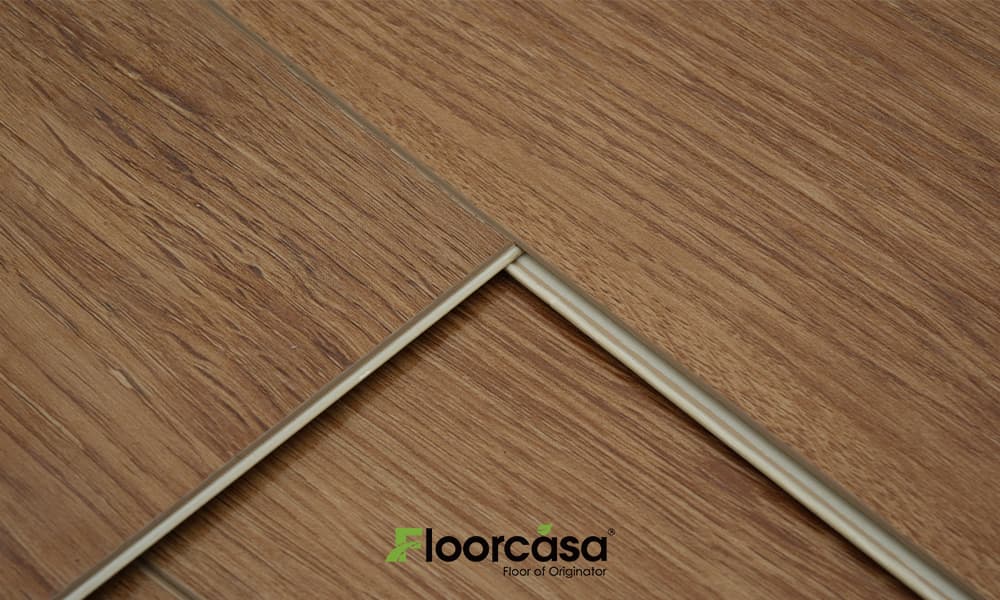
3.5mm SPC flooring is a rigid core flooring product composed primarily of calcium carbonate (limestone powder) and stabilized PVC resin. This formulation creates a dense, dimensionally stable core that resists deformation.
Typical structure includes:
l UV wear layer
l Decorative film layer
l SPC rigid core
l Integrated or attached underlayment (optional)
What Defines Traditional PVC Flooring?
PVC flooring generally uses a flexible vinyl core, relying on plasticizers to maintain elasticity. While this allows for easier bending and cutting, it also introduces weaknesses in structural rigidity and long-term shape retention.
Performance Comparison: Is SPC Better Than PVC?
Dimensional Stability and Load Resistance
One of the strongest arguments for SPC is its resistance to expansion and contraction. 3.5mm SPC flooring advantages include minimal reaction to temperature fluctuations, making it suitable for large-area installations without excessive expansion gaps.
PVC flooring, by contrast, is more susceptible to:
l Curling at edges
l Indentation from heavy furniture
l Movement under rolling loads
For commercial projects, SPC clearly demonstrates superior performance.
Waterproof Capability
Both materials are marketed as waterproof. However, waterproof SPC flooring maintains structural integrity even after prolonged moisture exposure, whereas PVC flooring may soften or lose shape under extreme conditions.
Technical Parameters and Specifications
Typical Technical Data for 3.5mm SPC Flooring
l Total thickness: 3.5 mm
l Wear layer: 0.3 mm / 0.5 mm
l Density: ≥ 2000 kg/m³
l Locking system: Unilin / Valinge
l Fire rating: Bfl-s1 (EU standard)
Formaldehyde emission: E0 / FloorScore compliant
These parameters position SPC as a high-performance solution for both residential and light-commercial use.
PVC Flooring Technical Limitations
PVC flooring typically shows lower density and reduced impact resistance. While suitable for low-traffic areas, it often fails to meet the durability expectations of international B2B buyers serving commercial markets.
Manufacturing Process and Quality Control
SPC Flooring Manufacturing Process
The SPC flooring manufacturing process involves high-temperature extrusion, precision calendaring, and strict dimensional calibration. Consistency in raw material formulation is critical, as variations directly affect locking strength and board flatness.
Manufacturers such as Floorcasa invest heavily in automated production lines, inline inspection systems, and batch traceability to meet export-market requirements.
PVC Flooring Production Considerations
PVC flooring production is generally less capital-intensive, but quality variance between factories is significant. Inconsistent plasticizer ratios often lead to premature aging and performance instability.
Application Scenarios and Project Suitability
Where SPC Flooring Excels
SPC flooring for commercial projects is widely specified for:
l Retail chains
l Hospitality renovations
l Office spaces
l Multifamily housing
The rigid core allows installation over imperfect subfloors, reducing preparation costs and installation time.
PVC Flooring Use Cases
PVC flooring remains common in:
l Temporary installations
l Budget residential projects
l Low-traffic environments
However, it is increasingly viewed as a short-term solution rather than a long-term investment.
International Buyer Preferences and Procurement Pain Points
What Global Buyers Look For
International distributors and project buyers prioritize:
l Dimensional stability during shipping
l Consistent locking performance
l Compliance with VOC and fire standards
l Long-term warranty support
In these areas, SPC flooring vs PVC flooring comparisons consistently favor SPC.
Common Pain Points with PVC Flooring
l Claims related to expansion and deformation
l Higher replacement frequency
l Customer complaints post-installation
These issues translate into higher after-sales costs and brand risk for importers.
Is SPC Better Than PVC from a Cost Perspective?
While PVC flooring often has a lower initial unit price, 3.5mm SPC flooring delivers better cost efficiency over its lifecycle. Reduced maintenance, fewer claims, and broader application versatility offset the marginally higher purchase cost.
For B2B buyers focused on long-term profitability, SPC offers a more sustainable value proposition.
Why Floorcasa Focuses on SPC Solutions
As an export-oriented manufacturer, Floorcasa specializes in engineered SPC flooring designed for international standards. By optimizing core formulation and locking systems, Floorcasa supports global partners seeking stable supply, consistent quality, and scalable project solutions.
B2B FAQ: SPC vs PVC Flooring
Q1: Is SPC flooring suitable to replace PVC flooring in existing projects?
Yes. In most cases, SPC can be installed over existing PVC flooring, provided the surface is flat and secure.
Q2: Does 3.5mm SPC flooring meet commercial performance requirements?
With an appropriate wear layer, 3.5mm SPC flooring meets the needs of light to medium commercial applications.
Q3: How does SPC flooring perform in different climates?
SPC’s rigid core ensures excellent stability across temperature and humidity variations, making it ideal for global distribution.
Q4: Is SPC flooring more difficult to install than PVC?
No. Modern click-lock systems often make SPC easier and faster to install than glue-down PVC flooring.
Conclusion and Professional Call to Action
So, is SPC better than PVC? From a structural, performance, and procurement standpoint, the answer is increasingly clear for global B2B buyers. 3.5mm SPC flooring delivers superior stability, durability, and long-term value—key factors in today’s competitive flooring market.
If you are evaluating SPC solutions for distribution or project supply, Floorcasa invites you to request:
l Detailed technical datasheets
l Project-specific quotations
l Physical samples for evaluation
Contact Floorcasa today to explore how engineered SPC flooring can strengthen your product portfolio and meet international market expectations.