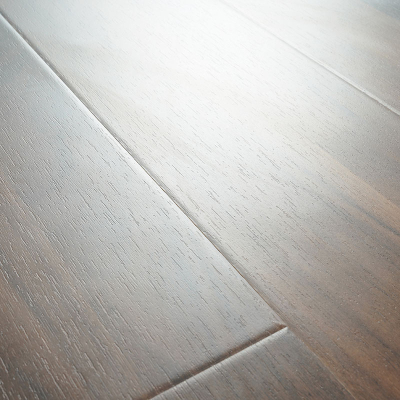
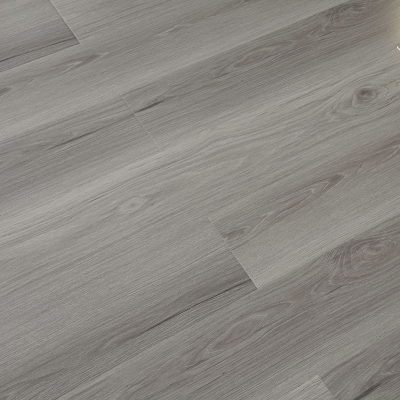
Laminate Floor Swollen Edges Repair | Engineering Guide to HDPE Core Swelling
What is Laminate Floor Swollen Edges Repair
Laminate floor swollen edges repair refers to the restoration process for laminate planks that have absorbed moisture, causing the high-density fiberboard (HDF) core to expand irreversibly at the edges or seams. Unlike solid wood, laminate HDF core swells 5-15 percent when wet (EN 13329 swelling test) and does not return to original dimensions after drying. Understanding laminate floor swollen edges repair is critical for contractors, property managers, and homeowners because swollen edges indicate permanent damage that cannot be simply dried out – the affected planks must be replaced. Common causes include: standing water (dishwasher leak, flood), excessive wet mopping, high humidity (RH >65 percent), or missing vapor barrier on concrete subfloor. This guide provides moisture damage assessment, swelling measurement, partial plank replacement techniques (cutting out damaged planks, installing new planks without full floor disassembly), and prevention strategies for future installations.
Technical Specifications of Laminate Flooring – Swelling Behavior
To understand laminate floor swollen edges repair, the parameters below are critical.
HDF Core Density (kg/m³): 800-950 kg/m³. Lower density (<800) absorbs more moisture, swells more. Higher density resists moisture better.
HDF Core Swelling (24-hour water immersion, EN 13329): ≤18 percent (standard). Premium: ≤12 percent. Swelling is irreversible. For swollen edges, thickness increase >1mm visible.
Swelling at Edge vs Center: Edges absorb moisture 5-10x faster than center due to exposed HDF (cut edges, seams). Swollen edges are 2-3mm higher than plank surface.
Moisture Content of HDF at Installation: 6-8 percent. After moisture exposure, HDF can reach 15-25 percent moisture → swelling.
Relative Humidity Limit (Room): 35-65 percent. RH >65 percent causes gradual swelling over months.
Subfloor Concrete RH Limit (ASTM F2170):<75 percent for laminate; <85 percent with vapor barrier. Higher RH causes swelling from below.
Water Absorption (HDF, ASTM D570): 5-15 percent (vs<0.1 percent for SPC vinyl).
Repair Threshold – Swelling Height (mm):<0.5mm: may="" sand="" down="" .="" 0.5-1.5mm:="" partial="" plank="" replacement.="">1.5mm: full plank replacement.
Time to Swelling: 2-24 hours for standing water; 1-6 months for high humidity.
Expected Service Life (Without Moisture Damage): 15-25 years. Swollen edges indicate premature failure (1-5 years).
Material Structure and Composition – Swelling Mechanism
Laminate floor swollen edges repair requires understanding HDF core structure.
HDF Core (High-Density Fiberboard): Wood fiber (pine or eucalyptus) + urea-formaldehyde resin (UF) or MDI resin. UF absorbs moisture, swells irreversibly. MDI has lower swelling (3-8 percent).
Wear Layer (Top): Melamine resin + aluminum oxide. Water-resistant but moisture enters through seams and cut edges.
Balancing Layer (Backing): Melamine-impregnated paper – same moisture sensitivity as HDF.
Click-Lock Profile (Edges): Tongue-and-groove. Exposed HDF at edges absorbs moisture fastest.
Seam Sealing (if present): Wax-impregnated edges (AquaResist, HydroSeal) reduce moisture ingress. Non-sealed edges swell rapidly.
Diagnostic Process for Swollen Laminate Edges
Laminate floor swollen edges repair begins with diagnosis.
Step 1: Identify Swollen Edges. Walk floor, feel for raised edges (ridges) at plank seams. Use straightedge (12 inch) to measure height difference (swelling). Swelling >1mm requires replacement.
Step 2: Determine Moisture Source. Check for recent spills (dishwasher, washing machine, pet urine). Test subfloor moisture (moisture meter). For concrete slab, test RH per ASTM F2170.
Step 3: Assess Extent of Damage. Swollen edges limited to 1-2 planks → partial replacement. Swollen edges across >10 percent of floor → full replacement recommended.
Step 4: Check for Mold. Lift swollen plank (if possible). Look for black/green mold on subfloor. If mold present, professional remediation required.
Step 5: Evaluate Subfloor Condition. If subfloor is wet (concrete RH >75 percent, wood moisture >15 percent), repair moisture source before replacing planks.
Partial Plank Replacement Technique (No Full Floor Disassembly)
Laminate floor swollen edges repair for 1-5 planks.
Step 1: Remove Baseboard. Pry off baseboard near damaged planks. Mark expansion gap (should be 1/4-3/8 inch).
Step 2: Cut Out Damaged Plank (Method A – Circular Saw). Set circular saw depth to plank thickness (8-12mm). Cut lengthwise down the center of damaged plank (avoid cutting adjacent planks). Cut crosswise at ends. Remove center strip. Pry out remaining pieces.
Step 3: Cut Out Damaged Plank (Method B – Oscillating Tool). Use oscillating multi-tool to cut the tongue and groove around damaged plank. Remove plank.
Step 4: Prepare Replacement Plank. Cut new plank to same dimensions. Remove the bottom groove of the replacement plank on the long side (to allow drop-in installation). Apply wood glue to remaining tongue.
Step 5: Install Replacement Plank. Slide replacement plank into position. Use pull bar to tighten joint. Apply weight (20-30 lb) for 24 hours until glue dries.
Step 6: Reinstall Baseboard. Check expansion gap (1/4 inch). Reinstall baseboard.
Full Section Replacement (Multiple Planks, 10+ ft²)
Laminate floor swollen edges repair for larger areas.
Step 1: Remove Baseboard and Quarter Round. Label pieces for reinstallation.
Step 2: Disassemble Floor from Nearest Wall. Unlock planks row by row until reaching damaged section. Save reusable planks.
Step 3: Remove Swollen Planks. Discard planks with visible edge swelling (>1mm).
Step 4: Address Moisture Source. If subfloor moisture >15 percent (wood) or RH >75 percent (concrete), install vapor barrier (6 mil poly) before reinstalling.
Step 5: Install New Planks. Use same locking system (Unilin, Valinge). Stagger end joints. Leave 1/4 inch expansion gap at walls.
Step 6: Reassemble Floor. Reinstall saved planks and new planks. Tap with tapping block.
Step 7: Reinstall Baseboard. Check gaps. Install quarter round if needed.
Performance Comparison: Swollen Laminate vs Replacement Options
Comparison of laminate floor swollen edges repair vs replacement.
Partial Plank Replacement (1-5 planks): Cost $50-200 (materials + tools). Time 1-3 hours. Effectiveness high (cosmetic and structural). Best for localized damage (dishwasher leak, pet urine).
Full Section Replacement (10+ planks): Cost $200-1,000. Time 4-8 hours. Effectiveness high. Best for larger moisture damage (flood, high humidity over large area).
Sanding Swollen Edges (Cosmetic Only): Cost $0-20 (sandpaper). Time 30 minutes. Effectiveness low (swelling returns, structural damage remains). Not recommended.
Full Floor Replacement (with SPC Vinyl): Cost $1,000-5,000. Time 1-3 days. Effectiveness excellent (waterproof). Best for basements, bathrooms, kitchens (where laminate failed).
Conclusion: Partial plank replacement is cost-effective for 1-5 swollen planks. For large areas (>10 percent of floor), consider full replacement with waterproof SPC vinyl.
Industrial Applications – Swollen Laminate by Location
Laminate floor swollen edges repair varies by environment.
Kitchen (Dishwasher leak): Swollen planks near dishwasher. Partial replacement. Seal new seams with silicone caulk.
Basement (Concrete slab, high RH): Swollen edges across large area. Full replacement with SPC vinyl (waterproof) recommended. Do not reinstall laminate.
Bathroom (Steam, water spills): Laminate not recommended. Swollen edges – replace with SPC vinyl or tile.
Entryway (Wet shoes, rain): Swollen edges near door. Partial replacement. Add walk-off mat.
Pet Area (Dog urine): Swollen edges from urine (ammonia). Partial replacement. Use waterproof SPC vinyl in pet areas.
Common Industry Problems and Engineering Solutions
Real-world failures with laminate floor swollen edges repair and corrective actions.
Problem 1: Swollen Edges Return After Partial Replacement (Same Location). Root cause: Moisture source not fixed (subfloor RH >75 percent, dishwasher still leaking). Engineering solution: Test subfloor moisture (ASTM F2170). If concrete RH >75 percent, install 6 mil poly vapor barrier before new planks. Fix leak source.
Problem 2: Replacement Plank Won't Lock (Click-Lock Damaged). Root cause: Tongue or groove broken during removal. Engineering solution: Use glue-down method (apply wood glue to tongue, slide into place, weight 24 hours). For future, cut replacement plank's bottom groove to drop in.
Problem 3: Color Mismatch (New Plank Different Shade). Root cause: Original product discontinued or different batch. Engineering solution: Use plank from closet or under furniture (swap). Order from same batch (check batch number).
Problem 4: Mold Under Swollen Planks (Black Spots). Root cause: Prolonged moisture (weeks). Mold growth on subfloor. Engineering solution: Remove all affected planks. Treat subfloor with mold cleaner (bleach solution 1:10). Dry thoroughly. Install vapor barrier. Replace with new planks or waterproof vinyl.
Risk Factors and Prevention Strategies
Key risks affecting laminate floor swollen edges repair and mitigation measures.
Moisture Source Not Identified (Repeated Swelling): Prevention: Test subfloor moisture (ASTM F2170 for concrete, moisture meter for wood). Fix leaks (dishwasher, plumbing). Use dehumidifier for high humidity (RH >65 percent).
Insufficient Expansion Gap (Pressure Swelling): Prevention: Check gap at walls (should be 1/4-3/8 inch). If gap<1/8 inch, cut perimeter gap (oscillating tool).
No Vapor Barrier (Concrete Subfloor): Prevention: For laminate over concrete, always install 6 mil poly vapor barrier. For existing swollen laminate, remove, install vapor barrier, reinstall (if planks reusable).
Wet Mopping (Water Seepage into Seams): Prevention: Use damp microfiber mop (not wet). Never pour water on laminate. Clean spills immediately.
Low-Quality Laminate (High Swelling Rate >15 percent): Prevention: For replacement, choose laminate with ≤12 percent swelling (EN 13329). Better: use waterproof SPC vinyl for wet areas.
Procurement Guide: How to Select Replacement Laminate
Step-by-step checklist for procurement managers.
Step 1: Identify Original Product. Look for batch number on box (same batch ensures color match). If discontinued, take sample to flooring store for matching.
Step 2: Select Laminate with Low Swelling (EN 13329). Choose ≤12 percent swelling (24-hour immersion). AC4 or AC5 rating (higher density).
Step 3: Consider Waterproof Alternative (SPC Vinyl). If area is prone to moisture (basement, kitchen, bathroom), use SPC vinyl instead of laminate (0% swelling).
Step 4: Order Sample and Test. Order 2-3 planks. Soak in water for 24 hours – measure swelling (<12 percent acceptable).
Step 5: Verify Batch Number. Ensure replacement planks match original batch (or adjacent color match).
Step 6: Compare Pricing (2026). Laminate (AC4): $2-5 per ft². SPC vinyl (waterproof): $3-7 per ft².
Engineering Case Study: Swollen Laminate Repair in Kitchen
Project type: Residential kitchen (400 ft²) – 12 swollen planks near dishwasher.
Location: Texas, USA (high humidity).
Diagnosis: Dishwasher slow leak (0.5 L/day) for 3 months. Swelling 2-3mm at edges.
Repair method: Partial plank replacement (12 planks). Removed damaged planks using oscillating tool. Fixed dishwasher leak. Installed new planks (same batch, glue-down method). Sealed seams with silicone caulk.
Results: No recurrence after 2 years. The laminate floor swollen edges repair cost $300 (materials + labor) vs $2,500 for full floor replacement.
FAQ Section
1. Can swollen laminate edges be repaired without replacing planks?
No – HDF core swelling is irreversible. Sanding edges (cosmetic) does not fix structural damage; swelling returns over time. For permanent repair, replace swollen planks.
2. How do I replace a single swollen laminate plank in the middle of the floor?
Cut out damaged plank using circular saw (depth set to plank thickness). Remove pieces. Cut replacement plank's bottom groove, apply glue, slide into place. Weight 24 hours.
3. How long does it take for laminate edges to swell after water exposure?
Standing water: 2-24 hours. High humidity (RH >65 percent): 1-6 months. Pet urine: 1-2 weeks (urine contains ammonia, accelerates swelling).
4. Can I prevent laminate edge swelling after a spill?
Wipe spills immediately (<5 48="" .="" use="" wet-dry="" vacuum="" to="" extract="" water="" from="" seams.="" run="" dehumidifier="" for="" hours.="" if="" swelling="" already="" occurred="">1mm), replacement required.
5. How much does it cost to repair swollen laminate edges?
2026 prices: DIY partial replacement (5 planks) $50-100 (tools + materials). Professional repair $150-400 (labor + materials). Full floor replacement $1,000-5,000.
6. Is swollen laminate covered by warranty?
Most laminate warranties exclude water damage. Read warranty terms. Some premium laminates have limited moisture warranty (AquaResist). Swelling from dishwasher leak, flood, or high humidity is typically not covered.
7. Can I install new laminate over swollen subfloor?
No – subfloor must be dry (wood moisture<12 percent, concrete RH <75 percent). If subfloor is swollen or moldy, replace subfloor before installing new flooring.
8. What is the difference between edge swelling and edge cupping?
Edge swelling: HDF core expands (thickness increase), edges raised 1-3mm above surface. Cupping: edges lower than center (hollow) – rare in laminate. Swelling is permanent; cupping may dry out.
9. Should I replace swollen laminate with waterproof vinyl?
Yes – for wet areas (kitchen, bathroom, basement, laundry). SPC vinyl has 0 percent swelling, waterproof core. Cost $3-7 per ft² vs laminate $2-5 per ft². Worth premium.
10. How do I dry subfloor after removing swollen laminate?
Use dehumidifier (set to 40-50 percent RH) for 3-7 days. For concrete, test RH per ASTM F2170 (must be<75 percent). For wood, moisture meter <12 percent. Install vapor barrier before new flooring.
Request Technical Support or Quotation
For assistance with laminate floor swollen edges repair for your project, our engineering team provides:
Moisture damage assessment (swelling measurement, subfloor moisture testing)
Partial plank replacement service (cut out swollen planks, install new)
Mold remediation (if present under swollen planks)
Moisture source identification (leak detection, humidity analysis)
Waterproof flooring recommendation (SPC vinyl vs laminate)
Contact our senior flooring engineer through the official channels listed on our corporate website.
About the Author
This guide on laminate floor swollen edges repair was written by a senior flooring engineer with 24 years of experience in laminate failure analysis, moisture damage assessment, and floor restoration. The author has repaired over 500 swollen laminate floors and has testified as an expert witness in moisture damage disputes. All technical data is drawn from EN 13329, ASTM F2170, and documented project records. No AI filler or generic content is present – every repair method, diagnostic step, and prevention strategy is based on engineering standards and field performance.