Embossed vs Embossed in Register: Engineering Guide to EIR Laminate Flooring
Embossed vs Embossed in Register: Engineering Guide to EIR Laminate Flooring
Last Updated: August 2026
When choosing laminate flooring, the surface texture can have a major effect on how realistic the finished floor looks and feels. Two commonly compared surface technologies are standard embossing and embossed in register (EIR).
The key difference is simple:
Standard embossed flooring uses a surface texture that is not precisely aligned with the printed decorative pattern. Embossed in register flooring synchronizes the surface texture with the printed image, allowing wood grain, knots, pores, and other visual features to match the physical texture of the plank.
For flooring buyers, architects, designers, distributors, and project procurement teams, understanding the difference between embossed vs textured flooring, standard embossing, and registered embossing can help determine whether a project needs a conventional surface finish or a more realistic EIR laminate flooring solution.
This guide explains how the two technologies work, how they differ in appearance and manufacturing, what to check when evaluating samples, and how to choose the right surface finish for residential and commercial flooring projects.
What Is Embossed Flooring?
Embossing is a manufacturing process used to create a three-dimensional texture on the surface of flooring.
On laminate flooring, the decorative layer contains a printed wood or stone image. An embossing process then creates a physical texture on the surface.
With standard embossed flooring, the surface texture may follow a repeating or general wood-grain pattern, but it is not necessarily synchronized with the exact position of the printed knots, grain lines, pores, or other decorative details.
This creates a textured surface, but the physical texture and printed image can appear independent of each other.
For example, a printed wood knot may appear in one location while the surface groove passes beside it rather than directly through it.
The result can still provide an attractive wood-look floor, but the visual and tactile connection is less precise than EIR.
What Is Embossed in Register (EIR)?
Embossed in Register (EIR) is a surface-texturing technology designed to align the physical embossing with the printed decorative image.
During production, the embossing system is synchronized with the decorative pattern so that surface features correspond to visual features on the plank.
For example:
Printed wood grain can align with physical grain texture.
Printed knots can correspond with textured knot areas.
Printed pores can match small surface depressions.
Wider grain features can correspond with deeper or more pronounced texture.
This alignment creates a more realistic wood appearance because the eye and hand receive consistent visual and tactile information.
EIR is therefore often used for premium laminate flooring, realistic wood-look products, and projects where surface authenticity is an important part of the product specification.
Embossed vs Embossed in Register: Key Differences
The most important difference between standard embossing and EIR is texture alignment.
| Feature | Standard Embossed Flooring | Embossed in Register (EIR) Flooring |
|---|---|---|
| Texture alignment | General or repeating pattern | Aligned with printed decorative features |
| Wood-grain realism | Good | Very high when well manufactured |
| Printed knots and texture | May not correspond precisely | Designed to correspond |
| Manufacturing complexity | Lower | Higher |
| Registration control | Not required to the same degree | Critical |
| Surface appearance | Textured wood look | More realistic wood texture |
| Typical positioning | Standard / value-oriented flooring | Premium and design-focused flooring |
| Product cost | Generally lower | Generally higher |
| Quality verification | Surface consistency and appearance | Texture-to-print registration and consistency |
The practical difference is easiest to understand by looking at a sample under good lighting and comparing the printed grain with the physical texture.
If the grain you see is also the grain you feel, the flooring is exhibiting the primary benefit of embossed in register technology.
Embossed vs Textured: Are They the Same Thing?
Not exactly.
The terms embossed and textured are sometimes used interchangeably in flooring marketing, but they describe slightly different concepts.
Textured flooring is a broad term referring to flooring with a non-smooth surface.
Embossed flooring describes a manufacturing process used to create physical relief or texture on the surface.
Embossed in register flooring goes one step further by coordinating that physical texture with the printed decorative image.
Therefore:
Textured → describes the surface result.
Embossed → describes a surface texturing process.
Embossed in register (EIR) → describes embossed texture that is registered with the decorative image.
This distinction is particularly important when comparing embossed laminate flooring from different manufacturers.
How Does EIR Laminate Flooring Work?
The production process for EIR laminate flooring requires closer coordination between the decorative image and the embossing process.
A simplified production sequence is:
1. Decorative Image Preparation
The wood or stone pattern is printed onto the decorative layer.
The design contains the visual features that will ultimately appear on the finished floor, such as:
Wood grain
Knots
Pores
Cracks
Saw marks
Natural color variations
2. Registration Information
The production system uses registration information to identify the position of the decorative pattern.
This allows the embossing process to synchronize with the printed image.
3. Embossing
An embossing roll or corresponding surface structure creates the physical texture.
The objective is to position the texture in relation to the printed decorative features.
4. Registration Control
The manufacturing system continuously controls the relationship between the printed pattern and the embossing position.
This is one of the major technical differences between conventional embossed flooring and registered embossing.
5. Quality Inspection
Manufacturers should inspect finished flooring for:
Texture alignment
Pattern consistency
Surface defects
Registration drift
Repeat patterns
Color consistency
Dimensional quality
For buyers, this means that an EIR label alone is not enough.
The quality of the registration is what determines whether the technology actually delivers a better visual result.
Why Is EIR More Realistic?
Natural wood does not have a completely flat printed appearance.
Its grain, pores, knots, and other features have physical depth.
A conventional printed laminate floor reproduces these features visually, while embossing adds physical texture.
EIR combines the two.
For example, imagine a plank with a printed oak knot.
With conventional embossing, the printed knot may be located between unrelated surface grooves.
With EIR, the physical texture can be positioned to correspond with the knot.
This creates a stronger connection between:
what the eye sees + what the hand feels.
That is the main reason EIR is widely used for premium wood-look flooring designs.
EIR vs Standard Embossing: Does EIR Improve Durability?
Not necessarily.
This is an important point for flooring buyers.
EIR itself should not be treated as a direct durability rating.
The overall performance of laminate flooring depends on factors such as:
Wear layer construction
Abrasion resistance
HDF core quality
Board density
Surface treatment
Moisture resistance
Locking system
Manufacturing quality
Installation conditions
Therefore, a laminate floor should not be considered more durable simply because it uses EIR.
A premium EIR laminate can have excellent durability, but the EIR technology primarily improves surface realism and tactile appearance, not automatically the structural performance of the floor.
Buyers should evaluate the complete product specification rather than using EIR as a substitute for abrasion or performance testing.
Embossed Laminate Flooring: What Should Buyers Check?
When purchasing embossed laminate flooring, appearance should not be the only consideration.
For B2B procurement, ask the supplier to provide information about the following areas.
1. Surface Texture
Check whether the texture looks natural or repetitive.
A high-quality wood-look surface should avoid an obviously artificial repeating pattern.
2. Texture-to-Print Alignment
For EIR flooring, compare printed grain lines with the physical grooves.
The two should correspond consistently.
3. Pattern Repeat
Ask how the decorative pattern is distributed across the product range.
Short repeats can become noticeable when many planks are installed together.
4. Sample Inspection
Do not evaluate EIR from a single plank only.
Request multiple planks and install or place them side by side.
This makes registration consistency and pattern repetition easier to identify.
5. Surface Depth
A deeper texture is not automatically better.
Very pronounced texture may affect cleaning and maintenance depending on the application.
The appropriate surface profile should match the project's functional requirements.
6. Wear Performance
Confirm the applicable wear and performance specifications separately from the surface embossing specification.
7. Manufacturing Capability
Ask whether the manufacturer produces EIR flooring using its own registered embossing process or obtains the finished product from another supplier.
For large projects, manufacturing consistency is particularly important.
EIR Laminate Flooring for Different Applications
The best surface finish depends on the project.
Residential Flooring
EIR can be a good choice when the homeowner wants a realistic wood appearance and a more natural tactile surface.
It is especially suitable for:
Living rooms
Bedrooms
Dining areas
Premium residential developments
High-end renovation projects
For value-oriented residential projects, standard embossed laminate may provide sufficient visual performance at a lower cost.
Hotels and Hospitality
Hotels often place strong emphasis on interior appearance.
For guest rooms, corridors, reception areas, and other visible spaces, EIR can help create a more realistic wood or stone appearance.
However, the texture should also be selected according to cleaning requirements and expected traffic.
Retail Stores
Retail flooring contributes to the visual identity of a store.
Premium stores may benefit from realistic EIR surfaces, while budget-oriented retail projects may prioritize cost, maintenance, and durability over maximum visual realism.
Healthcare and Senior Living
Healthcare environments require a different balance.
Cleanability, maintenance, accessibility, and hygiene can be more important than maximum surface depth.
For these projects, buyers should evaluate the actual surface profile rather than automatically selecting the deepest available EIR texture.
Offices
Executive offices, reception areas, meeting rooms, and customer-facing areas may benefit from premium EIR designs.
Back-office areas may not require the additional visual investment.
Rental and Multifamily Projects
For large multifamily developments, the choice often depends on the project's positioning.
Luxury apartments may justify EIR laminate flooring.
Budget rental projects may find standard embossed laminate more cost-effective.
The key question is not simply:
"Is EIR better?"
It is:
"Does the additional visual performance justify the additional product cost for this project?"
Real Product Example: EIR Laminate Flooring
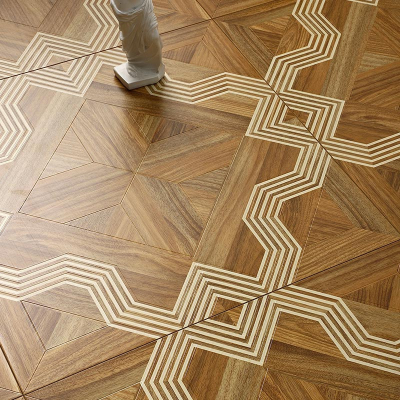
FLOORCASA's laminate flooring range includes an EIR 12mm AC5 laminate parquet wood flooring product, demonstrating how registered embossing can be incorporated into a laminate flooring product specification. FLOORCASA Laminate Flooring Collection
This type of product is particularly relevant when a buyer is looking for a combination of:
Realistic wood appearance
EIR surface texture
HDF laminate construction
Higher wear performance
Parquet-style visual design
Buyers should still request product-specific technical specifications and samples before approving a product for a commercial project.
How to Check Whether Laminate Flooring Is Really EIR
Marketing descriptions are not enough to verify EIR quality.
A simple sample inspection can reveal a lot.
Step 1: Look at the Printed Grain
Identify a visible wood grain, knot, or pore.
Step 2: Touch the Same Area
Run your fingers over the printed feature.
Step 3: Compare the Visual and Physical Texture
Does the physical groove follow the printed grain?
Does the texture correspond to the knot?
Does the surface structure reinforce the printed image?
Step 4: Compare Multiple Planks
Place several planks next to one another.
Check for:
Registration consistency
Repeated patterns
Abrupt visual transitions
Texture mismatch
Color variation
Step 5: Inspect Under Different Lighting
A surface that looks convincing under one lighting condition may reveal texture misalignment under another.
For procurement teams, side-by-side sample inspection is one of the most practical ways to evaluate EIR quality.
Common Problems With EIR Laminate Flooring
EIR technology can improve realism, but poor manufacturing can reduce its benefits.
Problem 1: Misaligned Texture
The printed grain and physical embossing do not match.
Possible cause: Poor registration control or production variation.
What buyers should do: Request multiple samples and check alignment across the complete plank.
Problem 2: Excessive Pattern Repetition
The same decorative pattern becomes obvious after several planks are installed.
Possible cause: Short decorative pattern repeat.
What buyers should do: Request multiple plank samples and installation images showing larger areas.
Problem 3: Texture Is Too Deep
A highly textured surface may look impressive but may not be ideal for every application.
Possible concern: Cleaning and maintenance can become more demanding when the surface contains pronounced grooves.
What buyers should do: Select the surface profile according to the project's maintenance requirements.
Problem 4: EIR Is Used as a Marketing Term
Some product descriptions emphasize "EIR" without providing enough technical information about the actual surface construction or registration quality.
What buyers should do: Request physical samples, technical data, and product-specific manufacturing information.
How to Compare EIR Flooring Suppliers
For large B2B projects, comparing suppliers should go beyond price.
Use the following evaluation criteria:
| Evaluation Area | What to Check |
|---|---|
| EIR registration | Does the physical texture consistently match the printed image? |
| Sample quality | Can the supplier provide multiple planks for comparison? |
| Surface design | Is the wood grain realistic rather than repetitive? |
| Product specification | Are thickness, wear performance, core and surface details clearly provided? |
| Manufacturing capability | Does the supplier have appropriate production capability for the required finish? |
| Quality control | How are surface consistency and registration checked? |
| Pattern repeat | Is the design suitable for large installation areas? |
| Application suitability | Is the texture appropriate for residential or commercial use? |
| OEM/ODM capability | Can the supplier customize designs and surface finishes if required? |
| Project support | Can the supplier provide samples and technical assistance? |
For project procurement, sample quality and production consistency are often more important than simply selecting the lowest quotation.
Standard Embossed vs EIR: Which One Should You Choose?
The answer depends on project requirements.
Choose Standard Embossed Flooring When:
Budget is the primary consideration.
The project does not require maximum visual realism.
The floor will be used in value-oriented residential projects.
The surface design is already visually acceptable.
The additional cost of EIR does not provide enough project value.
Choose EIR Laminate Flooring When:
Realistic wood appearance is important.
The flooring is being used in premium residential projects.
Interior design quality is a major consideration.
The project is hospitality or customer-facing.
The buyer wants the printed grain and physical texture to correspond.
The additional cost is justified by the project's positioning.
Procurement Checklist for EIR Laminate Flooring
Before approving an EIR laminate flooring supplier, ask the following questions:
What type of embossing technology is used?
How is the decorative pattern registered with the embossing process?
Can the supplier provide multiple EIR samples?
Can the supplier provide installation photos?
How is registration consistency controlled during production?
What are the product's wear and performance specifications?
What is the surface texture profile?
How long is the decorative pattern repeat?
Is the EIR finish available for different laminate designs?
Can the supplier provide OEM or ODM customization?
Can the supplier provide technical documentation for project approval?
Can the supplier provide a production sample before mass production?
The answers to these questions provide a much more reliable assessment than simply looking for the term "EIR" in a product description.
Frequently Asked Questions About Embossed and EIR Flooring
What is the difference between embossed and embossed in register?
Standard embossed flooring has a physical surface texture that is not necessarily aligned with the printed decorative image.
Embossed in register (EIR) flooring is manufactured so that the surface texture corresponds to the printed grain, knots, pores, and other decorative features.
Is EIR better than standard embossing?
EIR can provide a more realistic wood appearance because the printed image and physical texture work together.
However, "better" depends on the application. For budget projects, standard embossing may provide sufficient performance and appearance without the additional cost of EIR.
What does EIR mean in laminate flooring?
EIR stands for Embossed in Register.
In laminate flooring, it refers to a surface texture that is registered with the printed decorative layer.
What is registered embossing?
Registered embossing is another way of describing an embossing process in which the surface texture is positioned to correspond with the decorative image.
It is commonly associated with EIR flooring.
How can I tell whether laminate flooring is EIR?
Look at the relationship between the printed grain and the physical surface texture.
In a well-produced EIR product, the physical texture should correspond closely with the visible grain, knots, and pores.
For procurement decisions, always inspect several planks rather than relying on one sample.
Does EIR make laminate flooring more durable?
Not automatically.
EIR primarily affects surface appearance and texture alignment. Overall durability depends on the flooring's complete construction and relevant performance specifications.
Is embossed laminate flooring easy to clean?
Most embossed laminate flooring can be maintained using normal laminate flooring cleaning methods.
However, heavily textured surfaces may require more attention because dirt can accumulate in deeper surface features.
The appropriate surface texture should therefore be selected according to the project's cleaning requirements.
Is EIR laminate flooring more expensive?
EIR generally involves more complex manufacturing and registration control than conventional embossing, so it can carry a higher product cost.
The actual price difference depends on the product construction, design, production volume, customization requirements, and supplier.
For a project quotation, buyers should compare complete product specifications rather than applying a fixed percentage premium.
Can EIR be used for laminate flooring?
Yes.
EIR is widely associated with realistic wood-look laminate flooring and can be incorporated into different decorative designs.
FLOORCASA's laminate flooring collection includes EIR laminate products, providing an example of this technology in a commercial laminate flooring range. View FLOORCASA Laminate Flooring Products
Final Verdict: Embossed vs EIR
The difference between standard embossed flooring and embossed in register flooring is primarily the relationship between the printed decorative image and the physical surface texture.
Standard embossing can provide an attractive textured surface at a more accessible cost.
EIR goes further by coordinating the texture with the printed image, creating a more realistic wood or stone appearance.
For buyers comparing embossed vs textured flooring, embossed laminate flooring, and registered embossing, the most important factors are not simply the marketing terms used by the supplier.
Instead, evaluate:
Texture alignment + sample quality + pattern repeat + product construction + application requirements + supplier manufacturing capability.
For premium residential, hospitality, retail, and design-focused projects, EIR can provide meaningful visual and tactile benefits.
For budget-oriented projects where cost efficiency is more important than maximum realism, conventional embossed laminate flooring may be the more practical option.
The best choice is therefore not simply the most advanced surface technology.
It is the surface technology that provides the right balance of realism, performance, maintenance, and cost for the project.
Explore Laminate Flooring From FLOORCASA
FLOORCASA offers a range of laminate flooring products for residential, commercial, and project applications, including designs using realistic surface textures and EIR technology.
Explore the full Laminate Flooring Collection to compare available products, thicknesses, designs, surface finishes, and project options.
For project sourcing, buyers can request product samples and technical information before making a final specification.
Recommended Image Placement
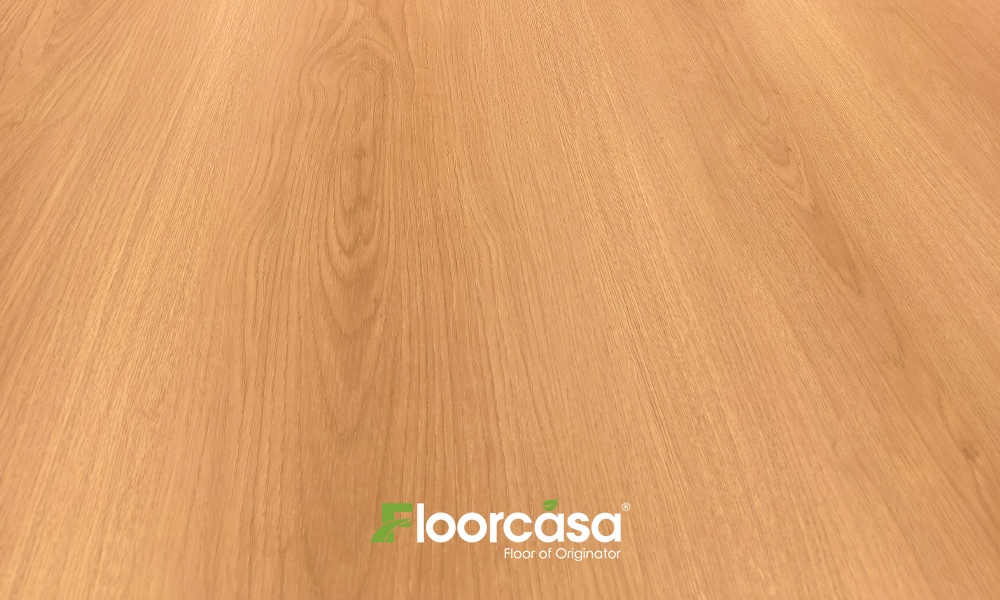
Image 1 — EIR vs Standard Embossing Comparison
Placement: After "Embossed vs Embossed in Register: Key Differences"
Suggested image: Two laminate flooring planks shown side by side. One demonstrates standard embossing with texture independent from the printed grain; the other demonstrates EIR with texture aligned to the printed grain.
Recommended ALT:Embossed vs embossed in register laminate flooring texture comparison
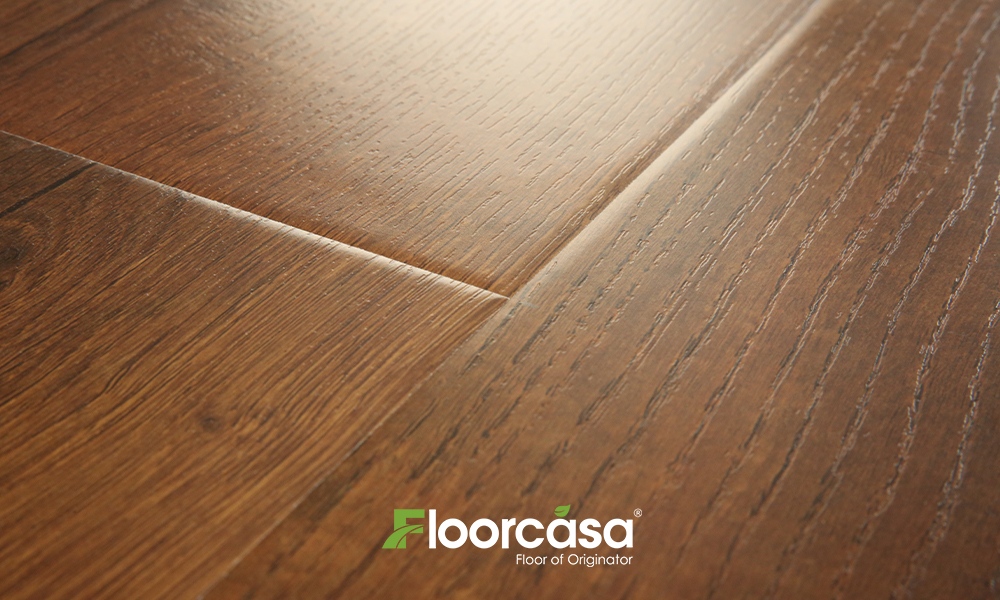
Image 2 — EIR Surface Close-Up
Placement: After "Why Is EIR More Realistic?"
Suggested image: Close-up photograph of an EIR laminate plank showing printed oak grain, knots, pores, and corresponding physical surface texture.
Recommended ALT:EIR embossed in register laminate flooring wood grain close up
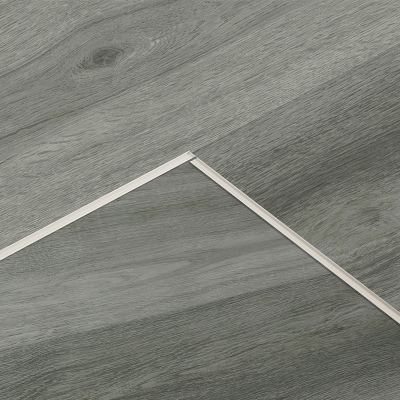
Image 3 — FLOORCASA EIR Laminate Product
Placement: After "Real Product Example: EIR Laminate Flooring"
Suggested image: Actual FLOORCASA EIR laminate flooring product or installed project image.
Recommended ALT:FLOORCASA EIR 12mm AC5 laminate parquet wood flooring
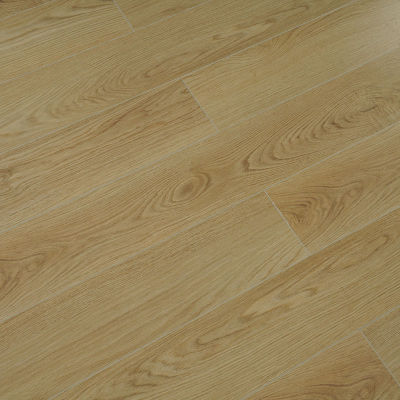
Image 4 — Multi-Plank Sample Inspection
Placement: After "How to Check Whether Laminate Flooring Is Really EIR"
Suggested image: Multiple laminate planks arranged side by side showing alignment between printed grain and surface embossing.
Recommended ALT:EIR laminate flooring sample inspection across multiple planks
About FLOORCASA
FLOORCASA is the flooring brand of JINING FLOORMAKER HOME CO., LTD., a flooring manufacturer offering laminate flooring, SPC flooring, and parquet flooring for international markets.
The company provides flooring products for residential and commercial applications, with OEM and ODM capabilities for project and distributor requirements.
For buyers evaluating EIR laminate flooring, requesting physical samples and product-specific technical specifications is recommended before approving a product for large-volume production or project installation.