Commercial Laminate Flooring Features
Commercial laminate flooring features describe the engineered performance characteristics of high-pressure laminate flooring systems designed for commercial environments, emphasizing wear resistance, dimensional stability, fire performance, and lifecycle durability under sustained foot traffic and maintenance-intensive operating conditions.
Technical Parameters & Specifications
Commercial laminate flooring features are defined by measurable technical indicators used by engineers and procurement teams during specification.
| Parameter | Typical Commercial Range | Reference Standard |
|---|---|---|
| Total Thickness | 8 – 12 mm | EN 13329 |
| Abrasion Class | AC4 – AC6 | EN 13329 / ISO 4586 |
| Impact Resistance | ≥ 10 N | EN 13329 |
| Density (HDF Core) | ≥ 850 kg/m³ | EN 323 |
| Thickness Swelling (24h) | ≤ 8% | EN 317 |
| Fire Rating | Bfl-s1 / Cfl-s1 | EN 13501-1 |
Structure & Material Composition
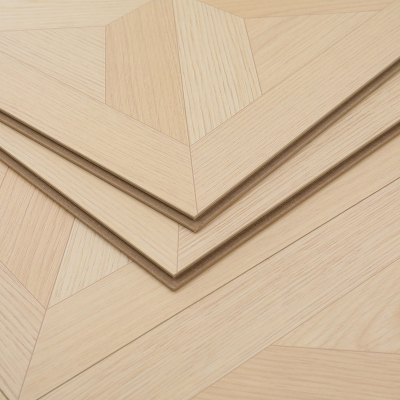
The performance-driven design of commercial laminate flooring features a multilayer composite structure.
Wear Overlay: Melamine resin layer with aluminum oxide particles for abrasion resistance
Decor Layer: Printed paper providing wood, stone, or abstract visuals
HDF Core: High-density fiberboard ensuring load-bearing capacity
Balancing Layer: Counteracting paper for dimensional stability
Edge Treatment: Waxed or sealed click profiles for moisture control
Manufacturing Process
Commercial laminate flooring features are achieved through a controlled industrial manufacturing sequence.
Fiber Preparation: Wood fibers refined, dried, and blended with resin
HDF Pressing: Continuous or multi-opening hot press systems
Paper Impregnation: Decor and overlay papers saturated with melamine resin
Short-Cycle Pressing: High pressure and temperature bonding
Profiling: CNC machining of click-lock systems
Surface Finishing: Texture embossing and quality inspection
Industry Comparison
The table below positions commercial laminate flooring features against alternative commercial flooring materials.
| Material | Durability | Water Resistance | Maintenance | Typical Commercial Use |
|---|---|---|---|---|
| Commercial Laminate | High | Moderate | Low | Retail, offices, education |
| SPC Flooring | Very High | Very High | Low | Hospitality, residential towers |
| LVT | High | High | Medium | Healthcare, offices |
| Carpet Tile | Medium | Low | High | Corporate interiors |
Application Scenarios
Commercial laminate flooring features are specified across multiple stakeholder-driven environments.
Distributors: Stock programs for commercial renovation markets
EPC Contractors: Fast-install flooring for office and retail projects
Developers: Cost-controlled flooring for mixed-use buildings
Engineering Consultants: Specification-driven commercial interiors
Core Pain Points & Engineering Solutions
Surface Wear: Addressed by AC5–AC6 abrasion layers
Moisture Exposure: Mitigated with sealed edges and treated cores
Installation Downtime: Click systems reduce labor hours
Lifecycle Cost: High durability lowers replacement frequency
Risk Warnings & Mitigation Recommendations
Improper specification of commercial laminate flooring features may result in performance issues.
Avoid laminate in permanently wet zones
Confirm fire rating compliance per local code
Ensure expansion gaps in large floor areas
Verify subfloor flatness before installation
Procurement & Selection Guide
Define traffic class and load requirements
Select appropriate AC rating
Confirm moisture resistance specifications
Review fire and slip resistance reports
Evaluate supplier quality control systems
Assess installation method and labor cost
Align flooring lifespan with project budget
Engineering Application Case
In a 12,000 m² office renovation project, AC5-rated commercial laminate flooring was installed using a floating click system. The solution met fire and durability requirements while reducing installation time by approximately 30% compared with glued LVT systems.
FAQ
What defines commercial-grade laminate? AC4 or higher abrasion class.
Is it suitable for heavy traffic? Yes, when properly specified.
Can it be installed over concrete? Yes, with vapor barrier.
Does it require glue? Typically no.
Is it waterproof? Moisture-resistant, not fully waterproof.
What is typical service life? 10–20 years.
Can damaged planks be replaced? Yes, modular replacement is possible.
Is acoustic backing required? Often recommended.
Does it support underfloor heating? Within temperature limits.
Is maintenance complex? No, dry or damp cleaning only.
CTA – Commercial & Technical Request
For detailed documentation on commercial laminate flooring features, including technical datasheets, test reports, pricing, or project samples, procurement and engineering teams are invited to request formal technical support materials.
E-E-A-T Author Credentials
This content is prepared by flooring industry professionals with more than 10 years of experience in commercial laminate manufacturing, international sourcing, and specification support for office, retail, and mixed-use developments.