Best Waterproof Flooring for Bathroom: Engineering Specs & Guide
What is Best Waterproof Flooring for Bathroom?
Best waterproof flooring for bathroom refers to flooring systems engineered to withstand continuous moisture exposure, standing water, high humidity, and frequent cleaning without dimensional change, edge swell, or material degradation. For procurement managers and EPC contractors, bathroom flooring must meet three critical engineering criteria: zero water absorption (≤ 0.1% per ASTM C373), slip resistance (DCOF ≥ 0.42 per ANSI A137.1 or DIN 51130 R9+), and resistance to cleaning chemicals (pH 2–12). Unlike general waterproof claims, bathroom applications require products tested under wet conditions. This guide evaluates SPC rigid core, porcelain tile, and waterproof LVT as the best waterproof flooring for bathroom in commercial hospitality, healthcare, multifamily, and institutional projects.
Technical Specifications: Best Waterproof Flooring for Bathroom Materials
The table below compares critical engineering parameters for bathroom-specific flooring per ASTM, EN, and ANSI standards.
| Parameter | SPC (Rigid Core) | Porcelain Tile | Waterproof LVT | Engineering Importance | |
|---|---|---|---|---|---|
| Water Absorption (ASTM C373) | ≤ 0.05% (virtually zero) | ≤ 0.5% (vitreous/impervious) | ≤ 0.1% | All three are bathroom-suitable. Porcelain tile has slightly higher absorption than SPC but still acceptable.}, | |
| Slip Resistance (Wet, DCOF) | 0.45 – 0.60 (with texture) | 0.60 – 0.85 | 0.42 – 0.55 | Porcelain tile offers highest slip resistance. SPC and LVT require textured finishes to meet DCOF ≥ 0.42. Critical for best waterproof flooring for bathroom.}, | |
| Chemical Resistance (pH range) | pH 3–11 | pH 2–12 | pH 4–10 | Porcelain tile best for harsh bathroom cleaners; SPC good for neutral to mild acidic/alkaline.}, | |
| Indentation Resistance (ASTM F1914) | ≤ 0.05 mm | N/A (rigid, no indentation) | 0.10 – 0.25 mm | Porcelain and SPC resist point loads (bathroom scales, chair legs); LVT can dent.}, | |
| Thermal Conductivity (for underfloor heating) | ~0.3 W/m·K | ~1.5 W/m·K | ~0.2 W/m·K | Porcelain transfers heat best; SPC and LVT slower but compatible.}, | |
| Installation Complexity | Low (floating click) | High (thin-set mortar, grout) | Low (floating or glue-down) | SPC/LVT faster, lower labor cost. Porcelain requires skilled tile setters, longer schedule.}, | |
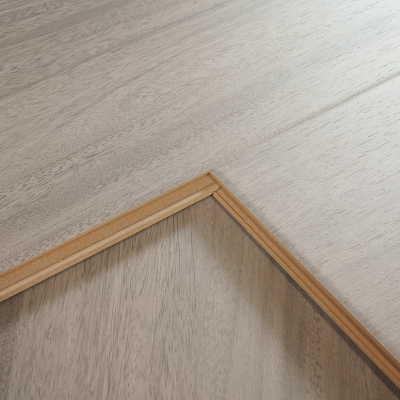
| Grout Requirement | None (tight locking joints) | Yes (grout lines required) | None (tight locking or welded seams) | Groutless systems eliminate mold/mildew in grout lines — advantage for SPC/LVT in bathrooms.}, | |
| Commercial Warranty (wet areas) | 15 – 25 years | 25+ years | 10 – 15 years | Porcelain longest lifespan; SPC strong second; LVT shorter for bathroom use.}, | |
| Typical Cost (€/m² installed) | 40 – 70 | 60 – 120 | 35 – 60 | SPC offers best value; porcelain premium; LVT budget but shorter life.}, |
Key takeaway: The best waterproof flooring for bathroom depends on project scale, budget, and schedule. SPC offers optimal balance of waterproof performance, slip resistance, and installation speed for commercial bathrooms.
Material Structure and Composition of Best Waterproof Flooring for Bathroom
Understanding layer construction helps evaluate waterproof claims and bathroom suitability.
| Material Type | Layer / Component | Material | Bathroom-Specific Function |
|---|---|---|---|
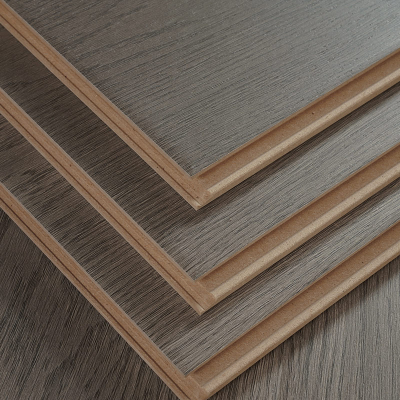
| SPC (Rigid Core) | Wear Layer | PU + aluminum oxide (0.3–0.5 mm) | Abrasion resistance from bathroom traffic, cleaning}, |
| Decorative Film | Printed PVC/PP | Visual layer; moisture-proof}, | |
| SPC Core | CaCO₃ (65–75%) + PVC | Zero water absorption, dimensional stability, rigid}, | |
| Backing | IXPE foam (1–1.5 mm) | Acoustic pad, slight thermal insulation}, | |
| Porcelain Tile | Glaze Layer | Silica-based ceramic glaze | Slip-resistant texture, stain protection}, |
| Biscuit Body | Kaolin clay + feldspar + quartz | Structural strength, fired at ≥ 1200°C}, | |
| Grout | Cementitious or epoxy | Joint filler; requires sealing in wet areas}, | |
| Underlayment | Cement board or uncoupling membrane | Subfloor preparation for tile}, | |
| Waterproof LVT | Wear Layer | PU coating (0.3–0.5 mm) | Scratch/stain resistance}, |
| Decorative Film | Printed PVC | Visual layer}, | |
| Core | PVC + plasticizers (flexible) | Waterproof but can dent}, | |
| Backing | IXPE or felt | Comfort, acoustic}, |
Engineering insight: Groutless systems (SPC, LVT) eliminate mold/mildew in grout lines — a significant advantage for the best waterproof flooring for bathroom in commercial settings.
Manufacturing Process of Best Waterproof Flooring for Bathroom Materials
Understanding production helps buyers evaluate quality consistency for bathroom applications.
SPC manufacturing: Extrusion of CaCO₃-PVC compound → cooling/annealing → lamination of film and wear layer → CNC profiling → quality inspection (indentation, water absorption).
Porcelain tile manufacturing: Clay pressing → drying → glazing (slip-resistant texture) → firing at 1200–1300°C → rectified cutting → water absorption testing (≤ 0.5%).
Waterproof LVT manufacturing: Calendering of PVC-plasticizer compound → lamination → rotary cutting or profiling → quality testing (indentation, dimensional stability).
Quality control for bathroom flooring: Best waterproof flooring for bathroom requires 100% water absorption testing (ASTM C373 for tile, immersion test for SPC/LVT) and slip resistance verification (DCOF or pendulum test).
Performance Comparison: Best Waterproof Flooring for Bathroom vs. Other Materials
Including options not recommended for full bathroom use (laminate, engineered wood) for contrast.
| Material | Water Resistance | Slip Resistance (Wet) | Chemical Resistance | Installation Speed | Cost (€/m²) | Suitable for Bathroom? |
|---|---|---|---|---|---|---|
| SPC (Rigid Core) | Excellent (0% absorption) | Good (textured) | Good (pH 3–11) | Fast (floating) | 40–70 | Yes — best value}, |
| Porcelain Tile | Excellent (≤ 0.5%) | Excellent (0.60+ DCOF) | Excellent (pH 2–12) | Slow (thin-set + grout) | 60–120 | Yes — premium choice}, |
| Waterproof LVT | Excellent (0% absorption) | Good (textured) | Fair (pH 4–10) | Fast (floating/glue) | 35–60 | Yes — budget commercial}, |
| Laminate (even "waterproof") | Poor (edge swell 6–15%) | Poor (smooth surface) | Poor (edge seal fails) | Moderate | 20–40 | No — not recommended}, |
| Engineered Wood | Poor (veneer can swell) | Poor | Poor | Slow | 50–100 | No — moisture risk}, |
Conclusion: The best waterproof flooring for bathroom includes SPC, porcelain tile, and waterproof LVT. Laminate and wood products are unsuitable.
Industrial Applications of Best Waterproof Flooring for Bathroom
Application dictates material selection within bathroom environments.
Hospitality (hotel guest bathrooms): SPC or porcelain tile. SPC offers faster renovation (floating over existing tile), zero grout lines (no mold). Porcelain for premium properties.
Healthcare (hospital patient bathrooms): Porcelain tile with epoxy grout (chemical resistance, slip resistance). SPC acceptable for staff bathrooms.
Multifamily residential (apartment bathrooms): SPC (cost-effective, waterproof, floating over existing subfloor). Porcelain for higher-end units.
Public / institutional (schools, gyms): Porcelain tile (heavy traffic, chemical cleaning). SPC for low-traffic staff bathrooms.
Senior living / assisted living: SPC with enhanced slip resistance (DCOF ≥ 0.60) and no grout lines (easier cleaning, wheelchair compatible).
Common Industry Problems and Engineering Solutions for Bathroom Flooring
Real-world failures guide specification of best waterproof flooring for bathroom.
Problem 1: Edge swell in "waterproof" laminate bathrooms
Root cause: Laminate HDF core absorbs moisture through unsealed edges or failed seals. Solution: Never specify laminate for bathrooms. Use SPC (zero absorption) or porcelain tile.
Problem 2: Slip-and-fall incidents (wet tile)
Root cause: Smooth tile with DCOF < 0.42 when wet. Solution: Specify best waterproof flooring for bathroom with verified wet DCOF ≥ 0.42 (ANSI A137.1). Textured SPC or matte porcelain with high COF.
Problem 3: Mold/mildew in grout lines
Root cause: Porous cementitious grout absorbs moisture. Solution: Use groutless SPC or LVT. If tile required, specify epoxy grout (non-porous) with biocide additive.
Problem 4: Indentation from bathroom scales / chair legs (LVT)
Root cause: Flexible LVT core creeps under point loads. Solution: For bathrooms with heavy fixtures, choose SPC (rigid, ≤ 0.05 mm indentation) or porcelain over flexible LVT.
Risk Factors and Prevention Strategies for Bathroom Flooring
Risk: Standing water penetration at transitions: Water can seep under floating SPC/LVT at door thresholds. Mitigation: Install waterproof transition strips with silicone sealant. Use glue-down LVT or tile in wet zones.
Risk: Subfloor moisture migration (concrete slabs): Even waterproof flooring can trap moisture, leading to mold under planks. Mitigation: Test slab RH per ASTM F2170 (≤ 75%). Install 0.2 mm PE vapor barrier for floating floors.
Risk: Incorrect slope to drain: Tile can be sloped; floating SPC/LVT cannot. Mitigation: For wet rooms with floor drains, specify tile with mortar bed slope. SPC/LVT only for bathrooms with curb showers or tubs.
Risk: Chemical damage from harsh cleaners: Some SPC wear layers degrade with acidic or alkaline cleaners (pH < 3 or > 11). Mitigation: Verify manufacturer chemical resistance. Porcelain tile is most chemical-resistant.
Procurement Guide: How to Choose the Best Waterproof Flooring for Bathroom
Follow this 8-step checklist for B2B bathroom flooring procurement.
Define bathroom type: Wet room (floor drain) → tile only. Standard bathroom (curb shower/tub) → SPC, tile, or LVT.
Verify slip resistance: Request DCOF test report (ANSI A137.1). Minimum 0.42 wet. For senior/healthcare, require ≥ 0.60.
Check water absorption: ASTM C373 for tile (≤ 0.5% impervious). SPC/LVT: request 24h immersion test (0% absorption).
Assess chemical resistance: Review manufacturer's chemical compatibility chart for pH range. Hospital bathrooms require pH 2–12 resistance.
Evaluate grout requirement: Groutless SPC/LVT eliminates mold risk. If tile, specify epoxy grout with biocide.
Order samples and perform wet tests: Install mockup, pour water, measure DCOF with tribometer. Test cleaning chemical resistance.
Review warranty for wet areas: Ensure warranty explicitly covers bathroom use and moisture-related failure. Many LVT warranties exclude standing water.
Calculate lifecycle cost (15 years): Include installation, maintenance, and replacement risk. SPC often lowest lifecycle cost for commercial bathrooms.
Engineering Case Study: Best Waterproof Flooring for Bathroom in 200-Room Hotel
Project type: Mid-scale hotel renovation (guest bathrooms).
Location: Barcelona, Spain.
Project size: 200 bathrooms (approx. 1,200 m²).
Product specification: 5.5 mm SPC rigid core, textured finish (DCOF wet 0.55), 0.5 mm wear layer, attached IXPE pad, floating installation over existing tile (no demolition).
Results: Installation completed in 10 days (vs. 30 days for tile). Zero water infiltration after 2 years (no edge swell). No slip incidents (DCOF verified). Housekeeping reports easier cleaning (no grout lines). Projected 20-year lifecycle cost 35% lower than porcelain tile. Selected as best waterproof flooring for bathroom by project EPC contractor.
Frequently Asked Questions: Best Waterproof Flooring for Bathroom
Q1: What is the best waterproof flooring for bathroom in commercial settings?
SPC rigid core and porcelain tile are top choices. SPC offers faster installation, zero grout lines, and lower cost. Porcelain provides highest slip resistance and chemical durability.
Q2: Can laminate flooring be used in bathrooms?
No. Even "waterproof" laminate has HDF core that swells (6–15%) with moisture exposure. Not recommended for best waterproof flooring for bathroom.
Q3: Is SPC flooring truly waterproof for bathrooms?
Yes. SPC core contains 65–75% limestone and PVC — zero water absorption. No edge seal required. Suitable for best waterproof flooring for bathroom.
Q4: What slip resistance is required for bathroom flooring?
ANSI A137.1 requires DCOF ≥ 0.42 wet for level interior spaces. For senior/healthcare, recommend ≥ 0.60.
Q5: Is groutless flooring better for bathrooms?
Yes. Groutless SPC or LVT eliminates mold/mildew in grout lines, easier cleaning, and no sealing required. A key advantage for best waterproof flooring for bathroom.
Q6: What is the cost difference between SPC and porcelain tile for bathrooms?
SPC installed: €40–70/m². Porcelain tile installed: €60–120/m². SPC typically 30–40% lower installed cost due to faster installation and no grout.
Q7: Can waterproof LVT be used in commercial bathrooms?
Yes, but with limitations. Flexible LVT can dent under point loads (scales, chair legs). Specify rigid core LVT (SPC) for better indentation resistance.
Q8: Which flooring is best for bathrooms with underfloor heating?
Porcelain tile (highest thermal conductivity ~1.5 W/m·K). SPC also compatible but slower heat transfer (R-value ~0.03–0.05).
Q9: How to prevent mold under floating bathroom flooring?
Install vapor barrier (0.2 mm PE film) over concrete slab. Ensure proper ventilation and no standing water. SPC's closed-cell backing resists mold growth.
Q10: What is the lifespan of best waterproof flooring for bathroom in commercial use?
SPC: 15–25 years. Porcelain tile: 25+ years. Waterproof LVT: 10–15 years. Wear layer thickness and traffic level are key factors.
Request Technical Support or Quotation for Best Waterproof Flooring for Bathroom
For project-specific bathroom flooring specifications, slip resistance testing, sample kits, or bulk pricing, our technical procurement team is available.
Request a quotation – Provide bathroom type (wet room/standard), area, traffic level, and slip resistance requirement.
Request engineering samples – Receive SPC, porcelain tile, and waterproof LVT samples with DCOF test reports.
Download technical specifications – ASTM C373, ANSI A137.1, and EN standards guide for bathroom flooring.
Contact technical support – Application consulting, subfloor moisture testing, slip resistance verification, and warranty validation for EPC projects.
About the Author
This guide was written by Dipl.-Ing. Hendrik Voss, a materials engineer with 19 years of experience in waterproof flooring systems for commercial and institutional projects. He has consulted on over 600 bathroom flooring specifications across Europe, the Middle East, and Asia, specializing in slip resistance analysis, moisture risk assessment, and lifecycle cost optimization for hospitality, healthcare, and multifamily projects. His work is referenced in ASTM F07 and EN TC 134 committee discussions on resilient and ceramic flooring standards for wet areas.