3.5mm SPC Flooring vs Laminate Flooring — Is SPC Better?
As resilient flooring continues to replace traditional materials in global construction and renovation projects, international buyers increasingly ask a critical question: is SPC better than laminate? From a professional procurement standpoint, the answer depends on performance requirements, application environments, and total lifecycle cost rather than surface appearance alone.
In recent years, 3.5mm SPC flooring has gained strong traction as a cost-efficient rigid core solution positioned between traditional laminate flooring and thicker SPC products. Understanding how it compares to laminate flooring is essential for distributors, project contractors, and brand owners making long-term sourcing decisions.
Global Flooring Industry Background
Shifting Demand from Laminate to Rigid Core
The global flooring market is undergoing a structural shift. While laminate flooring dominated entry- and mid-level segments for decades, rigid core products—particularly SPC flooring—are rapidly gaining market share. This shift is driven by:
l Increased demand for waterproof flooring
l Growth in renovation and replacement projects
l Higher expectations for dimensional stability
In mature markets such as North America and Europe, SPC flooring is increasingly specified as a laminate alternative, especially in moisture-prone environments.
Position of 3.5mm SPC Flooring in Global Trade
Among rigid core options, 3.5mm SPC flooring has become a mainstream export product due to its balance of performance, weight efficiency, and competitive pricing. It allows buyers to transition away from laminate flooring without significant cost escalation.
Understanding Laminate Flooring
Structure and Performance Characteristics
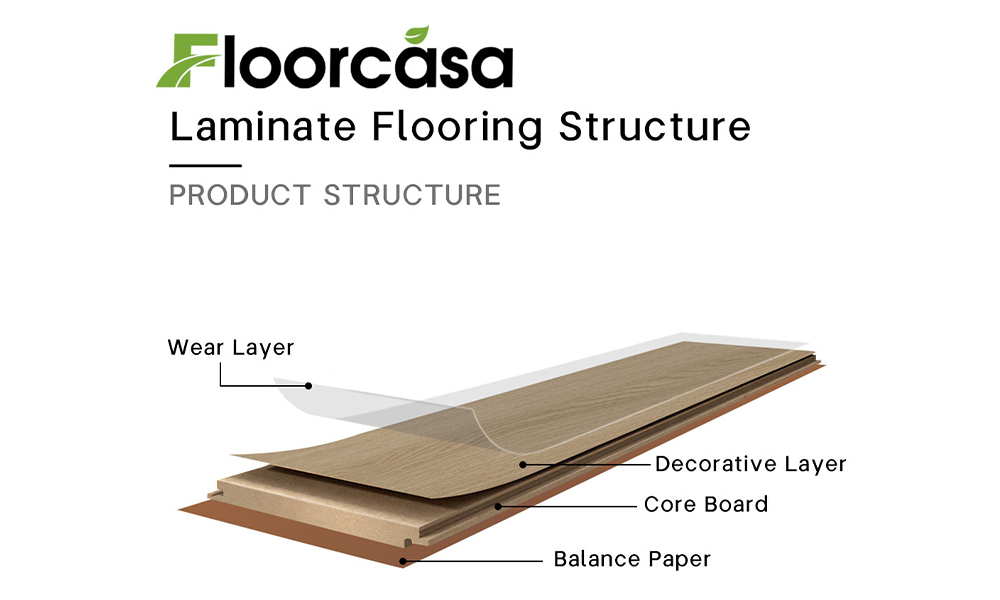
Laminate flooring typically consists of:
l A wear-resistant overlay
l A printed decorative paper
l An HDF (high-density fiberboard) core
l A backing layer
While laminate flooring offers strong surface durability and cost advantages, its performance is limited by the moisture sensitivity of the HDF core.
Limitations in Modern Applications
In global projects, laminate flooring increasingly faces challenges such as:
l Susceptibility to swelling when exposed to moisture
l Limited suitability for kitchens, basements, and commercial areas
l Stricter building codes requiring water-resistant solutions
These limitations have opened the door for SPC flooring adoption.
What Makes 3.5mm SPC Flooring Different?
Rigid Core Technology
The defining feature of 3.5mm SPC flooring is its stone-plastic composite core, typically composed of calcium carbonate and polymer resin. This structure provides:
l Excellent dimensional stability
l Resistance to temperature fluctuations
l Waterproof performance
Unlike laminate flooring, SPC flooring does not rely on wood-based cores, making it inherently more stable in demanding environments.
Thin Profile with Structural Strength
Despite its thinner profile, 3.5mm SPC flooring maintains rigidity through high core density rather than thickness alone. This allows it to perform reliably while reducing material usage and logistics costs.
Technical Comparison — SPC vs Laminate
Moisture Resistance
From a technical standpoint, SPC flooring is clearly superior:
l SPC flooring is 100% waterproof
l Laminate flooring is water-resistant at best
For buyers serving regions with humid climates or strict performance standards, 3.5mm SPC flooring offers a decisive advantage.
Dimensional Stability
SPC flooring outperforms laminate flooring in:
l Expansion and contraction control
l Resistance to warping under temperature changes
This makes SPC flooring particularly suitable for large-format installations and commercial projects.
Product Structure Comparison
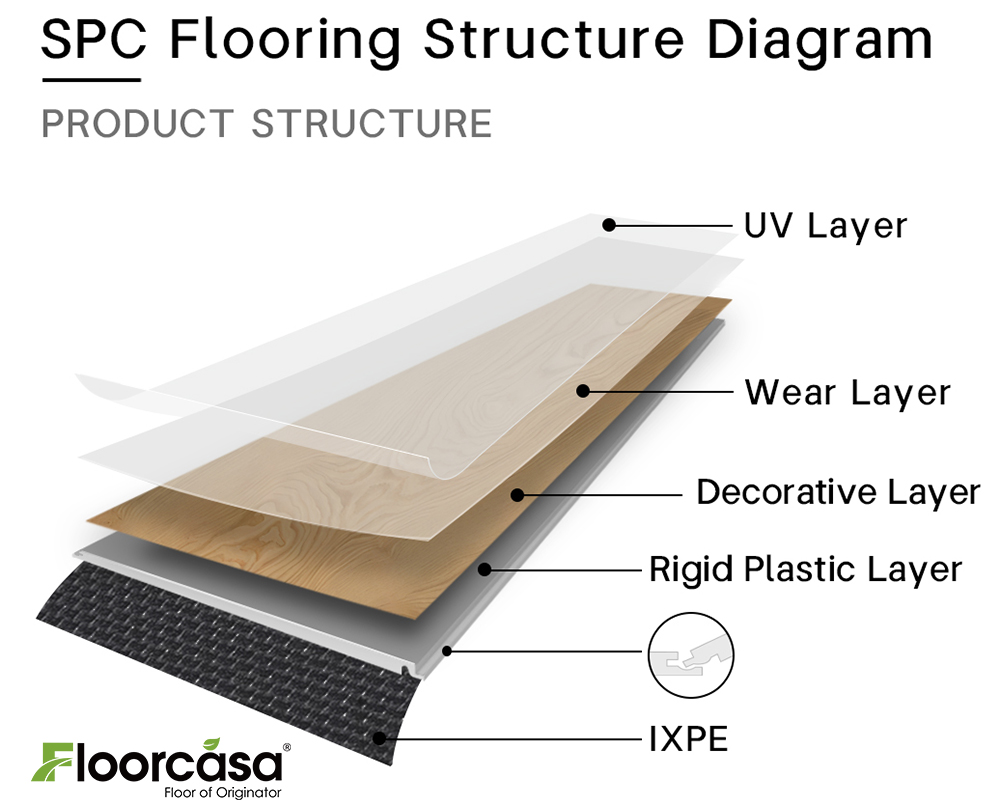
3.5mm SPC Flooring Structure
A typical 3.5mm SPC flooring product includes:
1. UV protective coating
2. Wear layer (0.3–0.5mm)
3. Decorative film
4. SPC rigid core
5. Optional attached underlayment
Laminate Flooring Structure
Laminate flooring relies on:
l Thicker HDF cores
l Moisture-sensitive wood fibers
This structural difference fundamentally explains why SPC flooring increasingly replaces laminate flooring in professional specifications.
Manufacturing Process Considerations
SPC Flooring Manufacturing
3.5mm SPC flooring is produced through high-temperature extrusion and precision calendering. Advanced CNC profiling ensures accurate click systems, which is especially critical for thinner SPC flooring.
Laminate Flooring Manufacturing
Laminate flooring manufacturing involves pressing wood fibers under high pressure. While efficient, this process limits moisture resistance and dimensional stability compared to SPC flooring.
Cost and Logistics Analysis
Is SPC More Expensive Than Laminate?
Historically, SPC flooring was more expensive. However, with scale production and thinner formats like 3.5mm SPC flooring, the cost gap has narrowed significantly.
When considering:
l Reduced failure risk
l Broader application range
l Lower warranty exposure
SPC flooring often delivers better overall value.
Shipping and Installation Efficiency
3.5mm SPC flooring offers:
l Lower weight per square meter than thicker SPC products
l Faster installation with modern click systems
These factors improve landed cost for international buyers.
Market Trends Supporting SPC Over Laminate
Regulatory and Performance Standards
Building codes and buyer expectations increasingly favor waterproof and low-maintenance flooring. SPC flooring aligns well with these trends, while laminate flooring faces declining acceptance in some markets.
Growth of Renovation Projects
Renovation projects benefit from the thin profile of 3.5mm SPC flooring, reducing door trimming and height transitions compared to thicker alternatives.
International Buyer Preferences and Pain Points
What Global Buyers Prefer
Buyers sourcing flooring for export markets increasingly prioritize:
l Waterproof performance
l Stable click-lock systems
l Consistent quality across batches
Floorcasa designs its 3.5mm SPC flooring programs to address these requirements.
Common Buyer Concerns
Some buyers worry that thinner SPC flooring compromises durability. In practice, core density, wear layer quality, and installation standards matter far more than thickness alone.
Is SPC Better Than Laminate for Global Projects?
From a professional B2B perspective, SPC flooring is generally better than laminate flooring for most modern applications. 3.5mm SPC flooring, in particular, offers a compelling combination of performance, cost efficiency, and versatility that aligns with current market demands.
Laminate flooring may still serve price-sensitive or low-risk applications, but SPC flooring increasingly represents the future-proof choice.
Frequently Asked Questions (B2B)
Is 3.5mm SPC flooring durable enough compared to laminate?
Yes. With a suitable wear layer and proper installation, 3.5mm SPC flooring outperforms laminate in durability and stability.
Does SPC flooring completely replace laminate flooring?
Not entirely. Laminate flooring remains relevant in low-moisture, entry-level markets, but SPC flooring is rapidly expanding its share.
Is 3.5mm SPC flooring suitable for commercial projects?
It is suitable for light-commercial environments and high-volume residential projects when correctly specified.
Which option offers better long-term value?
For most international projects, SPC flooring offers better long-term value due to lower failure risk and broader application range.
Conclusion and Professional Call to Action
When evaluating is SPC better than laminate, international buyers increasingly conclude that performance, stability, and waterproof capability outweigh marginal cost differences. 3.5mm SPC flooring delivers these advantages in a cost-effective, export-friendly format.
Floorcasa supplies high-quality 3.5mm SPC flooring engineered for global B2B markets, with controlled tolerances, reliable click systems, and comprehensive technical documentation.
For pricing, technical datasheets, or samples tailored to your target market, contact Floorcasa to support your next flooring project with confidence and clarity.