Waterproof Flooring for Pets: How to Choose the Best Option
Introduction
Choosing flooring for a home or business with pets is not simply a matter of picking a product labeled "waterproof." Pet owners and facility managers need to balance four separate performance areas: water and urine resistance, scratch and wear resistance, slip resistance, and ease of cleaning. A floor that performs well in one area may be average or poor in another.
This guide explains how SPC, WPC and vinyl flooring actually differ for pet use, what "pet-proof" really means in practice, and how to choose the right floor for dogs, cats, puppies, senior pets, grooming salons, veterinary clinics and pet hotels. It is written for homeowners and B2B buyers who need practical selection criteria rather than general market statements.
What Makes Flooring Pet-Friendly?
"Pet-friendly" is often used loosely. In practice, it should be evaluated across four separate performance areas. No single feature, such as a waterproof core or a UV coating, can substitute for the others.
Water and Urine Resistance
Water resistance usually refers to the core of the plank or tile. SPC and WPC cores are typically water-resistant, and many vinyl products are as well. However, a water-resistant core does not mean the entire installed floor system is sealed. Pet urine can enter through plank joints, wall edges, doorways and transition profiles, and reach the subfloor.
When evaluating a product, ask:
Is the core itself water-resistant?
How tight is the click-lock or glued joint?
What edge and perimeter protection is specified?
What maintenance is required after accidents?
Pet urine should always be cleaned up promptly. "Waterproof" is not a license to leave liquid standing on the floor.
Scratch and Wear Resistance
Scratch resistance, wear resistance, impact resistance and indentation resistance are different properties. A thick wear layer improves abrasion performance, but it does not by itself prove that a floor will resist dog claws. Surface coating, surface structure and the specific test results for a product all matter.
Buyers should ask for the actual test data relevant to the product, rather than relying on general claims that a material is "ideal for large or active pets."
Slip Resistance
Waterproof does not mean slip-resistant, and a textured surface does not automatically mean better traction.
Smooth versus textured surfaces. Smooth surfaces are easier to wipe clean but can offer less mechanical grip when wet. Deeply embossed or textured surfaces can improve traction but may trap hair, sand and moisture, which can itself reduce grip over time if not cleaned. Lightly textured surfaces are often a practical compromise, but the actual performance depends on the specific product.
Paws, claws and friction. Pets walk on pads and claws, not flat shoe soles. Traction depends on the contact between pads and the surface structure. Very smooth surfaces, polished finishes and surfaces that become slick when wet can increase slipping, especially for puppies, senior dogs and pets with joint or mobility issues.
Wet and urine-contaminated conditions. A floor that performs acceptably when dry may become slippery when wet or contaminated with urine. This is a common gap in residential flooring selection. Slip performance should be considered in the condition the floor will actually be in, not only when clean and dry.
How to judge slip performance from test information. Ask for slip-resistance test information applicable to the product rather than a general "anti-slip" claim. Relevant questions include:
Which test method was used, and was it conducted on dry, wet or contaminated surfaces?
What were the reported results, and how do they compare with the intended application?
Does the product specification state a slip-resistance class or rating?
Test methods vary by region and product type, so the specific method and conditions matter more than a single headline number. Where no product-specific slip data is available, treat "anti-slip" as a marketing term rather than a verified property.
Easy Cleaning and Odor Control
Ease of cleaning depends on the surface texture, joint tightness and coating. Smooth surfaces are generally easier to wipe, while deeply embossed surfaces can trap dirt, hair and moisture in the texture. Odor control is closely related to how quickly liquids are removed and whether they can enter joints or edges.
A practical cleaning routine includes:
Prompt removal of urine and liquid spills
Regular removal of pet hair, sand and dust
Use of cleaning products approved by the flooring manufacturer
Avoidance of aggressive cleaners that may damage the surface coating
Periodic inspection of joints, wall edges and doorways
Best Waterproof Flooring Options for Pets
1. SPC Flooring
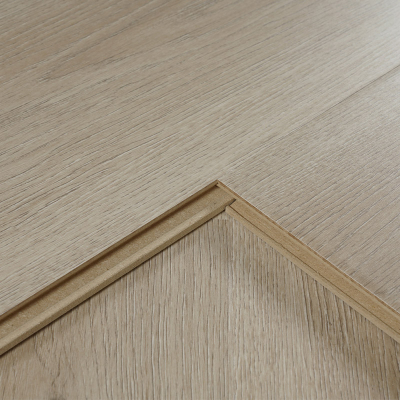
SPC (Stone Plastic Composite) flooring has a rigid composite core, usually limestone-based, with a decorative layer and a wear layer on top. It is typically water-resistant at the core and is commonly installed as a click-lock floating floor.
For pet owners, the main advantages are dimensional stability and everyday water resistance. The main considerations are:
The floor feels harder underfoot than WPC or some vinyl products.
Click-lock performance and subfloor flatness are important for joint tightness.
Scratch and slip performance depend on the surface structure and coating, not on the core material alone.
SPC is often a reasonable choice for households focused on water resistance and easy cleaning, but buyers should still check slip resistance and joint quality for their specific product.
2. WPC Flooring
WPC (Wood Plastic Composite) flooring uses a foamed composite core, which usually provides a softer and warmer feel underfoot than SPC. This can be beneficial for pets' joints and for comfort in living areas.
When comparing WPC products for pet use, pay attention to:
Indentation resistance under heavy furniture or concentrated loads
Click-lock strength and joint tightness
Surface wear and scratch performance
Slip resistance when wet
WPC is not automatically better or worse than SPC for pets. The right choice depends on the specific product's structure and test data.
3. LVT / LVP Flooring
Luxury Vinyl Tile (LVT) and Luxury Vinyl Plank (LVP) products vary widely in structure and installation method. Glue-down and click-lock versions have different characteristics:
Glue-down LVT can offer tight joints and good dimensional stability, but installation quality and subfloor preparation are critical.
Click-lock LVT is easier to install and replace, but joint tightness and edge protection need attention in pet areas.
Water resistance depends on the product structure and installation, not on the "vinyl" label alone. Stain resistance is generally good, but scratch and slip performance should be verified per product.
4. Porcelain Tile (as a Comparison)
Porcelain tile is water-resistant and easy to clean, and it does not absorb urine. However, it is hard and cold underfoot, can be slippery when wet, and grout lines require regular cleaning. For pets, especially senior or large dogs, surface texture and slip resistance should be carefully considered.
SPC vs WPC vs LVT for Dogs and Cats
| Comparison | SPC | WPC | LVT |
|---|---|---|---|
| Core structure | Rigid composite core | Foamed composite core | Multi-layer PVC structure |
| Underfoot feel | Firmer | Usually softer | Varies by product |
| Water resistance | Core typically water-resistant | Core typically water-resistant | Depends on product structure |
| Scratch resistance | Depends on surface structure and testing | Depends on surface structure and testing | Depends on surface structure and testing |
| Slip resistance | Depends on surface and testing | Depends on surface and testing | Depends on surface and testing |
| Installation | Commonly click-lock | Commonly click-lock | Glue-down or click-lock |
There is no single material that wins across all criteria. The right approach is to compare specific products on core structure, joint design, surface coating, test reports and installation requirements for the intended space.
Best Flooring for Different Pets and Living Spaces
Homes with Large Dogs
Large dogs generate more impact, claw wear and saliva or water spillage. Look for products with verified wear and scratch performance, tight joints and good slip resistance. Firmer SPC products may suit high-traffic areas, while WPC may be preferred where comfort underfoot matters more. Check indentation resistance if heavy furniture or crates are present.
Homes with Cats
Cats scratch, jump and sometimes vomit or spray. Easy cleaning and stain resistance are important, along with surface durability. Litter tracking is also a factor, so smooth or lightly textured surfaces that are easy to sweep are often practical.
Homes with Puppies and Senior Dogs
For puppies and senior dogs, slip resistance and comfort underfoot are usually the top priorities. Softer WPC or suitable vinyl products may be preferable, provided the surface offers adequate traction when wet. Consider lightly textured surfaces and avoid highly polished finishes in areas where these pets walk.
Homes with Multiple Pets
Multiple pets mean more accidents, more hair and more traffic. Prioritize joint tightness, edge protection, easy cleaning and verified slip resistance, and plan a maintenance routine that includes checking seams and wall edges.
Pet Grooming Salons
Grooming salons need water resistance, slip resistance, chemical compatibility with grooming products, and easy cleaning of hair and debris. Key considerations include:
Chemical compatibility: grooming shampoos, conditioners and disinfectants can affect surface coatings. Confirm which cleaning agents the product is compatible with.
Cleaning frequency: salons clean frequently and often with wet methods. Slip performance when wet is more important than dry performance.
Hair and debris removal: smooth or lightly textured surfaces are easier to sweep and rinse than deeply embossed surfaces.
Joint and edge hygiene: tight joints and sealed edges reduce the risk of hair, water and chemicals entering the subfloor.
Residential click-lock flooring is not automatically suitable for professional facilities. Commercial-grade products and proper edge sealing should be considered.
Veterinary Clinics and Pet Hotels
Clinics and pet hotels require floors that withstand frequent cleaning and disinfection, rolling equipment loads and high traffic. Key considerations include:
Disinfectant compatibility: confirm the product's resistance to the disinfectants used in the facility.
Rolling loads: carts, cages and equipment require adequate indentation and impact resistance.
Slip resistance under wet conditions: cleaning and accidents mean the floor is often wet.
Joint hygiene: tight joints and sealed edges support effective cleaning and reduce odor risk.
Product selection should be based on commercial specifications and test data, not on residential product labels.
How to Choose Scratch-Resistant and Slip-Resistant Flooring
When comparing products, focus on these factors:
Wear layer thickness: relevant to abrasion performance, but not a direct measure of scratch resistance
Surface coating: UV-cured coatings and other treatments affect surface performance
Scratch-resistance testing: ask for test data specific to the product
Slip-resistance testing: check the test method and results, including wet conditions where relevant
Surface texture: affects traction and cleaning; deeper texture is not always better
Pet traction and mobility: consider the age, size and mobility of the pets in the space
Do not assume that a thicker wear layer automatically means better scratch resistance, or that a wood-grain embossing automatically means better slip resistance.
How to Prevent Pet Urine from Damaging Flooring
Clean up urine promptly with an appropriate cleaning product.
Check plank joints, wall edges, doorways and transition profiles regularly.
Use cleaning products approved by the flooring manufacturer.
Inspect for curled edges, open joints or signs of moisture penetration.
Maintain pet activity areas with a consistent cleaning routine.
Consider perimeter sealing or appropriate underlayment where specified.
A water-resistant core reduces the risk of damage, but installation quality and maintenance determine how well the floor system performs over time.
How to Maintain Waterproof Flooring in Pet-Friendly Homes
Remove pet hair, sand and dust regularly.
Clean liquid and urine spills promptly.
Use manufacturer-approved cleaners and avoid aggressive chemicals.
Protect furniture contact points to reduce indentation and scratching.
Inspect joints and edges periodically.
Follow the manufacturer's instructions for the specific product and installation method.
Product Testing and Safety Considerations
Different standards cover different things, and they should not be mixed together as proof of pet performance:
EN 13329 primarily covers laminate flooring, not SPC, WPC or LVT as a general rule.
ASTM F1700 is a product specification for solid vinyl floor tile, not a pet scratch or slip certification.
GREENGUARD relates to chemical emissions and indoor air quality, not water, scratch or slip performance.
LEED is a green building rating system, not a flooring product certification.
Buyers should request the specific test reports relevant to the product, such as slip resistance, wear resistance, scratch resistance and VOC emissions, and match them to the intended application.
Frequently Asked Questions
What is the best waterproof flooring for dogs?
There is no single best product. Compare SPC, WPC and vinyl products on core water resistance, joint tightness, slip resistance, scratch and wear test data, and ease of cleaning for your specific space.
What is the best flooring for cats?
Easy-to-clean, stain-resistant flooring with adequate surface durability and slip resistance is generally suitable. Smooth or lightly textured surfaces are often easier to maintain.
Can dog claws scratch SPC flooring?
SPC can be scratched depending on the surface coating, wear layer and the pet's activity. Ask for product-specific scratch and wear test information rather than relying on general claims.
Is SPC flooring slippery for dogs?
Slip performance depends on the surface structure and condition of the floor. Check slip-resistance test data and consider how the floor performs when wet or contaminated with urine.
Can dog urine damage vinyl flooring?
Urine can affect vinyl flooring if it enters joints or edges and is left standing. Prompt cleaning and proper joint and edge protection reduce the risk.
Is WPC flooring better than SPC for pets?
Neither is universally better. WPC is usually softer underfoot, while SPC is typically firmer and more dimensionally rigid. The right choice depends on the product's structure, test data and the needs of the pets and space.
What flooring is best for pet grooming salons?
Commercial-grade flooring with water resistance, slip resistance, chemical compatibility and easy cleaning is generally required. Residential click-lock products should be evaluated carefully before use in professional facilities.
How do you remove pet urine from waterproof flooring?
Clean it up promptly with a manufacturer-approved cleaner, dry the surface, and check joints and edges for any penetration. Persistent odor may indicate liquid has reached the subfloor or edges.
Conclusion
Choosing waterproof flooring for pets is a comparison exercise, not a single-product decision. SPC, WPC and vinyl each have different strengths and limitations, and performance depends on the specific product's core, joint design, surface coating and test data. By focusing on water and urine resistance, scratch and wear performance, slip resistance and easy cleaning, homeowners and commercial buyers can select flooring that suits their pets and their space.