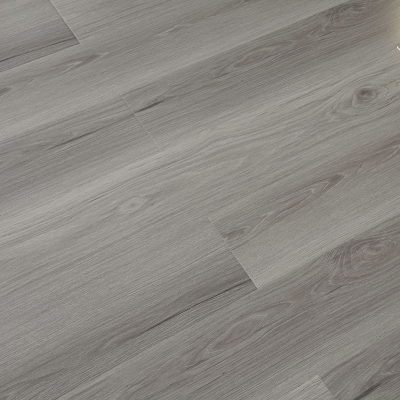
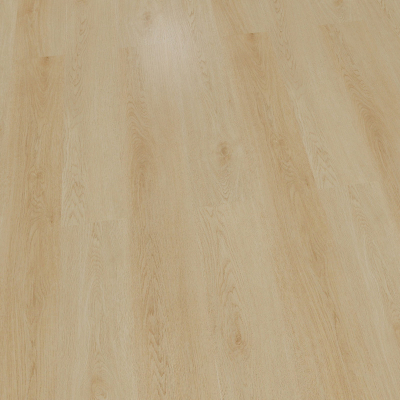
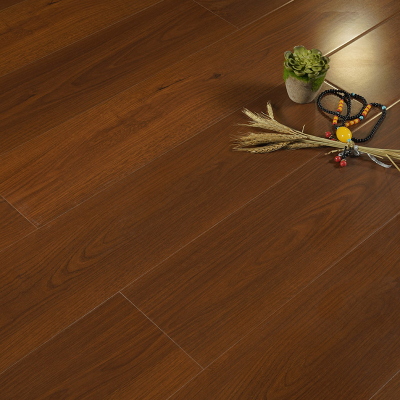
Waterproof Flooring That Looks Like Real Hardwood
Waterproof flooring that looks like real hardwood refers to engineered resilient flooring systems—typically SPC, WPC, or advanced waterproof laminate—designed to replicate natural wood grain, texture, and plank dimensions while providing full moisture resistance, dimensional stability, and commercial-grade durability for residential and light commercial projects.
Technical Parameters and Specifications
SPC (Stone Plastic Composite) Wood-Look Flooring
Total Thickness: 4.0–6.5 mm
Wear Layer: 0.3–0.7 mm (commercial grade ≥0.5 mm)
Core Density: ≥1900 kg/m³
Water Absorption: <0.1%
Dimensional Stability: ≤0.15%
Plank Size: 1220–1830 mm length; 150–230 mm width
Embossing: EIR (Embossed in Register) synchronized texture
Fire Rating: Bfl-s1 (EN 13501-1 typical)
WPC (Wood Plastic Composite) Wood-Look Flooring
Total Thickness: 5.5–8.0 mm
Wear Layer: 0.3–0.5 mm
Core Density: 1200–1500 kg/m³
Impact Sound Reduction: 18–20 dB (with backing)
For projects requiring waterproof flooring that looks like real hardwood, SPC is generally preferred for higher dimensional stability in humid climates.
Structure and Material Composition
Typical SPC Wood-Visual Structure
UV Anti-Scratch Coating Layer
Transparent Wear Layer (PVC)
High-Resolution Decorative Film (Wood Grain Print)
Rigid SPC Core (PVC + Calcium Carbonate)
Optional IXPE/EVA Acoustic Underlayment
Visual Realism Technologies
EIR synchronized embossing matching grain pattern
Micro-beveled edges (V-groove)
Matte UV surface treatment (5–8 gloss units)
Random plank pattern repetition control
These technologies enable waterproof flooring that looks like real hardwood to meet architectural aesthetic requirements without the moisture risks of solid timber.
Manufacturing Process
SPC Wood-Look Flooring Production Steps
Raw material batching (PVC resin, stabilizers, CaCO₃)
High-temperature twin-screw extrusion of rigid core
Calendering and sheet stabilization
Hot lamination of decorative film
EIR embossing synchronization
UV coating and multi-stage curing
Cooling and conditioning (24–48 hours)
Precision click-lock milling
Quality inspection (abrasion, locking strength, visual consistency)
Critical Process Controls
Core temperature stability during extrusion
Film alignment tolerance ≤0.2 mm for EIR accuracy
Wear layer thickness verification per batch
Process precision directly influences realism and long-term durability of waterproof flooring that looks like real hardwood.
Industry Comparison Table
| Criteria | SPC Wood-Look | Engineered Hardwood | Laminate |
|---|---|---|---|
| Water Resistance | Fully waterproof | Limited | Surface resistant |
| Visual Authenticity | High (EIR) | Natural veneer | High |
| Dimensional Stability | Excellent | Moderate | Moderate |
| Maintenance Cost | Low | High (refinishing) | Low |
| Installation | Floating | Nail/Glue | Floating |
| Lifecycle Cost | High ROI | High initial cost | Medium |
Application Scenarios
Property Developers
Mid- to high-end apartments requiring wood aesthetics with moisture protection in kitchens and living areas.
EPC Contractors
Fast-track residential projects needing floating installation and minimal curing time.
Distributors / Importers
Stable demand for oak, walnut, and maple visuals in waterproof flooring that looks like real hardwood across multiple climate regions.
Core Pain Points and Engineering Solutions
Moisture Damage to Traditional Wood → Replace with SPC core providing zero swelling.
Tenant Scratching and Wear → Specify ≥0.5 mm wear layer for high-traffic zones.
Unrealistic Texture Appearance → Choose EIR embossing rather than standard emboss.
Subfloor Irregularities → Ensure leveling tolerance within 3 mm per 2 m.
Noise Transmission → Integrate 1–1.5 mm IXPE acoustic layer.
Risk Warnings and Mitigation
Do not install over subfloors with moisture content exceeding 2% CM.
Maintain 8–10 mm expansion gaps along perimeter walls.
Avoid direct prolonged UV exposure before installation.
Confirm click-lock compatibility with project area size (≤400 m² without transition strips).
Procurement Selection Guide
Define aesthetic requirement (oak, walnut, brushed finish).
Determine traffic classification (residential/light commercial).
Select wear layer thickness accordingly.
Verify EIR synchronization quality through physical samples.
Review third-party abrasion and dimensional stability reports.
Compare installed cost per m² (material + labor).
Evaluate supplier production capacity and QC system.
Proper evaluation ensures reliable selection of waterproof flooring that looks like real hardwood for long-term asset value protection.
Engineering Case Study
Project: 18-floor residential development
Location: Coastal humid region
Specification: 5.0 mm SPC, 0.5 mm wear layer, EIR oak finish
Total Area: 22,500 m²
Performance Result: Installation completed 30% faster than engineered wood; zero swelling observed after 24-month inspection; maintenance requests reduced by 25% compared to previous hardwood installation.
The project confirms the engineering viability of waterproof flooring that looks like real hardwood in moisture-prone environments.
FAQ
1. Is SPC truly waterproof?
Yes, the mineral-filled core does not absorb water.
2. Can it be used in kitchens?
Yes, fully suitable for kitchen and dining areas.
3. How realistic is EIR texture?
EIR aligns embossing with print pattern for authentic grain feel.
4. What wear layer is recommended for rentals?
Minimum 0.3 mm; 0.5 mm for higher durability.
5. Is underlayment necessary?
Optional but recommended for acoustic improvement.
6. Can damaged planks be replaced?
Yes, floating systems allow partial replacement.
7. Is it compatible with radiant heating?
Yes, surface temperature should not exceed 27°C.
8. How does it compare cost-wise to hardwood?
Typically 30–50% lower installed cost.
9. What is the typical service life?
8–15 years depending on traffic and wear layer.
10. Does it require special maintenance?
No refinishing required; regular cleaning is sufficient.
Request Quotation or Technical Documentation
For project pricing, full technical data sheets, abrasion test reports, fire certification, or physical plank samples for evaluation, submit a formal inquiry to our engineering sales department. OEM specifications and custom surface designs are available for volume orders.
Authoritative Technical Background (E-E-A-T)
This article is prepared by flooring engineers and project consultants with more than 15 years of experience in resilient flooring manufacturing, international compliance testing, and large-scale residential project supply chain management.
All performance parameters referenced are based on standard production ranges and field engineering applications in multi-unit developments.