SPC Flooring Problems
What Dealers Are Facing in 2025
In recent years, SPC (Stone Plastic Composite) flooring has rapidly gained global market share due to its water resistance, dimensional stability, and cost competitiveness. However, as adoption accelerates across residential, commercial, and industrial sectors, SPC flooring problems have become a growing concern—especially for distributors, importers, engineering contractors, and procurement managers.
In 2025, the market is no longer driven solely by price. Buyers are increasingly focused on product consistency, long-term performance, installation efficiency, and after-sales risk. For B2B stakeholders, understanding the real challenges behind SPC flooring is essential for reducing claims, improving customer satisfaction, and maintaining supply chain reliability.
This article provides a comprehensive, data-driven analysis of SPC flooring problems: what dealers are facing in 2025, along with actionable insights for better procurement decisions.
What is SPC Flooring Problems: What Dealers Are Facing in 2025
SPC flooring problems refer to a range of technical, quality, and supply chain issues that arise during the manufacturing, transportation, installation, and long-term use of SPC flooring products.
While SPC flooring is engineered for durability, its multi-layer structure and dependence on precise manufacturing conditions mean that even small deviations can lead to performance issues. In 2025, these problems are becoming more visible due to:
· Increased global demand and mass production
· Entry of low-cost manufacturers with inconsistent quality control
· Higher expectations from end users in developed markets
· More complex project requirements (commercial, healthcare, hospitality)
For dealers, these challenges translate into higher return rates, installation complaints, and reputational risks.
Key Technical Specifications
Understanding technical specifications is essential to identifying and preventing SPC flooring problems.
Parameter | Standard Range | Impact on Performance |
Total Thickness | 3.5mm – 8.0mm | Affects durability and comfort |
Wear Layer | 0.2mm – 0.7mm | Determines scratch resistance |
Density | 1900–2100 kg/m³ | Influences stability and strength |
Click System | Unilin / Valinge | Affects installation and locking strength |
IXPE/EVA Underlayment | 1–2mm | Impacts sound absorption and comfort |
Formaldehyde Emission | E0 / FloorScore | Environmental compliance |
Common Spec-Related Issues
· Thin wear layers leading to premature wear
· Low-density cores causing indentation and breakage
· Weak click systems resulting in joint failure
Main Cost Factors or Performance Factors
The root of many SPC flooring problems lies in cost-performance trade-offs.
Key Cost Drivers
1. Raw Materials
o PVC resin quality
o Calcium carbonate purity
o Stabilizers and additives
2. Production Technology
o Extrusion precision
o Temperature control
o Calibration systems
3. Quality Control
o Online inspection systems
o Batch consistency testing
4. Logistics and Packaging
o Moisture protection
o Pallet stability
Performance Trade-offs
Cost Reduction Method | Resulting Problem |
Increasing calcium powder ratio | Brittleness, cracking |
Reducing wear layer thickness | Faster surface wear |
Using low-grade PVC | Poor flexibility and durability |
Skipping quality checks | Batch inconsistency |
Dealers in 2025 report that aggressive price competition is one of the main drivers behind recurring SPC flooring problems.
Product Structure or Core Technology
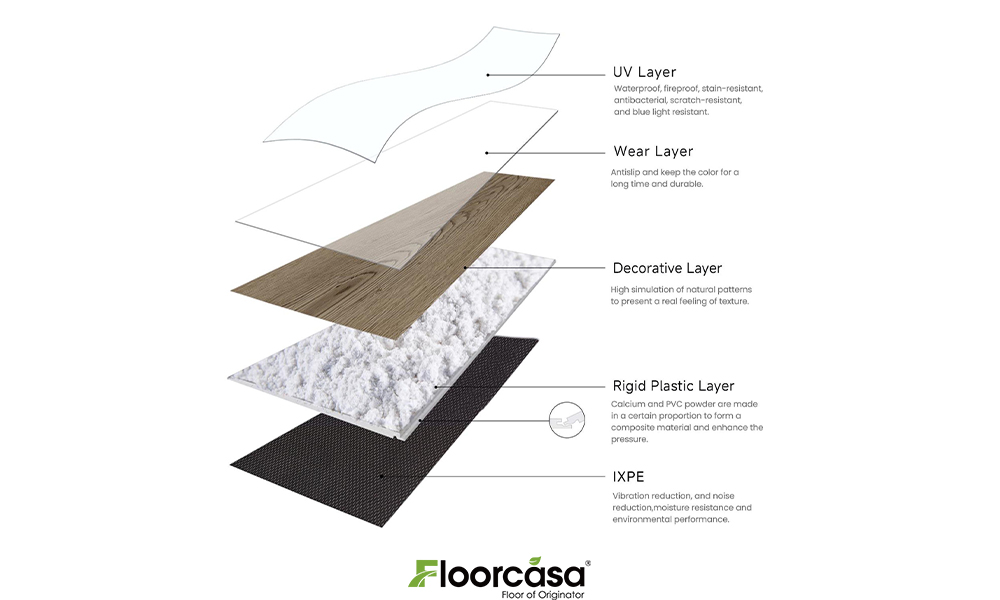
SPC flooring typically consists of five layers:
1. UV Coating – Scratch and stain resistance
2. Wear Layer – Protects decorative film
3. Decor Film – Aesthetic design
4. SPC Core Layer – Rigid structural base
5. Backing Layer (IXPE/EVA) – Sound absorption and comfort
Core Technology Challenges
· Core Layer Brittleness: Excessive calcium carbonate reduces flexibility
· Delamination: Poor bonding between layers
· Click System Failure: Precision issues during milling
These structural weaknesses are among the most reported SPC flooring problems in 2025.
Manufacturing Process Overview
A simplified SPC flooring production process includes:
1. Raw material mixing
2. High-temperature extrusion
3. Sheet calibration and cooling
4. UV coating and lamination
5. Slotting (click system cutting)
6. Quality inspection and packaging
Process-Related Issues
· Inconsistent extrusion temperature → warping
· Poor calibration → thickness variation
· Inaccurate slotting → installation gaps
Manufacturers with advanced automation and strict process control show significantly lower defect rates.
Industry Comparison
SPC flooring competes with several alternative flooring types.
Feature | SPC Flooring | WPC Flooring | LVT | |
Water Resistance | High | Low | High | Medium |
Stability | High | Medium | Medium | Medium |
Comfort | Medium | Low | High | Medium |
Cost | Medium | Low | High | Medium |
Common Problems | Click failure, brittleness | Swelling | Denting | Scratching |
Key Insight
While SPC offers superior water resistance, SPC flooring problems tend to be more technical and manufacturing-related compared to laminate or WPC.
Application Scenarios
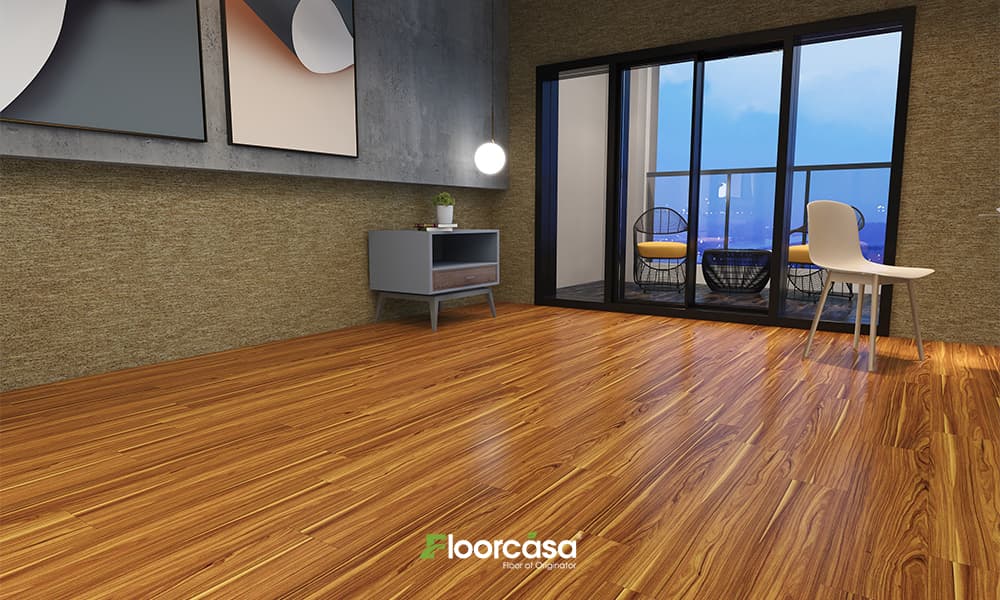
SPC flooring is widely used in:
· Residential apartments
· Commercial offices
· Retail stores
· Hospitals and healthcare facilities
· Hotels and hospitality projects
High-Risk Scenarios
· Areas with heavy rolling loads (shopping carts, hospital beds)
· Regions with extreme temperature fluctuations
· Large open spaces without expansion joints
In these environments, SPC flooring problems such as joint separation and deformation are more likely to occur.
Common Buyer Concerns
In 2025, B2B buyers frequently report the following SPC flooring problems:
1. Click System Breakage During Installation
2. Color Variation Between Batches
3. Warping After Installation
4. Surface Scratches Despite Wear Layer Claims
5. Noise Issues (Hollow Sound)
6. Delamination Over Time
7. Inconsistent Thickness
8. Packaging Damage During Shipping
These issues directly affect project timelines and after-sales costs.
Procurement and Selection Guide
To minimize SPC flooring problems, buyers should adopt a more technical and data-driven procurement approach.
Key Evaluation Criteria
· Factory Audit
o Check automation level
o Review quality control systems
· Sample Testing
o Conduct impact resistance tests
o Verify click strength
· Certification Verification
o FloorScore
o CE marking
o ISO standards
· Batch Consistency
o Request multiple production batch samples
Supplier Questions to Ask
· What is the calcium carbonate ratio?
· What click system is used and licensed?
· What is the rejection rate?
· How is packaging optimized for export?
A structured evaluation process significantly reduces exposure to SPC flooring problems.
Case Study or Example
Case: European Distributor Facing High Claim Rates
A European distributor sourcing low-cost SPC flooring from multiple suppliers experienced:
· 12% return rate due to click system failure
· Installation complaints across 3 large projects
· Significant brand reputation damage
Solution Implemented
· Switched to a single certified manufacturer
· Increased wear layer spec from 0.3mm to 0.5mm
· Conducted pre-shipment inspections
Results
· Return rate reduced to below 2%
· Improved installer satisfaction
· Higher repeat order volume
This case highlights how addressing SPC flooring problems at the sourcing stage can deliver measurable business outcomes.
FAQ (Buyer-Focused)
1. What are the most common SPC flooring problems in 2025?
Click system failure, brittleness, and batch inconsistency are the most reported issues.
2. Why does SPC flooring crack easily?
High calcium carbonate content reduces flexibility, leading to brittleness.
3. How can I test SPC flooring quality?
Conduct impact tests, bending tests, and click strength evaluations.
4. Is SPC flooring suitable for heavy commercial use?
Yes, but only with high-spec products and proper installation.
5. What causes joint gaps after installation?
Poor click system precision or improper installation.
6. How important is the wear layer?
Critical—it directly affects durability and scratch resistance.
7. Can SPC flooring deform in heat?
Yes, especially if expansion gaps are not properly maintained.
8. What certifications should I require?
FloorScore, CE, ISO9001, and SGS test reports.
9. How to avoid color variation issues?
Order from the same production batch and confirm batch control systems.
10. Is cheaper SPC flooring worth it?
Often not—lower upfront cost can lead to higher long-term risk.
Conclusion
As the global flooring market matures, SPC flooring problems: what dealers are facing in 2025 are becoming more complex and impactful. For distributors, importers, and project stakeholders, success depends on moving beyond price-driven decisions toward technical evaluation and supplier reliability.
By understanding the root causes of SPC flooring problems—from raw materials to manufacturing precision—buyers can significantly reduce risk, improve project outcomes, and build long-term competitive advantage in the global market.