Soundproofing Solutions for Apartments: Why SPC Flooring Is a Top Choice
Global Housing and Renovation Context Driving Demand for SPC Flooring
The global residential construction and renovation market is undergoing a rapid transformation driven by urban density, high-rise living, and stricter building acoustic regulations. As multi-family apartments and mixed-use developments continue to expand across Asia-Pacific, Europe, and North America, noise control has become a critical performance requirement in interior materials.
Within this evolving landscape, SPC flooring has become one of the most widely specified rigid core flooring solutions for apartment projects. Developers, contractors, and distributors increasingly recognize that surface materials play a direct role in impact noise transmission and occupant comfort, positioning SPC flooring as a practical soundproofing solution when combined with appropriate underlayment systems.
Why Soundproofing Has Become a Core Selection Criterion in Apartment Flooring
The Impact of Impact Noise on Residential Asset Value
In multi-storey residential buildings, impact noise generated by walking, furniture movement, and daily activities is one of the most frequent sources of occupant complaints. Poor acoustic performance often results in post-handover disputes, warranty claims, and costly retrofitting.
For international buyers, selecting SPC flooring with proven acoustic performance allows project owners to reduce complaint risks and protect long-term asset value.
How SPC Flooring Contributes to Apartment Soundproofing
Understanding Impact Sound vs. Airborne Sound
From a building acoustics perspective, flooring systems mainly influence impact sound insulation rather than airborne sound transmission. High-quality SPC flooring, when integrated with suitable acoustic underlays, effectively reduces footfall noise by absorbing and dispersing vibration energy at the surface interface.
This is why modern apartment specifications increasingly define complete flooring systems rather than individual surface products.
The Role of Integrated Underlay in SPC Flooring Systems
Many advanced SPC flooring products are manufactured with factory-attached IXPE or EVA acoustic backing. This integrated layer plays a key role in achieving reliable impact sound reduction values while simplifying on-site installation.
For apartment projects, underlay thickness and density are now specified together with SPC flooring to meet building code requirements.
Product Structure of Acoustic-Oriented SPC Flooring
Multi-Layer Construction Optimized for Noise Reduction
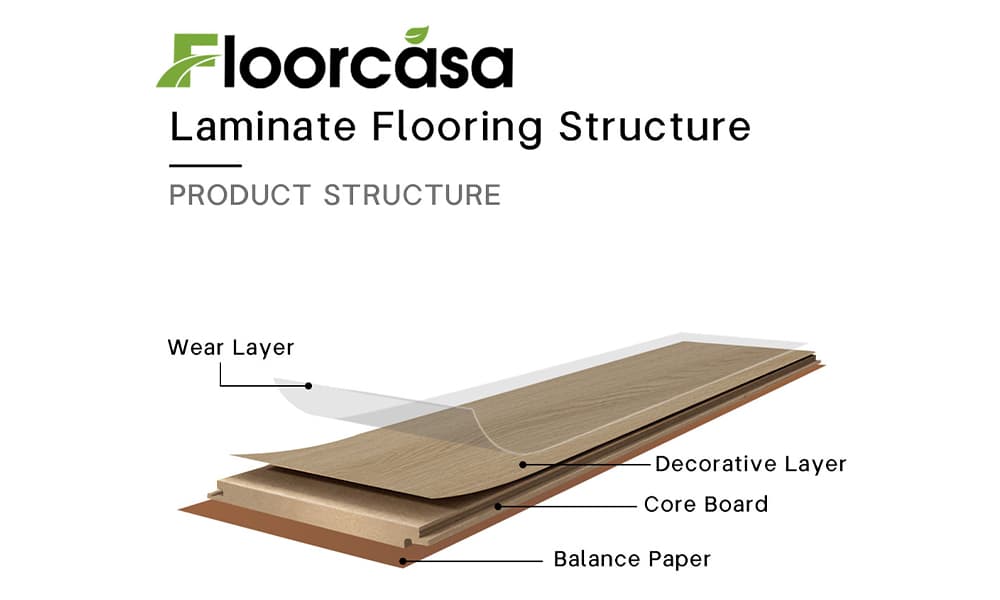
Professional-grade SPC flooring designed for residential buildings typically includes:
l UV protective coating
l High-density wear layer
l High-resolution decorative film
l Stone plastic composite rigid core
l Acoustic backing layer (IXPE / EVA)
This layered structure allows vibration energy to be partially dissipated before reaching the concrete slab, improving perceived comfort inside apartments.
Manufacturing Process and Acoustic Performance Control
How Acoustic SPC Flooring Is Produced
The manufacturing workflow for acoustic SPC flooring involves:
l SPC core extrusion and stabilization
l Decorative film lamination
l Precision wear layer fusion
l Click-lock profiling
l Acoustic underlay bonding
l Finished product inspection
Strict bonding strength control and density calibration are essential to ensure that the acoustic underlay performs consistently across each production batch of SPC flooring.
Laboratory Testing and Certification
Professional manufacturers test acoustic SPC flooring according to ISO and EN impact sound insulation standards. Typical test results are expressed as ΔLw (impact sound reduction), which allows buyers to compare products objectively during tender evaluations.
Global Market Trends for Acoustic SPC Flooring in Apartments
The global market for residential flooring continues to show stable growth, driven by urban renewal programs and residential upgrades. Within this segment, demand for soundproofing-focused SPC flooring is increasing in Europe and the Asia-Pacific region, where local building regulations and end-user expectations emphasize acoustic comfort.
Developers now actively request acoustic performance documentation when sourcing SPC flooring, signaling a shift from purely aesthetic selection toward functional system-level evaluation.
Technical Parameters Buyers Should Evaluate for Apartment Projects
When selecting SPC flooring for sound-sensitive residential projects, professional buyers should review:
l Total thickness: typically 4.5–6.5 mm
l Acoustic underlay thickness: 1.0–2.0 mm
l Impact sound reduction: ΔLw 18–22 dB
l Wear layer thickness: 0.3–0.5 mm
l Locking system strength
These parameters allow buyers to balance durability, acoustic performance, and installation efficiency.
International Buyer Preferences and Common Procurement Challenges
What Global Buyers Expect from Acoustic SPC Flooring
International developers and distributors typically prioritize:
l Verified impact sound reduction test reports
l Stable acoustic underlay bonding quality
l Consistent product dimensions across shipments
l Compatibility with radiant floor heating systems
Key Pain Points in Global Apartment Flooring Sourcing
Despite growing adoption, buyers often encounter:
l Unclear acoustic test data or inconsistent test standards
l Variations in underlay density between samples and mass production
l Insufficient documentation for building approval procedures
These challenges reinforce the need for transparent manufacturing and testing practices in SPC flooring supply.
Why SPC Flooring Is a Practical Alternative to Traditional Acoustic Flooring Systems
Compared with traditional floating wood floors and carpet-based systems, SPC flooring offers greater dimensional stability, moisture resistance, and easier maintenance. For high-rise apartments and rental properties, these characteristics significantly reduce operational and replacement costs.
Moreover, modern SPC flooring designs provide realistic wood visuals, enabling developers to meet both acoustic and aesthetic expectations without compromise.
How Floorcasa Supports Acoustic SPC Flooring Projects Worldwide
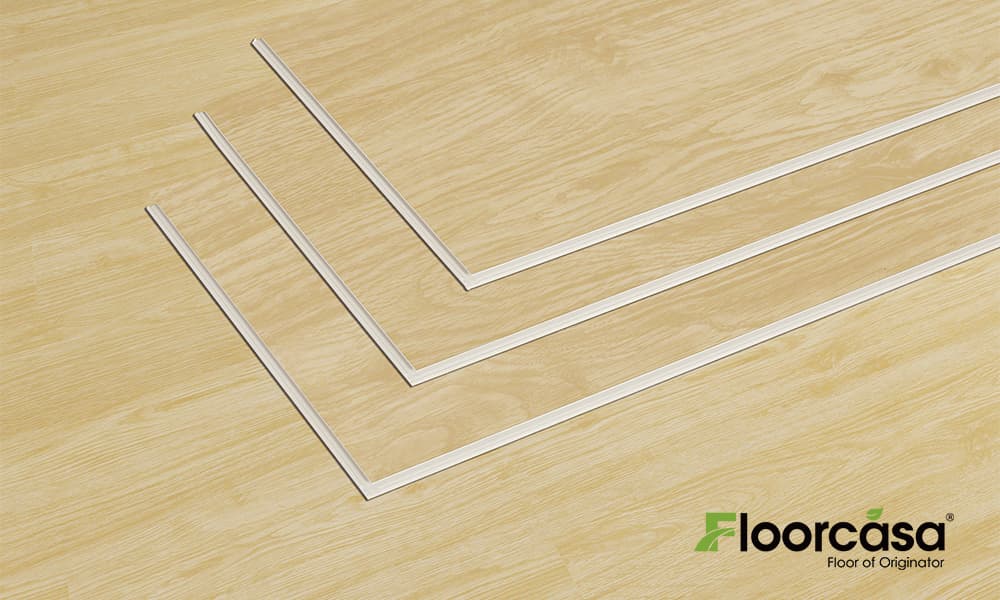
As a professional manufacturer and global supplier, Floorcasa provides acoustic-optimized SPC flooring solutions for apartment projects. Through advanced lamination processes, controlled underlay integration, and standardized acoustic testing, Floorcasa ensures reliable performance for international residential developments.
Floorcasa also supports private-label programs, project-based customization, and full technical documentation, enabling buyers to streamline approval procedures and project execution.
Frequently Asked Questions (B2B)
1. Can SPC flooring alone meet apartment soundproofing requirements?
In most projects, SPC flooring must be combined with certified acoustic underlay to meet impact sound reduction requirements. The flooring system should always be evaluated as a complete assembly.
2. What is a typical impact sound reduction level for acoustic SPC flooring?
Professional acoustic SPC flooring systems typically achieve ΔLw values between 18 dB and 22 dB, depending on underlay material and thickness.
3. Is acoustic SPC flooring compatible with underfloor heating?
Yes. Most high-quality SPC flooring systems are compatible with radiant heating, provided installation guidelines and temperature limits are followed.
4. Can Floorcasa provide acoustic test reports and samples for project approval?
Yes. Floorcasa supplies verified acoustic test reports, full technical datasheets, and physical samples for professional apartment flooring projects.
Work with Floorcasa for Reliable Acoustic SPC Flooring Solutions
Selecting the right soundproofing solution is essential for modern apartment developments. With professionally engineered SPC flooring, project owners can improve residential comfort, reduce post-handover complaints, and maintain long-term property value.
Contact Floorcasa today to request your quotation, technical documentation, and product samples, and discover how acoustic SPC flooring can support your next apartment project.