Herringbone Flooring: What to Look for When Selecting the Right Product
In today’s competitive flooring market, design is no longer secondary to performance—it is an integral part of product value. Among the most popular design-driven flooring options, herringbone flooring has become a preferred choice for architects, designers, and developers seeking to combine visual impact with structural reliability.
From luxury residential interiors to high-end commercial environments, the herringbone pattern delivers a timeless aesthetic while enhancing perceived space and movement. However, for distributors, importers, engineering contractors, and procurement managers, selecting the right herringbone flooring involves far more than choosing a pattern.
Material composition, dimensional accuracy, installation method, and supply consistency all play critical roles in determining project success. Poor product selection can lead to installation delays, increased waste, and long-term performance issues.
This guide outlines what to look for in herringbone flooring, providing a technical and procurement-focused perspective to help professional buyers make informed decisions.
What Is Herringbone Flooring
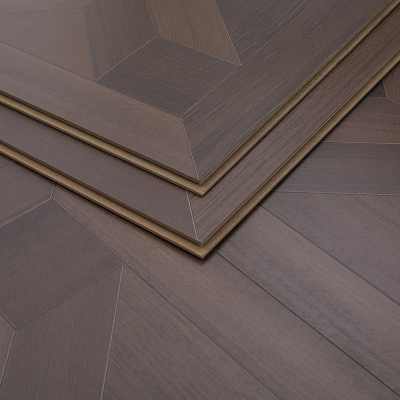
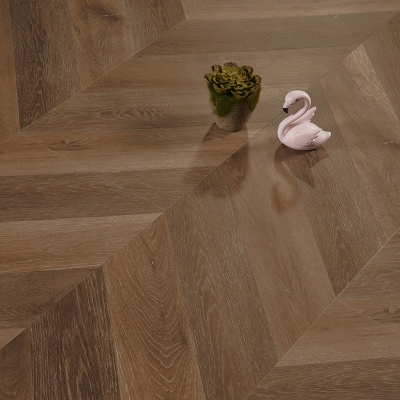
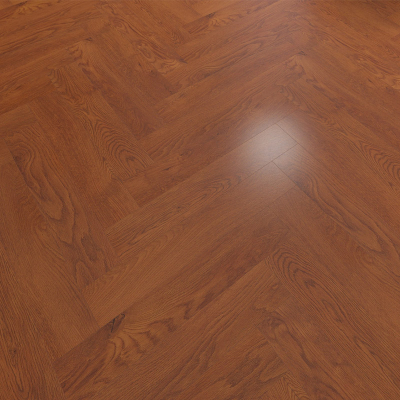
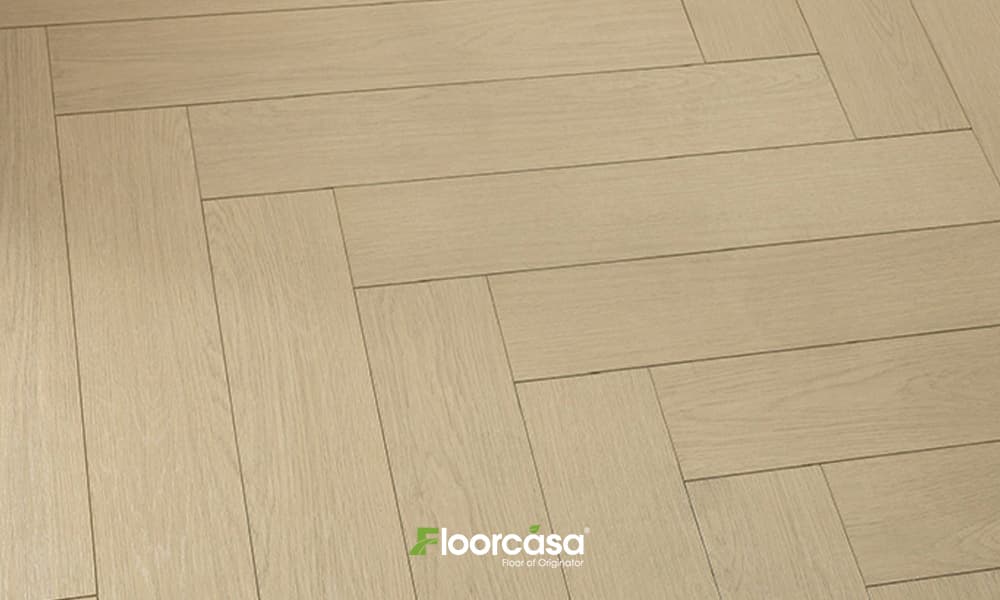
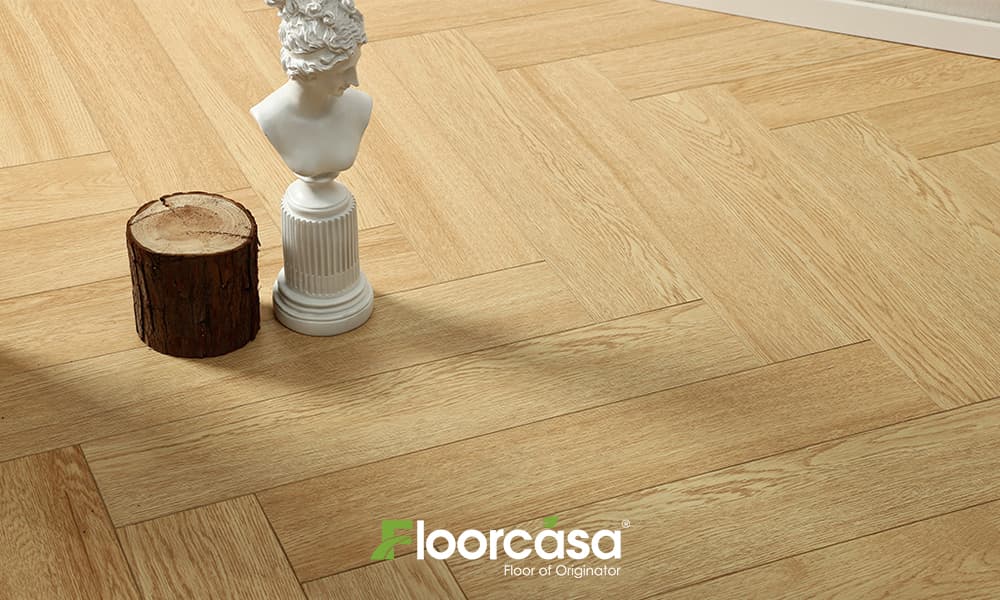
Herringbone flooring refers to a distinctive parquet pattern created by arranging rectangular planks in a zigzag formation, where each plank meets another at a 90-degree angle.
Unlike standard straight plank installation, herringbone flooring requires precise plank dimensions and alignment to achieve the intended geometric pattern. The visual effect is both dynamic and symmetrical, making it a popular choice in premium design projects.
Herringbone patterns can be applied to various material types:
· Solid hardwood flooring
· SPC (stone plastic composite) flooring
· LVT (luxury vinyl tile)
Among these, SPC-based herringbone flooring has gained traction due to its dimensional stability and ease of installation.
Key Technical Specifications
When evaluating herringbone flooring, technical specifications directly impact installation quality and long-term performance.
Specification | Standard Range | Premium Range |
Plank Thickness | 4–6 mm (SPC) / 12–15 mm (wood) | 6–8 mm (SPC) / 15–20 mm (wood) |
Wear Layer | 0.3–0.5 mm | 0.5–0.7 mm |
Plank Size Accuracy | ±0.2 mm tolerance | ±0.1 mm tolerance |
Surface Treatment | UV coating | Enhanced UV / ceramic coating |
Locking System | Click or glue-down | Precision click system |
Moisture Resistance | Medium–High | High (SPC) |
Precision in plank sizing is especially critical for herringbone flooring, as even minor deviations can disrupt pattern alignment.
Main Cost Factors and Performance Drivers
The pricing of herringbone flooring is influenced by several technical and logistical factors.
Material Type
· Engineered wood and solid wood are typically more expensive
· SPC and LVT options offer more cost-efficient alternatives
Manufacturing Precision
Herringbone patterns require higher machining accuracy, increasing production costs compared to straight planks.
Installation Method
Glue-down herringbone installations require skilled labor, while click-lock SPC systems reduce installation complexity.
Surface Finishing
Advanced surface treatments such as embossed-in-register (EIR) or matte finishes increase both aesthetic value and cost.
Buyers should evaluate total project cost, including installation and potential material waste.
Product Structure and Core Technology
The performance of herringbone flooring depends on its internal structure, which varies by material type.
SPC Herringbone Flooring Structure
1. UV protective coating
2. Wear-resistant layer
3. Decorative film
4. Rigid SPC core
5. Optional acoustic backing
This structure provides excellent dimensional stability and moisture resistance.
Engineered Wood Herringbone Structure
1. Hardwood veneer layer
2. Multi-layer plywood base
3. Stabilizing backing layer
While visually premium, engineered wood is more sensitive to moisture compared to SPC.
Manufacturing Process Overview
Producing high-quality herringbone flooring requires precise machining and strict quality control.
SPC Herringbone Flooring Production
1. Raw material mixing and extrusion
2. Core board formation
3. Decorative film lamination
4. Wear layer application
5. UV coating
6. Precision cutting and edge profiling
Wood Herringbone Flooring Production
1. Timber selection and drying
2. Veneer slicing
3. Layer bonding (for engineered wood)
4. Precision cutting into herringbone dimensions
5. Surface finishing
Dimensional accuracy is a key quality indicator in both processes.
Industry Comparison
Buyers often compare herringbone flooring with other flooring patterns and materials.
Factor | Herringbone Flooring | Straight Plank Flooring |
Visual Impact | High | Moderate |
Installation Complexity | High | Low |
Material Waste | Higher | Lower |
Labor Cost | Higher | Lower |
Design Value | Premium | Standard |
While herringbone flooring requires more investment, it delivers higher perceived value in premium projects.
Application Scenarios
Herringbone flooring is widely used in projects where design aesthetics are a priority.
Residential Applications
· Luxury apartments
· Villas and high-end homes
· Living rooms and hallways
Commercial Applications
· Boutique hotels
· Retail flagship stores
· Corporate offices
· Showrooms
SPC-based herringbone flooring is increasingly used in commercial environments due to its durability and waterproof properties.
Common Buyer Concerns
Professional buyers sourcing herringbone flooring typically face several challenges.
Installation Difficulty
The pattern requires precise alignment, increasing installation complexity and labor costs.
Material Waste
Improper planning can result in higher cutting waste compared to straight plank flooring.
Product Consistency
Color variation or dimensional inconsistency can disrupt the overall pattern.
Lead Time
Custom herringbone designs may require longer production cycles.
Procurement and Selection Guide
Selecting the right herringbone flooring requires a structured evaluation process.
Verify Dimensional Accuracy
Ensure tight tolerances in plank length and width to maintain pattern consistency.
Choose the Right Material
· SPC for commercial durability and moisture resistance
· Engineered wood for premium aesthetics
Evaluate Installation Method
Click-lock systems are faster and reduce labor dependency, especially for large projects.
Request Samples and Mockups
Testing layout samples helps identify potential alignment or color variation issues.
Case Study: Retail Flagship Store Design
A European retail brand selected herringbone flooring for its flagship store renovation to enhance visual identity and customer experience.
The project initially considered engineered wood but switched to SPC herringbone flooring due to:
· faster installation timeline
· better resistance to heavy foot traffic
· lower long-term maintenance costs
The result was a high-end aesthetic combined with improved operational efficiency, demonstrating the practical advantages of modern herringbone solutions.
FAQ: Buyer Questions About Herringbone Flooring
1. What makes herringbone flooring different from regular flooring?
Its zigzag pattern creates a more dynamic and premium visual effect.
2. Is herringbone flooring more expensive?
Yes, due to higher manufacturing precision and installation complexity.
3. Which material is best for herringbone flooring?
SPC for durability and moisture resistance; engineered wood for aesthetics.
4. Is installation more difficult?
Yes, it requires skilled labor or precise click-lock systems.
5. Can herringbone flooring be waterproof?
SPC-based options are fully waterproof.
6. Does it generate more material waste?
Yes, due to cutting and pattern alignment requirements.
7. Is it suitable for commercial projects?
Yes, especially SPC herringbone flooring.
8. What thickness should I choose?
5–7 mm for SPC, 12–15 mm for engineered wood.
9. Can damaged planks be replaced?
Yes, but replacement may require careful alignment.
10. How is it shipped internationally?
Typically in cartons with pattern-matched labeling.
Request a Quote or Technical Information
If you are planning to source herringbone flooring for residential or commercial projects, selecting the right supplier is critical to achieving both aesthetic and performance goals.
Professional manufacturers can offer:
· precision-engineered plank dimensions
· consistent color and surface finishes
· technical documentation and certifications
· customized design solutions
· competitive bulk pricing
Contact our team today to request samples, technical specifications, and a tailored quotation for your next herringbone flooring project.