Cheap SPC vs Premium SPC
In today’s highly competitive global flooring market, SPC (Stone Plastic Composite) flooring has become a preferred choice for distributors, importers, engineering contractors, and procurement managers. Its waterproof performance, dimensional stability, and ease of installation make it ideal for both residential and commercial applications.
However, not all SPC flooring is created equal. The growing price gap between low-cost and high-end products has made “Cheap SPC vs Premium SPC: What Buyers Must Know” a critical topic for B2B buyers. While cheaper options may seem attractive from a cost perspective, long-term performance, warranty risks, and customer satisfaction often tell a different story.
This article provides a comprehensive, data-driven comparison to help buyers make informed procurement decisions.
What is Cheap SPC vs Premium SPC: What Buyers Must Know
The term Cheap SPC vs Premium SPC: What Buyers Must Know refers to the fundamental differences in material quality, manufacturing standards, performance, and lifecycle cost between low-priced SPC flooring and high-grade SPC products.
· Cheap SPC flooring is typically manufactured using lower-grade raw materials, reduced core density, and thinner wear layers to minimize production costs.
· Premium SPC flooring is engineered with high-quality limestone powder, virgin PVC, advanced stabilizers, and thicker wear layers to ensure durability and performance consistency.
Understanding these differences is essential for avoiding hidden costs such as product failure, returns, and reputational damage.
Key Technical Specifications
Below is a comparison of typical specifications between cheap and premium SPC flooring:
Specification | Cheap SPC Flooring | Premium SPC Flooring |
Core Density | 1.6–1.8 g/cm³ | 2.0–2.2 g/cm³ |
Wear Layer Thickness | 0.1–0.3 mm | 0.3–0.7 mm |
Total Thickness | 3.5–4.0 mm | 4.5–6.5 mm |
Raw Materials | Recycled PVC + fillers | Virgin PVC + high-purity CaCO₃ |
Dimensional Stability | Moderate | Excellent |
Click System | Basic | Advanced (Unilin/Valinge) |
Warranty | 3–8 years | 15–25 years |
Fire Rating | B2 or lower | B1 / EN standards compliant |
Premium SPC products clearly outperform cheaper alternatives in nearly every measurable category.
Main Cost Factors or Performance Factors
When analyzing Cheap SPC vs Premium SPC: What Buyers Must Know, it is crucial to understand what drives pricing differences.
1. Raw Material Quality
Premium SPC uses virgin PVC and high-quality calcium carbonate, ensuring stability and non-toxicity. Cheap SPC often incorporates recycled plastics, which may lead to odor issues and inconsistent performance.
2. Wear Layer Thickness
The wear layer directly impacts durability. A thicker wear layer in premium SPC enhances scratch resistance and extends product lifespan.
3. Core Density
Higher density improves:
· Impact resistance
· Load-bearing capacity
· Dimensional stability
4. UV Coating and Surface Treatment
Premium SPC includes advanced UV coatings for:
· Anti-scratch performance
· Anti-bacterial properties
· Stain resistance
5. Click Lock System
Inferior locking systems in cheap SPC increase installation failure rates, while premium systems ensure tight seams and faster installation.
Product Structure or Core Technology
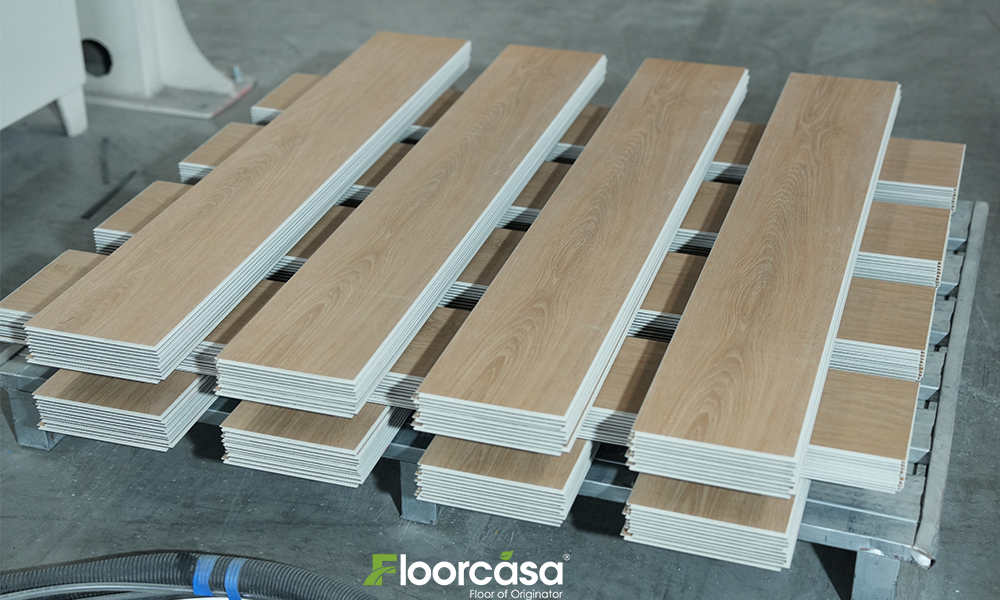
SPC flooring typically consists of five layers:
1. UV Coating – Surface protection layer
2. Wear Layer – Transparent abrasion-resistant layer
3. Decor Film – High-resolution printed design
4. SPC Core – Rigid core made from limestone and PVC
5. Underlayment (Optional) – IXPE or EVA backing
Key Differences:
· Cheap SPC: Lower-grade UV coating, thinner wear layer, inconsistent core composition
· Premium SPC: Multi-layer UV coating, high-definition decor film, high-density rigid core
The core layer is the most critical differentiator in Cheap SPC vs Premium SPC comparisons.
Manufacturing Process Overview
Premium SPC flooring manufacturers follow strict quality control procedures:
1. Raw material selection and mixing
2. High-temperature extrusion
3. Calendering and pressing
4. UV coating application
5. Precision cutting and click profiling
6. Final inspection and packaging
Cheap SPC producers often reduce costs by:
· Skipping quality checks
· Using outdated machinery
· Shortening production cycles
This results in inconsistent thickness, weak locking systems, and surface defects.
Industry Comparison
SPC vs Other Flooring Options
Flooring Type | Advantages | Limitations |
SPC Flooring | Waterproof, stable, durable | Price variation by quality |
WPC Flooring | Softer, more comfortable | Less rigid, higher cost |
Laminate | Affordable, aesthetic | Not fully waterproof |
LVT | Flexible, quiet | Less dimensional stability |
Within SPC itself, the distinction between cheap and premium products is often more significant than the difference between flooring types.
Application Scenarios
Cheap SPC Flooring
· Low-budget residential projects
· Temporary installations
· Price-sensitive markets
Premium SPC Flooring
· Commercial spaces (offices, malls)
· Hospitality (hotels, resorts)
· Healthcare and education facilities
· High-traffic residential projects
Choosing the wrong grade can lead to premature failure in demanding environments.
Common Buyer Concerns
B2B buyers frequently raise the following concerns when evaluating Cheap SPC vs Premium SPC:
· Will cheap SPC lead to higher return rates?
· How does wear layer thickness affect warranty claims?
· Are certifications (CE, FloorScore) reliable indicators of quality?
· What is the real lifecycle cost difference?
· How to verify supplier consistency?
These concerns highlight the importance of supplier transparency and third-party testing.
Procurement and Selection Guide
To make the right purchasing decision, buyers should follow a structured evaluation process:
1. Verify Certifications
Ensure compliance with:
· CE / ISO standards
· FloorScore or GREENGUARD
2. Request Samples and Test Reports
Check:
· Wear resistance (AC rating)
· Dimensional stability
· Formaldehyde emissions
3. Evaluate Supplier Capability
· Production capacity
· Export experience
· Quality control system
4. Analyze Total Cost of Ownership (TCO)
Consider:
· Installation cost
· Maintenance
· Replacement cycle
5. Avoid Price-Only Decisions
The cheapest option often results in higher long-term costs.
FAQ
1. Is cheap SPC flooring always low quality?
Not always, but it typically compromises on materials and durability.
2. What is the minimum wear layer for commercial use?
At least 0.5 mm is recommended for high-traffic areas.
3. How can I identify premium SPC flooring?
Check core density, certifications, and supplier reputation.
4. Does thicker SPC always mean better quality?
Not necessarily—core density and material quality matter more.
5. What certifications should I look for?
CE, ISO, FloorScore, and SGS test reports.
6. Can cheap SPC pass international standards?
Some can, but consistency is often an issue.
7. What is the lifespan difference?
Cheap SPC: 3–8 years; Premium SPC: 15–25 years.
8. Is premium SPC worth the higher price?
Yes, especially for commercial and long-term projects.
9. How important is the click system?
Critical—it affects installation efficiency and durability.
10. What are the biggest risks of cheap SPC?
High return rates, customer dissatisfaction, and brand damage.
Rather than focusing solely on upfront pricing, successful distributors and project suppliers prioritize product consistency, long-term performance, and supplier reliability. In a competitive global market, choosing the right SPC grade is not just a purchasing decision—it is a critical factor that directly impacts customer satisfaction, brand reputation, and sustainable business growth.