7 Key Factors When Importing Laminate Flooring
In today’s global flooring market, importing laminate flooring has become a strategic move for distributors, importers, engineering contractors, and procurement managers seeking cost efficiency without compromising quality. However, successful sourcing requires more than just price comparison. Understanding the 7 key factors when importing laminate flooring can significantly reduce risks, optimize long-term value, and ensure product performance across diverse applications.
As international trade continues to evolve, buyers must evaluate technical specifications, manufacturing standards, compliance requirements, and supplier reliability. This guide provides a comprehensive, data-driven overview to help B2B buyers make informed procurement decisions.
What is 7 Key Factors When Importing Laminate Flooring
The concept of 7 key factors when importing laminate flooring refers to the critical evaluation criteria that determine product suitability, compliance, durability, and overall return on investment. These factors go beyond surface aesthetics and include technical, logistical, and commercial considerations.
The seven core factors typically include:
1. Wear resistance (AC rating)
2. Core board density and stability
3. Moisture resistance
4. Environmental and compliance standards
5. Locking system technology
6. Supplier manufacturing capability
7. Cost structure and logistics
For companies like floorcasa, aligning these factors with market demands ensures consistent product performance and customer satisfaction across global markets.
Key Technical Specifications
Understanding technical specifications is essential when evaluating laminate flooring options for import.
Core Technical Indicators
Specification | Description | Typical Range |
AC Rating | Abrasion resistance level | AC3 – AC6 |
Thickness | Total board thickness | 7mm – 12mm |
Density (HDF Core) | Core board strength and durability | 780–900 kg/m³ |
Swelling Rate | Water resistance indicator | ≤ 12% |
Formaldehyde Emission | Environmental compliance | E0 / E1 |
Locking Strength | Joint durability | ≥ 1,000 N |
Performance Comparison by AC Rating
AC Rating | Application Area | Traffic Level |
AC3 | Residential | Moderate |
AC4 | Residential / Light Commercial | Medium |
AC5 | Commercial | Heavy |
AC6 | Industrial / High Traffic | Very Heavy |
Selecting the right specifications is one of the most important elements within the 7 key factors when importing laminate flooring, especially for large-scale commercial projects.
Main Cost Factors or Performance Factors
Cost is not limited to the product price. A comprehensive cost analysis includes:
Key Cost Drivers
· Raw Materials: HDF core quality significantly affects pricing
· Surface Treatment: Embossing and wear layers increase durability and cost
· Certifications: CARB, CE, and FSC compliance add value but raise costs
· Packaging & Branding: OEM customization impacts unit price
· Shipping & Tariffs: Freight rates and import duties vary by region
Performance vs Cost Balance
Higher upfront costs often translate into lower lifecycle costs due to reduced maintenance and replacement frequency. For example, AC5-grade laminate may cost 15–20% more than AC3 but can last twice as long in commercial settings.
Product Structure or Core Technology
Laminate flooring typically consists of four layers:
1. Wear Layer – Transparent protective coating for abrasion resistance
2. Decor Layer – High-resolution printed design layer
3. Core Layer (HDF) – Provides structural stability
4. Balance Layer – Prevents warping and enhances durability
Advanced Technologies
· Synchronized Embossing (EIR) for realistic textures
· Waxed Edges for enhanced water resistance
· Click Lock Systems (e.g., Unilin, Valinge) for easy installation
Manufacturers like floorcasa integrate advanced locking systems and high-density cores to meet international quality benchmarks.
Manufacturing Process Overview
Understanding the production process helps buyers assess supplier capability.
Typical Manufacturing Steps
1. Raw material preparation (wood fiber processing)
2. High-density board pressing
3. Decorative paper impregnation
4. Hot pressing and lamination
5. Surface finishing and embossing
6. Cutting and profiling (click system)
7. Quality inspection and packaging
Quality Control Points
· Moisture content monitoring
· Dimensional stability testing
· Abrasion resistance testing
· Formaldehyde emission testing
Factories with automated production lines and strict QC systems generally deliver more consistent products.
Industry Comparison
Laminate Flooring vs Alternative Materials
Feature | Laminate Flooring | Engineered Wood | |
Cost | Moderate | Moderate-High | High |
Water Resistance | Moderate | Excellent | Low |
Durability | High | Very High | Moderate |
Installation | Easy | Easy | Complex |
Appearance | Realistic Wood | Modern / Stone | Natural Wood |
Laminate remains a preferred choice due to its balance of cost, aesthetics, and durability, making it a strong contender in the 7 key factors when importing laminate flooring evaluation process.
Application Scenarios
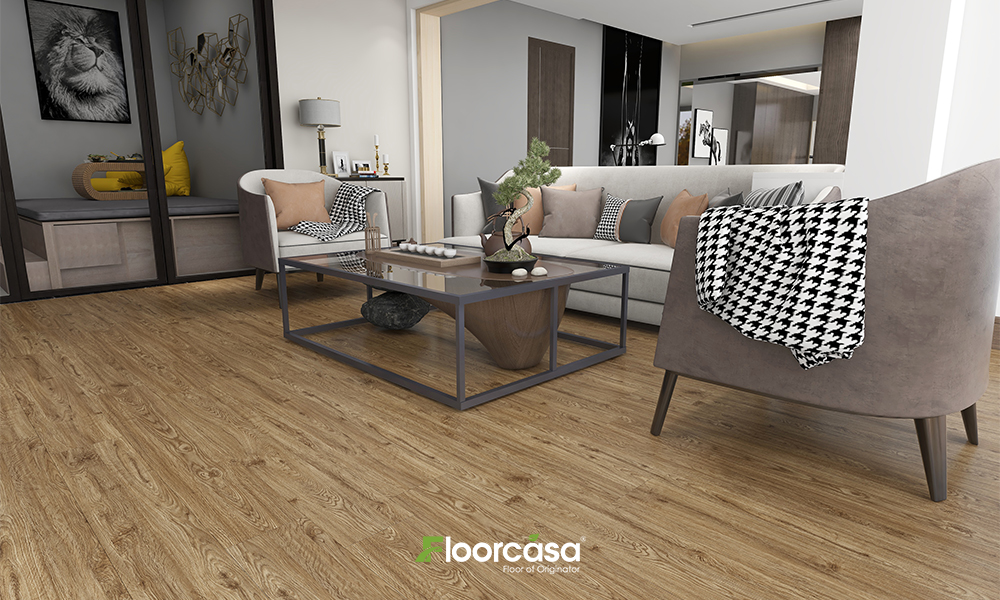
Laminate flooring is widely used in:
· Residential housing projects
· Commercial retail spaces
· Offices and co-working environments
· Hotels and hospitality sectors
· Educational institutions
Its versatility makes it suitable for both developed and emerging markets.
Common Buyer Concerns
B2B buyers often raise the following concerns:
· Inconsistent product quality between batches
· Moisture resistance in humid climates
· Compliance with local regulations
· Shipping damage and packaging durability
· Supplier reliability and lead times
Addressing these concerns is critical when evaluating the 7 key factors when importing laminate flooring.
Procurement and Selection Guide
Key Steps for Buyers
1. Define application requirements (residential vs commercial)
2. Verify technical specifications and certifications
3. Request product samples and test reports
4. Audit supplier manufacturing capabilities
5. Evaluate logistics and delivery timelines
6. Compare total landed cost instead of FOB price
7. Establish long-term supplier partnerships
Working with experienced suppliers like floorcasa can streamline procurement and reduce risks associated with international sourcing.
Case Study or Example
Project: Commercial Office Renovation in Southeast Asia
A procurement manager sourced AC4 laminate flooring for a 5,000 m² office project. Initial focus was on low-cost suppliers, but after evaluating the 7 key factors when importing laminate flooring, the buyer shifted to a mid-range supplier with:
· Higher HDF density (850 kg/m³)
· Certified E1 environmental compliance
· Enhanced locking system
Results:
· 30% reduction in installation time
· 25% lower maintenance costs over 3 years
· Zero customer complaints
This case highlights the importance of balancing cost and performance.
FAQ
1. What AC rating should I choose for commercial use?
AC4 or AC5 is recommended for moderate to heavy commercial traffic.
2. How important is HDF density?
Higher density improves durability, impact resistance, and lifespan.
3. Is laminate flooring waterproof?
Standard laminate is water-resistant, not fully waterproof.
4. What certifications should I look for?
CARB, CE, FSC, and ISO certifications are commonly required.
5. How do I avoid quality inconsistency?
Work with reputable manufacturers and request batch testing reports.
6. What is the typical lead time?
Usually 20–40 days depending on order size and customization.
7. Can laminate flooring be used in humid climates?
Yes, but choose products with enhanced moisture resistance.
8. What is the lifespan of laminate flooring?
Typically 10–20 years depending on usage and quality.
9. How does laminate compare to SPC flooring?
Laminate offers better aesthetics, while SPC provides superior water resistance.
10. What is the minimum order quantity (MOQ)?
MOQ varies by supplier, typically between 1–2 containers.
Conclusion
Understanding the 7 key factors when importing laminate flooring is essential for making informed, cost-effective, and low-risk purchasing decisions. From technical specifications to supplier evaluation, each factor plays a critical role in ensuring long-term performance and customer satisfaction.
By focusing on quality, compliance, and total cost of ownership, B2B buyers can build a reliable supply chain and gain a competitive advantage in their markets.