Affordable Waterproof Flooring: How to Choose the Right Option
What Is Affordable Waterproof Flooring?
Affordable waterproof flooring is a floor covering sold at the lower end of its material's price range and intended for rooms where moisture is present. The phrase covers three different costs that a buyer should keep apart: the material cost, which is the price of the planks or tiles; the installed cost, which adds the underlay, the trims, the subfloor preparation and the labour; and the cost of what happens when the floor fails, which may be a small repair or a whole room.
A floor that is cheap per square metre can be more expensive to install, and the reverse is also true. A floor whose joints open in a wet room, or whose core takes up water, may cost more over its life than a more expensive material installed correctly. The sections below set out the options, the rooms they suit, the cost drivers and the checks before an order.
How the material families are built is covered on the waterproof flooring page, and the wear layer options on the SPC flooring wear layer page.
What Does Waterproof Flooring Actually Mean?
"Waterproof" is used in the market in four different senses, and a buyer should establish which one a product actually supports.
The surface. The wear layer and the coating resist marking and make cleaning easier. A surface that beads water is not evidence that water has not reached the core.
The joint and the edge. Water reaches a floor at the joints, the wall edges and the doorways. A tight joint with an intact edge resists water at the seam better than a loose one, and a tight joint does not make the seam waterproof.
The core. An SPC or LVP core is made from a mineral-filled polymer and does not absorb water in the way a wood-based core does. That is a statement about the core, not about the installed floor.
The system. The installed floor includes the subfloor and its moisture condition, and the floor covering does not stop moisture rising through a concrete slab. A water-resistant core does not make the whole system waterproof.
Where a supplier uses the word without a test report that states what was measured and under what conditions, the word describes a marketing position rather than a measured property. None of the four makes a floor suitable for standing water: a bathroom with a shower requires a product designed for wet areas, and a floor covering does not replace the building's waterproofing or the repair of a leak.
5 Affordable Waterproof Flooring Options
SPC Flooring
Material: a mineral-filled polymer core with a printed décor film, a wear layer and a UV coating.
Price factors: plank thickness, wear layer, core formulation, whether an underlay is attached, and the décor range.
Moisture: the core does not absorb water in the way a wood-based core does; the joints, edges and subfloor decide how the installed floor behaves.
Installation: floating click-lock, or glued down where the product permits.
Suits: kitchens, bathrooms where the product is approved, and dry rooms.
Limits: a thin wear layer wears sooner, and the joint quality depends on the profile and the installation.
How SPC is priced and how its quality is judged is covered on the affordable SPC flooring page; this page uses SPC only as one option in the comparison.
LVP and LVT Flooring
Material: a flexible vinyl core with a printed décor and a wear layer.
Price factors: wear layer, backing, format, and the installation method.
Moisture: the material resists water at the surface, and a glued installation can give a tighter floor than a floating one where the subfloor suits the adhesive.
Installation: usually glued down.
Suits: commercial interiors where a glued floor is acceptable.
Limits: a glued floor is more involved to repair, and the subfloor must suit the adhesive system.
Sheet Vinyl Flooring
Material: a continuous flexible sheet, with the seams heat-welded or chemically sealed.
Price factors: sheet thickness, wear layer, and the welding.
Moisture: the continuous sheet is the reason it is often chosen for wet rooms, but the seams, the edges and the subfloor still determine the result.
Installation: adhesive, with a smooth and flat subfloor.
Suits: bathrooms, laundry rooms and kitchens.
Limits: the subfloor must be smooth and flat, and a damaged sheet is repaired rather than replaced plank by plank.
Waterproof Laminate Flooring
Material: a laminate with a treated core and sealed edges.
Price factors: core treatment, edge sealing, wear layer and décor.
Moisture: the moisture resistance depends on the specific product, and the product is described as moisture-resistant unless a test report supports a waterproof claim. The core is wood-based.
Installation: floating click-lock.
Suits: dry rooms and kitchens where spills are wiped up.
Limits: not intended for bathrooms with a shower or for standing water.
How a moisture-resistant laminate is built and tested is covered on the waterproof laminate flooring technology page; this page uses laminate only as one option in the comparison.
Ceramic and Porcelain Tile
Material: a fired clay body with a glazed or through-body surface, fixed with adhesive.
Price factors: tile size, finish, adhesive and grout, and the substrate preparation.
Moisture: the tile itself absorbs little water, but the grout lines, the substrate and the waterproofing layer decide the performance of the floor.
Installation: adhesive, with a demanding substrate preparation.
Suits: bathrooms, kitchens, entrances and other wet or high-traffic areas.
Limits: the substrate preparation is demanding, the floor is hard and cold underfoot, and the grout needs maintenance.
Which Affordable Waterproof Flooring Is Best for Different Rooms?
In a kitchen, spills are frequent and the floor is cleaned often. SPC, sheet vinyl and tile are the common choices; a moisture-resistant laminate can be used where the product's instructions permit it and spills are wiped up. The joint and edge protection matters as much as the core.
In a bathroom, the presence of a shower changes the requirement. A bathroom with a shower requires a product designed for wet areas, and tile or a wet-area-rated vinyl sheet is the usual choice. An SPC or laminate floor is not made suitable for a shower by sealing the joints, and the suitability is confirmed from the product's installation instructions and warranty.
In a basement, the moisture condition of the slab is dealt with before any floor is chosen, because the floor covering does not stop moisture rising through concrete. SPC and sheet vinyl are common choices once the slab is dry and a suitable membrane is in place.
In a laundry room, the risk is a leak or an overflow rather than daily splashing. Sheet vinyl and tile are the common choices, and the floor is assessed for the possibility of standing water rather than for splashes alone. A moisture-resistant laminate is not the default choice here.
In a living room, the moisture exposure is low, and the choice turns on appearance, underfoot feel and budget; SPC, laminate and tile are all possible, and the wear layer and the finish are chosen for the traffic.
Affordable Waterproof Flooring Cost: What Affects the Total Budget?
The installed cost is built from the lines below, and a quote that omits one of them is not comparable with one that includes it. Each line is followed by the question a buyer can ask to test it.
Flooring material and thickness: a thicker plank uses more material and weighs more, which affects both material cost and freight. Ask whether the quote is a material price or an installed price.
Wear layer and surface finish: the wear layer is a separate film, and a registered emboss or special texture adds tooling cost. Ask which wear layer the quote is based on.
Underlayment and accessories: an attached backing, a separate underlay, the trims, the thresholds and the skirting are additional items. Ask what is included and what is not.
Subfloor preparation: levelling, repair and moisture testing are labour and material the flooring price does not include. Ask whether the subfloor needs levelling, and what the test result is.
Installation labour: the joint system, the format and the room layout affect the time, and a glued floor takes longer than a floating one. Ask for the labour rate per square metre for the specific method.
Waste and replacement: the cutting allowance depends on the layout, and the availability of replacement planks from the same décor batch affects the cost of a later repair. Ask what the cutting allowance is and whether spare planks are supplied.
Maintenance and replacement: the care routine and the expected service life are part of the ownership cost over the years. Ask what the warranty covers and what the care routine is.
This guide does not quote fixed prices per square metre, because a price without the country, the date, the specification and whether it is a material or an installed price cannot be compared with another.
How to Choose Cheap Waterproof Flooring Without Sacrificing Quality
The checks below are the ones a buyer can carry out before an order. They state what to request; the test methods and the acceptance criteria are covered on the quality standards pages for each material.
Actual thickness and layer structure: measured on a sample and stated in the specification sheet.
Wear layer thickness, where the product has one: read with the abrasion class in the test report, because the two are different measures.
Core and density: the tested value and the test method, with density treated as a property of the core rather than a quality score.
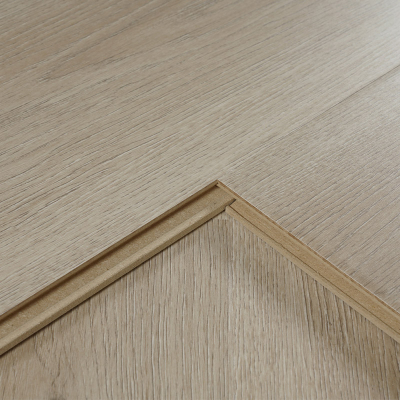
Locking joint and edge treatment: the joint engaged on a sample and the edge inspected on a cross-section.
Water resistance or moisture resistance report: the report for the exact product, with the test method and conditions stated.
Formaldehyde and VOC documents: the report required for the destination market.
Warranty and installation requirements: the warranty scope, the subfloor requirements and the installation method for the product.
Retained sample: approved before the bulk order and kept as the reference for the shipment.
A low price is not by itself evidence of a quality problem, and a high price is not by itself evidence of quality. The checks above are what separate the two.
Waterproof Flooring vs Water-Resistant Flooring
The two terms answer different questions. A water-resistant floor reduces the rate at which water is taken up, and its claim is tied to a test for short-term exposure. A waterproof claim should also be tied to a test that states what was measured and for how long.
The way to tell them apart is to read the report rather than the label. A product described as waterproof without a report is described by a marketing word; a product described as water-resistant with a report states the exposure it was tested for. Neither term makes a floor suitable for standing water, and neither replaces the building's waterproofing.
Frequently Asked Questions
1. What is the cheapest waterproof flooring?
The cheapest option depends on the room and on the installed cost, not on the material price alone. Sheet vinyl and SPC are often the lower-cost choices, and the subfloor preparation and the trims can change which is cheaper for a given room. Compare the installed cost for the specific project rather than the material price per square metre.
2. What is the best affordable waterproof flooring for bathrooms?
A bathroom with a shower requires a product designed for wet areas, and tile or a wet-area-rated vinyl sheet is the usual choice. An SPC or laminate floor is not made suitable for a shower by sealing the joints, and the suitability is confirmed from the product's installation instructions and warranty.
3. Is SPC flooring cheaper than tile?
It depends on the tile and the SPC product, and on the subfloor. Tile carries a higher labour and substrate cost, while SPC is faster to install; a fair comparison uses the installed cost for the room.
4. Is waterproof laminate suitable for basements?
The basement's slab moisture is dealt with before any floor is chosen, because the floor covering does not stop moisture rising through concrete. Where a laminate is proposed, the product's installation instructions and warranty are the basis for the decision, and a moisture-resistant laminate is not the default choice for a basement with a moisture problem.
5. How long does affordable waterproof flooring last?
Service life depends on the material, the wear layer or surface, the traffic and the maintenance, and it is confirmed from the warranty terms and the product documents rather than stated as a fixed number of years for all materials.
6. Does waterproof flooring require professional installation?
It depends on the material and the room. A floating SPC or laminate floor can be installed by a competent installer, a glued floor and a tiled floor need more skill, and a wet area needs the details done correctly. The installation instructions for the product state the requirements.
7. What certifications should I check?
The documents depend on the material and the destination market. A product emission report or certification covers indoor air quality and is not a waterproof rating; an installation standard for one material does not apply to another; and a concrete moisture test is a site test, not a product test. The applicable documents are listed per material on the quality standards pages, and they are requested for the exact product model.
8. Are cheaper waterproof floors less durable?
Not necessarily. An affordable product that meets the project's specification is a correct choice, and a more expensive product in a room that does not need it is an unnecessary cost. The checks in this guide are what separate a suitable low-cost floor from an unsuitable one.