Luxury Vinyl Tile for Retail Stores: Flooring by Store Type
Note on search intent: This page focuses on retail flooring selection, store-type requirements, appearance, and installation logistics. For LVT and SPC material properties and manufacturing details, see the LVT product pages.
Why Is LVT Suitable for Retail Stores?
Retail stores are among the most demanding commercial environments for flooring. A retail floor must withstand high foot traffic, rolling loads from shopping trolleys and pallets, frequent cleaning with commercial-grade chemicals, spills, and the aesthetic expectations of brand presentation—all at the same time.
LVT and SPC are suitable for retail stores because they address these demands in combination:
Durability under traffic. A suitable wear layer resists abrasion from constant foot traffic, so the floor maintains its appearance in high-traffic aisles.
Resistance to rolling and point loads. A rigid SPC core resists indentation from trolleys, pallets, and heavy fixtures better than a flexible core. Rigid SPC cores are commonly specified for high-load retail areas; flexible LVT cores are commonly specified for design-led retail areas.
Slip resistance. Textured surfaces provide slip resistance for customer safety, including in food retail where spills are common.
Chemical resistance. A suitable topcoat resists cleaning agents, degreasers, and spills.
Aesthetic realism. High-resolution printing and EIR embossing reproduce wood, stone, and abstract designs that support brand identity.
Installation flexibility. Click-lock SPC allows fast installation and phased replacement; glue-down LVT allows design flexibility.
Low maintenance. No sealing or waxing is required, reducing long-term maintenance cost.
The right choice between SPC and LVT depends on the store type, the traffic level, the load conditions, and the design intent. The following sections explain how to select retail flooring by store type.
Retail Flooring Requirements by Store Type
Different retail types place different demands on flooring. The following table summarises the main flooring pressure and key requirements for common retail types.
| Retail Type | Main Flooring Pressure | Key Requirements |
|---|---|---|
| Supermarket | Carts + spills + traffic | Wear + point load + slip |
| Shopping Mall | Traffic + appearance | Wear + aesthetics |
| Boutique | Appearance + moderate traffic | Design + wear |
| Department Store | Traffic + fixtures | Abrasion + indentation |
| Food Retail | Spills + cleaning | Slip + chemical resistance |
| Electronics Store | Carts + fixtures | Indentation + appearance |
The key requirements listed above are the primary considerations for each store type. Secondary requirements—such as acoustic performance, comfort underfoot, or specific design requirements—should also be verified against the project requirements.
Supermarkets. The main pressure is trolley traffic, spills, and high foot traffic. Flooring must resist wear, point loads from trolleys, and slip risk from spills. SPC with a suitable wear layer, slip resistance, and gasket joints is commonly specified.
Shopping malls. The main pressure is high foot traffic combined with appearance expectations. Flooring must resist wear and support the mall's design intent. SPC and LVT with EIR embossing and high-resolution printing are common options.
Boutiques. The main pressure is appearance and moderate traffic. Flooring must support brand identity while resisting wear from customer movement. LVT with EIR embossing and a design-led surface is commonly specified.
Department stores. The main pressure is traffic and fixtures. Flooring must resist abrasion and indentation from shelving and display units. SPC with a rigid core is commonly specified for high-load areas.
Food retail. The main pressure is spills and frequent cleaning. Flooring must provide slip resistance and chemical resistance. SPC with a chemical-resistant topcoat and higher slip resistance is commonly specified.
Electronics stores. The main pressure is carts and fixtures. Flooring must resist indentation from equipment and maintain a clean, modern appearance. SPC with a rigid core and EIR embossing is commonly specified.
Important note: These are general guidance. The appropriate specification depends on the actual traffic level, load conditions, cleaning regime, and design requirements. Verify product test reports before specification.
Limitations of Retail LVT and SPC
LVT and SPC are suitable for many retail applications, but they are not suitable for every retail situation. The following limitations should be considered before specification.
Extreme thermal shock. Areas exposed to extreme temperature changes may require a different flooring type. Verify the product's service temperature range against the actual conditions.
Heavy impact loads. Areas subject to heavy impact—such as areas where heavy equipment is dropped or moved—may require a thicker rigid core or a different flooring type. Verify the product's impact resistance test results.
Specific chemical exposure. Some retail environments involve chemicals that may not be compatible with LVT or SPC. Verify chemical resistance against the specific chemicals used.
Very heavy rolling loads. Areas with very heavy or frequent rolling loads may require a thicker rigid core or a different flooring type. Verify the product's point-load resistance against the actual load.
Continuous standing water. LVT and SPC are not designed for continuous standing water. For areas with continuous water exposure, tile or other systems may be more appropriate.
Important note: Which flooring is appropriate depends on the specific store type, the actual conditions, the installation system, and the product certification. Verify the product's performance against the specific requirements of the store before specification.
Why Flooring Appearance Matters in Retail Stores
In retail, the floor is part of the brand experience. Customers notice the floor—not because they are looking for it, but because it affects how the space feels. A floor that looks worn, dull, or inconsistent undermines the brand; a floor that looks clean, well-designed, and consistent supports it.
Wood-Look LVT
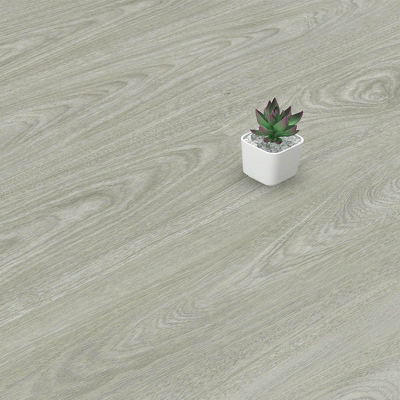
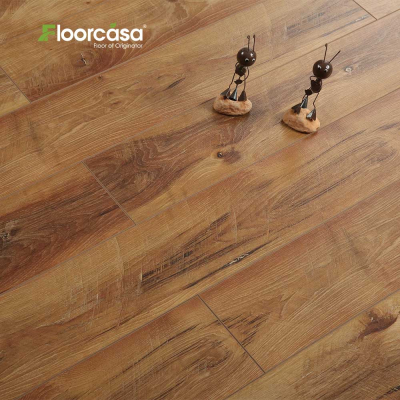
Wood-look LVT reproduces the appearance of natural wood, including grain patterns, colour variation, and texture. It is a common choice for boutiques, apparel stores, and lifestyle retail, where a warm, natural appearance supports the brand.
Stone-Look LVT
Stone-look LVT reproduces the appearance of natural stone, including marble, slate, and concrete. It is a common choice for premium retail, department stores, and food retail, where a clean, modern appearance supports the brand.
EIR Texture
EIR (Embossed in Register) texture means the surface embossing is synchronized with the printed pattern. This creates tactile realism—the floor not only looks like wood or stone, it feels like it. EIR texture is a key differentiator for premium retail flooring.
Color Consistency Across Stores
For retail chains, colour consistency across stores is essential for brand identity. Colour variation between batches (measured as ΔE) can make one store look different from another. Verify colour consistency requirements with the manufacturer and request batch test reports. In practice, even small batch-to-batch variations can be noticeable when stores are compared side by side.
Custom Designs for Retail Chains
For retail chains with a distinctive brand identity, custom designs—custom colours, custom patterns, custom plank sizes—allow the flooring to support the brand in a way that standard products cannot. Discuss custom design options with the manufacturer.
Replacing Damaged Areas Without Closing the Store
Retail floors sometimes need localised repair—a damaged plank, a stained area, a section worn by a display fixture. Click-lock SPC allows individual planks to be replaced without removing the entire floor, which means repairs can be made without closing the store. Glue-down LVT may require more extensive work for localised repairs.
Flooring Installation and Retail Store Downtime
For retail stores, installation speed and downtime are commercial considerations. Every day the store is closed for flooring work is a day of lost sales. The following factors affect installation time and downtime.
Installation speed. Click-lock SPC installs faster than glue-down LVT and much faster than tile. This reduces the total installation time and the labour cost.
Phased installation. Large retail spaces can be installed in phases—one section at a time—so the store can remain partially open during the work. This is a common approach for supermarkets, department stores, and shopping malls.
Night installation. Some retail stores install flooring at night, after closing, so the store can open normally the next day. This requires careful scheduling and coordination with the installation team.
Store sections. Phased installation by store section—for example, one aisle at a time—allows the store to remain operational while the flooring is replaced.
Replacement without closing the entire store. Click-lock SPC allows localised replacement of damaged planks, which means repairs can be made without closing the store or disrupting customer flow.
Click vs glue-down. Click-lock SPC is faster to install and easier to replace. Glue-down LVT provides a more permanent installation and may be preferred where design flexibility or specific performance requirements call for it.
Renovation schedule. The renovation schedule should be planned around the store's peak trading periods. Off-peak periods, holiday closures, or planned refits are common windows for flooring work.
Cost impact. Installation cost is affected by installation method (click-lock vs glue-down), installation schedule (day vs night), and store downtime (full closure vs phased). Night installation and phased installation typically cost more per square meter but reduce lost sales. Compare the total cost—including lost sales—rather than installation cost alone.
For retail store flooring, installation planning is as important as product selection. Discuss the installation schedule and downtime requirements with the flooring supplier and installation team.
How Retail LVT Is Engineered
Retail LVT performance depends on how the product is engineered. The following factors are the most relevant for retail applications. Detailed manufacturing processes are covered in the LVT manufacturing page.
Core. The core determines how the floor performs under trolley traffic and heavy fixtures. Rigid SPC cores are commonly specified for high-load retail areas; flexible LVT cores are commonly specified for design-led retail areas.
Wear layer. The wear layer determines how long the floor maintains its appearance under high traffic. A thicker wear layer resists surface wear for longer.
Decorative layer. The decorative layer determines the appearance. High-resolution printing and multi-layer colour reproduction provide realistic wood, stone, and abstract designs.
Surface treatment. The surface treatment (embossing, topcoat) determines slip resistance, chemical resistance, and tactile realism. EIR embossing and a chemical-resistant topcoat are common requirements for retail.
For detailed manufacturing information, see the LVT manufacturing page.
Technical Specifications for Retail LVT
| Item | Specification |
|---|---|
| Product type | SPC (rigid) or LVT (flexible) |
| Total thickness | SPC 5.0–6.5 mm; LVT 2.0–4.0 mm |
| Wear layer | Product-specific; verify AC rating (typically AC4–AC5 for retail) |
| Surface | EIR embossing (wood-look, stone-look, abstract) |
| Locking | Click-lock (SPC) or glue-down (LVT) |
| Slip resistance | Verify product test (typically R10–R11 for retail) |
| Chemical resistance | Verify product test (ASTM D1308) |
| Fire rating | Verify product test (Class I / Bfl-s1) |
| Formaldehyde | E1 / CARB Phase 2 |
Contact us for the complete technical datasheet, test reports, and OEM specifications. Technical values vary by production specification, and the appropriate specification depends on the store type, traffic level, and project requirements. We provide test reports with each shipment.
Common Retail LVT Problems
Field-observed problems in retail LVT installations provide practical lessons for specifiers and facility managers.
Wear and scratching. Cause: wear layer insufficient for the traffic level. Solution: replace affected planks and specify a wear layer appropriate for the store type. Prevention: verify abrasion resistance test results.
Indentation. Cause: core density insufficient for trolley or fixture loads. Solution: replace affected area with a thicker rigid core; use furniture pads. Prevention: verify point-load resistance test results.
Joint separation. Cause: insufficient expansion gaps; thermal movement. Solution: use colour-matched filler for small gaps; replace boards for larger gaps. Prevention: calculate expansion gaps correctly and install expansion profiles.
Slip hazard. Cause: worn surface or slippery cleaning residue. Solution: deep clean with degreaser, apply slip-resistant coating, or replace flooring if texture is worn. Prevention: specify appropriate slip resistance and maintain cleaning protocols.
Delamination. Cause: moisture ingress, adhesive failure, or thermal cycling. Solution: replace affected planks and address the moisture source. Prevention: specify waterproof adhesive, install a vapour barrier, and maintain appropriate humidity.
Colour inconsistency. Cause: batch variation between production runs. Solution: verify batch consistency and plan installations from a single batch where possible. Prevention: specify colour consistency requirements and request batch test reports.
FAQ: Retail LVT Selection and Specification
1. How do I specify LVT for a supermarket?
For supermarkets, specify SPC with a rigid core, a suitable wear layer, slip resistance, and gasket joints. Verify the product's point-load resistance against trolley traffic and its chemical resistance against the cleaning agents used. Request test reports before specification.
2. What wear layer is required for a boutique retail store?
The required wear layer depends on the traffic level and the design intent. For boutiques with moderate traffic, a wear layer suitable for moderate commercial use is commonly specified. For high-traffic boutiques, a higher wear layer may be required. Verify the product's abrasion resistance test results.
3. How long does retail LVT last in a retail store?
Service life varies by product, traffic level, cleaning regime, and installation quality. Verify product test data and project references for the specific application. Retail LVT with a suitable wear layer and appropriate maintenance is commonly specified for long service life in retail environments.
4. What is the cost of retail LVT?
Cost varies by product, region, and project conditions. The total cost includes the flooring, underlayment, installation, and maintenance over the service life. Obtain project-specific quotations and compare lifecycle cost rather than initial cost alone.
5. Can retail LVT be installed over existing flooring?
SPC and LVT can be installed over existing tile, LVT, or smooth concrete if the surface is flat, sound, and clean. A vapour barrier is required for ground-floor installations. Do not install over carpet or uneven surfaces.
6. Is retail LVT suitable for food retail?
Yes, with appropriate slip resistance and chemical resistance. SPC with a chemical-resistant topcoat and higher slip resistance is commonly specified for food retail. Verify slip resistance and chemical resistance against the specific cleaning agents used.
7. Does retail LVT need a vapour barrier?
A vapour barrier is required for ground-floor installations over concrete. It prevents moisture vapour migration from the slab, which can cause adhesive failure and mould.
8. How do I install retail LVT without closing the store?
Phased installation and night installation are common approaches. Click-lock SPC allows fast installation and localised replacement without closing the entire store. Discuss the installation schedule with the flooring supplier and installation team.