Click Lock SPC Flooring vs Glue Down: Which Is Better?
Click Lock SPC Flooring vs Glue Down: Which Is Better for Commercial Projects?
When evaluating click lock SPC flooring vs glue down which is better for commercial or residential development projects, decision-makers must analyze installation method, structural stability, lifecycle cost, subfloor condition, and long-term maintenance risk. Both systems use SPC (Stone Plastic Composite) rigid core technology, yet their fixing mechanisms create significant differences in engineering performance.
For procurement managers, EPC contractors, and distributors, selecting between floating click systems and glue-down systems is not a matter of preference, but a technical decision based on load conditions, renovation schedule, and operational requirements.
Product Definition
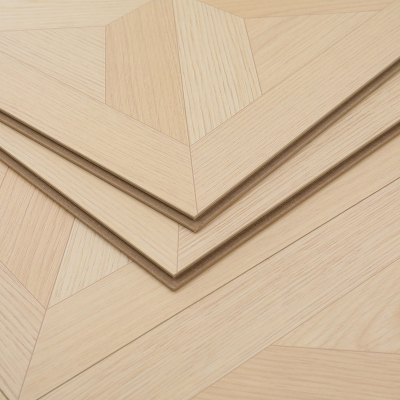
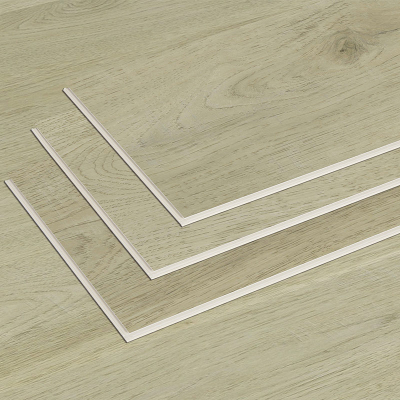
Click lock SPC flooring is a floating rigid core flooring system using mechanical interlocking edges without adhesive. Glue-down SPC flooring is directly bonded to the subfloor using pressure-sensitive or hard-set adhesive, creating a fully adhered commercial flooring structure with enhanced dimensional stability.
Technical Parameters & Specifications
In assessing click lock SPC flooring vs glue down which is better, the following technical specifications should be verified:
| Parameter | Click Lock SPC | Glue Down SPC | Reference Standard |
|---|---|---|---|
| Total Thickness | 4.0–6.5 mm | 2.5–5.0 mm | ISO 24346 |
| Wear Layer | 0.3–0.7 mm | 0.3–0.7 mm | EN 429 |
| Dimensional Stability | ≤ 0.1% | ≤ 0.05% | ISO 23999 |
| Impact Resistance | High (Rigid Core) | High | EN 13329 |
| Indentation Resistance | Moderate–High | High (Fully Bonded) | EN 433 |
| Installation Method | Floating Click System | Adhesive Bonding | — |
Glue-down systems typically offer greater resistance to movement under rolling loads, which influences the conclusion of click lock SPC flooring vs glue down which is better for heavy commercial traffic.
Structure & Material Composition
Click Lock SPC Flooring Structure
UV Coating
Wear Layer
Decorative Film
SPC Rigid Core (Limestone + PVC)
Integrated Click-Lock Edge Profile
Optional IXPE Acoustic Pad
Glue Down SPC Flooring Structure
UV Coating
Wear Layer
Decorative Film
SPC Core (Thinner Profile)
Adhesive Bonding Layer (Field Applied)
The absence of a locking profile in glue-down systems allows thinner construction but requires professional adhesive installation.
Manufacturing Process
Step 1: Raw Material Preparation
PVC resin and limestone powder blending
Stabilizer addition
Step 2: Extrusion
Twin-screw extrusion forming rigid sheets
Precision thickness calibration
Step 3: Lamination
Hot pressing decorative film and wear layer
Controlled temperature bonding
Step 4: Profiling
Click lock milling (for floating systems)
Edge trimming (for glue-down panels)
Step 5: UV Coating & Quality Control
Surface curing
Dimensional and locking strength testing
Profiling precision directly impacts joint durability in click lock SPC flooring vs glue down which is better comparisons.
Industry Comparison
| Criteria | Click Lock SPC | Glue Down SPC | Traditional LVT |
|---|---|---|---|
| Installation Speed | Fast | Moderate | Moderate |
| Subfloor Preparation | Moderate | Strict | Strict |
| Rolling Load Performance | Good | Excellent | Moderate |
| Replacement Flexibility | Easy | Difficult | Difficult |
| Renovation Suitability | High | Medium | Medium |
In high-traffic retail or healthcare environments, glue-down systems may outperform floating systems under constant rolling loads.
Application Scenarios
Retail stores and supermarkets
Office buildings
Hotels and hospitality projects
Healthcare facilities
Residential renovation projects
Architects and procurement teams evaluating click lock SPC flooring vs glue down which is better must align the choice with traffic intensity and renovation timelines.
Core Pain Points & Solutions
Joint Separation in Floating Floors
Solution: Ensure flat subfloor and expansion gaps.Adhesive Failure
Solution: Use manufacturer-approved adhesive and moisture testing.Noise Transmission
Solution: Add acoustic underlayment for floating systems.Rolling Load Indentation
Solution: Choose glue-down in heavy trolley areas.Downtime During Renovation
Solution: Use click lock for rapid installation projects.
Risk Warnings & Avoidance Recommendations
Avoid floating installation in areas with heavy pallet traffic.
Do not install glue-down flooring without moisture testing (RH ≤ 75%).
Ensure acclimatization before installation.
Verify locking system strength test reports.
Confirm adhesive curing time before reopening facility.
Procurement & Selection Guide
To determine click lock SPC flooring vs glue down which is better, follow these steps:
Assess traffic type (pedestrian vs rolling loads).
Evaluate renovation schedule constraints.
Inspect subfloor flatness and moisture levels.
Define acoustic performance requirements.
Calculate lifecycle cost including labor.
Request third-party wear and stability test reports.
Review local fire compliance requirements.
Engineering Case Example
Project: Commercial Office Renovation Area: 3,800 m² Traffic Type: Office chairs and moderate pedestrian flow System Selected: Glue-down SPC (3.0 mm thickness, 0.5 mm wear layer) Reason: Improved rolling load resistance and reduced sound movement Result: No joint displacement after 18 months of continuous use.
In contrast, a retail renovation project with 2-week completion timeline selected floating click system due to rapid installation requirements.
FAQ – Technical Clarifications
1. Which is better for heavy carts?
Glue-down SPC provides better rolling load resistance.
2. Is click lock easier to install?
Yes, faster and adhesive-free installation.
3. Which has longer lifespan?
Both can exceed 10–20 years with proper specification.
4. Does glue-down require perfect subfloor?
Yes, flatness tolerance is stricter.
5. Is floating floor noisier?
It may produce more impact sound without underlayment.
6. Can glue-down be removed easily?
No, removal is labor-intensive.
7. Which is better for renovation?
Click lock due to faster turnaround.
8. Is adhesive environmentally safe?
Use low-VOC certified adhesives.
9. Which system handles temperature fluctuation better?
Glue-down generally offers greater dimensional restraint.
10. Is expansion gap required?
Yes for floating systems, minimal for glue-down.
Request Technical Documentation or Quotation
For project-specific evaluation of click lock SPC flooring vs glue down which is better, submit floor layout, traffic data, and environmental conditions. Commercial samples, detailed test reports, and project quotations are available upon formal inquiry.
Author & Technical Authority (E-E-A-T)
This article is prepared by a commercial flooring systems consultant with over 10 years of experience in retail, office, and hospitality fit-out projects. Technical data aligns with international commercial flooring standards and engineering best practices.